Hera
Goddess
In ancient Greek religion, Hera (; Ancient Greek: Ἥρα, romanized: Hḗrā; Ἥρη, Hḗrē in Ionic and Homeric Greek) is the goddess of marriage, women, and family, and the protector of women during childbirth. In Greek mythology, she is queen among the twelve Olympians on Mount Olympus, sister and wife of Zeus, and daughter of the Titans Cronus and Rhea.
Explore on the graph- Mentions
- 89
- Connected characters
- 18
- Books
- 18


Mentions in the Iliad
A. T. Murray, Loeb Classical Library, Harvard University Press, 1924 · Homer, Iliad with an English Translation · CC BY-SA 3.0 US
“since she pitied the Danaans, when she saw them dying. When they were assembled and gathered together, among them arose and spoke swift-footed Achilles: Son of Atreus, now I think we shall return home, beaten back again, should we even escape death,”
“for in her heart she loved and cared for both men alike. She stood behind him, and seized the son of Peleus by his fair hair, appearing to him alone. No one of the others saw her. Achilles was seized with wonder, and turned around, and immediately recognized Pallas Athene. Terribly her eyes shone.”
“But you came, goddess, and freed him from his bonds, when you had quickly called to high Olympus him of the hundred hands, whom the gods call Briareus, but all men Aegaeon; for he is mightier than his father. He sat down by the side of the son of Cronos, exulting in his glory,”
“how far I among all the gods am honoured the least. Then, greatly troubled, Zeus, the cloud-gatherer spoke to her: Surely this will be sorry work, since you will set me on to engage in strife with Hera, when she shall anger me with taunting words. Even now she always upbraids me among the immortal gods,”
“So he sat down there upon his throne; but Hera saw, and failed not to note how silver-footed Thetis, daughter of the old man of the sea, had taken counsel with him. Forthwith then she spoke to Zeus, son of Cronos, with mocking words: Who of the gods, crafty one, has now again taken counsel with you?”
“In answer to him spoke the ox-eyed lady Hera: Most dread son of Cronos, what a word you have said! Truly, in the past I have not been accustomed to inquire nor ask you, but at your ease you devise all things whatever you wish. But now I have wondrous dread at heart, lest”
“lest all the gods that are in Olympus avail you not against my drawing near, when I put forth upon you my irresistible hands. He spoke, and ox-eyed lady Hera was seized with fear, and sat down in silence, curbing her heart. Then troubled were the gods of heaven throughout the palace of Zeus,”
See all 87
“and smiling took in her hand the cup from her son. Then he poured wine for all the other gods from left to right, drawing forth sweet nectar from the bowl. And unquenchable laughter arose among the blessed gods, as they saw Hephaestus puffing through the palace.”
“since Hera hath Vent the minds of all by her supplication, and over the Trojans hang woes. So spake he, and the Dream went his way, when he had heard this saying. Forthwith he came to the swift ships of the Achaeans, and went his way to Agamemnon, son of Atreus, and found him sleeping in his hut, and over him was shed ambrosial slumber.”
“For the immortals that have homes upon Olympus are no longer divided in counsel, since Hera hath bent the minds of all by her supplication, and over the Trojans hang woes by the will of Zeus. But do thou keep this in thy heart, nor let forgetfulness lay hold of thee, whenso honey-hearted sleep shall let thee go.”
“He biddeth thee arm the long-haired Achaeans with all speed, since now thou mayest take the broad-wayed city of the Trojans. For the immortals that have homes upon Olympus are no longer divided in counsel, since Hera hath bent the minds of all by her supplication, and over the Trojans hang woes by the will of Zeus.”
“Then would the Argives have accomplished their return even beyond what was ordained, had not Hera spoken a word to Athena, saying: Out upon it, child of Zeus that beareth the aegis, unwearied one! Is it thus indeed that the Argives are to flee to their dear native land over the broad back of the sea?”
“And forthwith the son of Cronos made essay to provoke Hera with mocking words, and said with malice: Twain of the goddesses hath Menelaus for helpers, even Argive Hera, and Alalcomenean Athene. Howbeit these verily sit apart and take their pleasure in beholding,”
“So spake he, and thereat Athene and Hera murmured, who sat side by side, and were devising ills for the Trojans. Athene verily held her peace and said naught, wroth though she was at father Zeus, and fierce anger gat hold of her; howbeit Hera's breast contained not her anger, but she spake to him, saying:”
“Then in answer to him spake ox-eyed, queenly Hera: Verily have I three cities that are far dearest in my sight, Argos and Sparta and broad-wayed Mycenae; these do thou lay waste whensoe'er they shall be hateful to thy heart. Not in their defence do I stand forth, nor account them too greatly.”
“brought tidings unto Hermes; and he stole forth Ares, that was now sore distressed, for his grievous bonds were overpowering him. So suffered Hera, when the mighty son of Amphitryon smote her on the right breast with a three-barbed arrow; then upon her too came pain that might in no wise be assuaged.”
“the stately wife of horse-taming Diomedes. She spake, and with both her hands wiped the ichor from the arm; the arm was restored, and the grievous pains assuaged. But Athene and Hera, as they looked upon her, sought to anger Zeus, son of Cronos, with mocking words.”
“and hard by him dwelt other Boeotians having a land exceeding rich. But when the goddess, white-armed Hera, was ware of them as they made havoc of the Argives in the fierce conflict, forthwith she spake winged words to Athene: Out upon it, thou child of Zeus that beareth the aegis, unwearied one,”
“Then Hera, the queenly goddess, daughter of great Cronos, went to and fro harnessing the horses of golden frontlets. and Hebe quickly put to the car on either side the curved wheels of bronze, eight-spoked, about the iron axle-tree. Of these the felloe verily is of gold imperishable,”
“Then she stepped upon the flaming car and grasped her spear, heavy and huge and strong, wherewith she vanquisheth the ranks of men—of warriors with whom she is wroth, she, the daughter of the mighty sire. And Hera swiftly touched the horses with the lash, and self-bidden groaned upon their hinges the gates of heaven which the Hours had in their keeping,”
“Then the goddess, white-armed Hera, stayed the horses, and made question of Zeus most high, the son of Cronos, and spake to him: Father Zeus, hast thou no indignation with Ares for these violent deeds, that he hath destroyed so great and so goodly a host of the Achaeans recklessly and in no seemly wise to my sorrow;”
“there the goddess, white-armed Hera, stayed her horses, and loosed them from the car, and shed thick mist about them; and Simoïs made ambrosia to spring up for them to graze upon. Then the goddesses twain went their way with steps like those of timorous doves, eager to bring aid to the Argive warriors.”
“and smite him in close fight, neither have thou awe of furious Ares that raveth here a full-wrought bane, a renegade, that but now spake with me and Hera, and made as though he would fight against the Trojans but give aid to the Argives; yet now he consorteth with the Trojans and hath forgotten these.”
“Most hateful to me art thou of all gods that hold Olympus, for ever is strife dear to thee and wars and fightings. Thou hast the unbearable, unyielding spirit of thy mother, even of Hera; her can I scarce control by my words. Wherefore it is by her promptings, meseems, that thou sufferest thus.”
“when once they are dead, the speedy consolation of fire. But to our oaths let Zeus be witness, the loud-thundering lord of Hera. So saying, he lifted up his staff before the face of all the gods, and Idaeus went his way back to sacred Ilios. Now they were sitting in assembly, Trojans and Dardanians alike,”
“his breastplate richly-dight, which Hephaestus wrought with toil. Could we but take these twain, then might I hope to make the Achaeans this very night embark upon their swift ships. So spake he vauntingly, and queenly Hera had indignation thereat; she shook herself on her throne and made high Olympus to quake,”
“For did we but will, all we that are aiders of the Danaans, to drive back the Trojans and to withhold Zeus whose voice is borne afar, then, in vexation of spirit, would he sit alone there upon Ida. Then, his heart sore troubled, the lord, the Shaker of Earth, spake to her: Hera, reckless in speech, what a word hast thou spoken!”
“Now at sight of them the goddess, white-armed Hera, had pity; and forthwith spake winged words to Athene: Out upon it, thou child of Zeus that beareth the aegis, shall not we twain any more take thought of the Danaans that are perishing, even for this last time? Now will they fill up the measure of evil doom and perish”
“with his fat and flesh, when he is fallen at the ships of the Achaeans. So spake she, and the goddess, white-armed Hera, failed not to hearken. She then went to and fro harnessing the horses of golden frontlets, even Hera, the queenly goddess, daughter of great Cronos; but Athene, daughter of Zeus that beareth the aegis,”
“that thou mayest know, thou of the flashing eyes, what it is to strive against thine own father. But against Hera hath he not so great indignation nor wrath, seeing she is ever wont to thwart him in whatsoe'er he hath decreed. But most dread art thou, thou bold and shameless thing, if in good sooth thou wilt dare to raise thy mighty spear against Zeus.”
“even as it may befall; and for him, let him take his own counsel in his heart and judge between Trojans and Danaans, as is meet. So spake she, and turned back her single-hooved horses. Then the Hours unyoked for them their fair-maned horses, and tethered them at their ambrosial mangers,”
“not upon your car, once ye were smitten by the thunderbolt, would ye have fared back to Olympus, where is the abode of the immortals. So spake he, and thereat murmured Athene and Hera, that sat by his side and were devising ills for the Trojans. Athene verily held her peace and said naught,”
“and have joy neither in the rays of Helios Hyperion nor in any breeze, but deep Tartarus is round about them. Though thou shouldst fare even thither in thy wanderings, yet reck I not of thy wrath, seeing there is naught more shameless than thou. So said he; howbeit white-armed Hera spake no word in answer.”
“be found for ill once wrought—nay, rather, ere it be too late bethink thee how thou mayest ward from the Danaans the day of evil. Good friend, surely it was to thee that thy father Peleus gave command on the day when he sent thee to Agamemnon forth from Phthia: ‘My son, strength shall Athene and Hera”
“Even as when the lord of fair-haired Hera lighteneth, what time he maketh ready either a mighty rain unspeakable or hail or snow, when the snow-flakes sprinkle the fields, or haply the wide mouth of bitter war; even so often did Agamemnon groan from the deep of his breast,”
“For I will go straight on to the camp, even until I come to the ship of Agamemnon, where, I ween, the chieftains will be holding council, whether to flee or to fight. So spake he, and Hector took the staff in his hands, and sware to him, saying: Now be my witness Zeus himself, the loud-thundering lord of Hera,”
“and thereat Athene and Hera thundered, doing honour to the king of Mycenae, rich in gold. Then on his own charioteer each man laid command to hold in his horses well and orderly there at the trench, but themselves on foot, arrayed in their armour, ranged swiftly forward,”
“the piercing dart that the Eilithyiae, the goddesses of childbirth, send—even the daughters of Hera that have in their keeping bitter pangs; even so sharp pains came upon the mighty son of Atreus. Then he leapt upon his chariot and bade his charioteer drive to the hollow ships, for he was sore pained at heart.”
“I would that I mine own self were all my days as surely the son of Zeus, that beareth the aegis, and my mother were the queenly Hera, and that I were honoured even as are Athene and Apollo, as verily this day beareth evil for the Argives, one and all; and among them shalt thou too be slain, if thou have the heart”
“even so mighty a shout did the lord, the Shaker of Earth, send forth from his breast. and in the heart of each man of the Achaeans he put great strength, to war and fight unceasingly. Now Hera of the golden throne, standing on a peak of Olympus, therefrom had sight of him, and forthwith knew him”
“Wilt thou now hearken to me, dear child, in what I shall say? or wilt thou refuse me, being angered at heart for that I give aid to the Danaans and thou to the Trojans? Then made answer to her Aphrodite, daughter of Zeus: Hera, queenly goddess, daughter of great Cronos,”
“speak what is in thy mind; my heart bids me fulfill it, if fulfill it I can, and it is a thing that hath fulfillment. Then with crafty thought spake to her queenly Hera: Give me now love and desire, wherewith thou art wont to subdue all immortals and mortal men.”
“curiously-wrought, wherein are fashioned all manner of allurements; therein is love, therein desire, therein dalliance—beguilement that steals the wits even of the wise. This she laid in her hands, and spake, and addressed her: Take now and lay in thy bosom this zone,”
“the god of the two strong arms, shall fashion thee with skill, and beneath it shall he set a foot-stool for the feet, whereon thou mayest rest thy shining feet when thou quaffest thy wine. Then sweet Sleep made answer to her, saying: Hera, queenly goddess, daughter of great Cronos, another of the gods, that are for ever, might I lightly lull to sleep, aye, were it even the streams of the river”
“To her I came in my flight, and besought her, and Zeus refrained him, albeit he was wroth, for he had awe lest he do aught displeasing to swift Night. And now again thou biddest me fulfill this other task, that may nowise be done. To him then spake again ox-eyed, queenly Hera: Sleep, wherefore ponderest thou of these things in thine heart?”
“in the likeness of a clear-voiced mountain bird, that the gods call Chalcis, and men Cymindis. But Hera swiftly drew nigh to topmost Gargarus, the peak of lofty Ida, and Zeus, the cloud-gatherer, beheld her. And when he beheld her, then love encompassed his wise heart about,”
“lest haply thou mightest wax wroth with me hereafter, if without a word I depart to the house of deep-flowing Oceanus. Then in answer spake to her Zeus, the cloud-gatherer. Hera, thither mayest thou go even hereafter. But for us twain, come, let us take our joy couched together in love;”
“Thither let us go and lay us down, since the couch is thy desire. Then in answer to her spake Zeus, the cloud-gatherer: Hera, fear thou not that any god or man shall behold the thing, with such a cloud shall I enfold thee withal, a cloud of gold. Therethrough might not even Helios discern us twain,”
“and Hera hath beguiled him to couch with her in love. So spake he and departed to the glorious tribes of men, but Poseidon he set on yet more to bear aid to the Danaans. Forthwith then he leapt forth amid the foremost, and cried aloud: Argives, are we again in good sooth to yield victory to Hector,”
“on the peaks of Ida beside Hera of the golden throne. Then he sprang up, and stood, and saw Trojans alike and Achaeans, these in rout, and the Argives driving them on from the rear, and amid them the lord Poseidon. And Hector he saw lying on the plain, while about him sat his comrades,”
“and he was gasping with painful breath, distraught in mind, and vomiting blood; for not the weakest of the Achaeans was it that had smitten him. At sight of him the father of men and gods had pity, and with a dread glance from beneath his brows he spake to Hera, saying: Hera, that art hard to deal with, it is the craft of thine evil wiles”
“to horse-pasturing Argos, albeit after he had laboured sore. Of these things will I mind thee yet again, that thou mayest cease from thy beguilings, to the end that thou mayest see whether they anywise avail thee, the dalliance and the couch, wherein thou didst lie with me when thou hadst come forth from among the gods, and didst beguile me. So spake he, and the ox-eyed, queenly Hera shuddered;”
“But I tell thee, I would counsel even him to walk in that way, wherein thou, O lord of the dark cloud, mayest lead him. So spake she, and the father of men and gods smiled, and made answer, and spake to her with winged words: If in good sooth, O ox-eyed, queenly Hera,”
“even as I promised at the first and bowed my head thereto, on the day when the goddess Thetis clasped my knees, beseeching me to do honour to Achilles, sacker of cities. So spake he, and the goddess, white-armed Hera, failed not to hearken, but went her way from the mountains of Ida unto high Olympus.”
“the immortal gods gathered together in the house of Zeus, and at sight of her they all sprang up, and greeted her with cups of welcome. She on her part let be the others, but took the cup from Themis, of the fair cheeks, for she ran first to meet her, and spake, and addressed her with winged words:”
“Hearest thou not what the goddess, white-armed Hera, saith, she that is but now come from Olympian Zeus? Wouldest thou thyself fulfill the measure of manifold woes, and so return to Olympus despite thy grief, perforce, and for all the rest sow the seeds of grievous woe?”
“or will yet be slain; and a hard thing it is to preserve the lineage and offspring of men. She spake she, and made furious Ares to sit down upon his throne. But Hera called Apollo forth from out the hall, and Iris, that is the messenger of the immortal gods;”
“one of like portion with himself, to whom fate hath decreed an equal share. Howbeit for this present will I yield, despite mine indignation; yet another thing will I tell thee, and make this threat in my wrath: if in despite of me, and of Athene, driver of the spoil,”
“even so with cries rushed they one against the other. And the son of crooked-counselling Cronos took pity when he saw them, and spake to Hera, his sister and his wife: Ah, woe is me, for that it is fated that Sarpedon, dearest of men to me, be slain by Patroclus, son of Menoetius!”
“even on Hector; for my fate, I will accept it whenso Zeus willeth to bring it to pass, and the other immortal gods. For not even the mighty Heracles escaped death, albeit he was most dear to Zeus, son of Cronos, the king, but fate overcame him, and the dread wrath of Hera.”
“And now would he have dragged away the body, and have won glory unspeakable, had not wind-footed, swift Iris speeding from Olympus with a message that he array him for battle, come to the son of Peleus, all unknown of Zeus and the other gods, for Hera sent her forth. And she drew nigh, and spake to him winged words:”
“Thine were the shame, if anywise he come, a corpse despitefully entreated. Then swift-footed goodly Achilles answered her: Goddess Iris, who of the gods sent thee a messenger to me? And to him again spake wind-footed, swift Iris: Hera sent me forth, the glorious wife of Zeus;”
“shedding hot tears, for that he beheld his trusty comrade lying on the bier, mangled by the sharp bronze. Him verily had he sent forth with horses and chariot into the war, but never again did he welcome his returning. Then was the unwearying sun sent by ox-eyed, queenly Hera”
“the Myrmidons made moan in lamentation for Patroclus; but Zeus spake unto Hera, his sister and his wife: Thou hast then had thy way, O ox-eyed, queenly Hera; thou hast aroused Achilles, swift of foot. In good sooth must the long-haired Achaeans be children of thine own womb.”
“even she that saved me when pain was come upon me after I had fallen afar through the will of my shameless mother, that was fain to hide me away by reason of my lameness. Then had I suffered woes in heart, had not Eurynome and Thetis received me into their bosom—Eurynome, daughter of backward-flowing Oceanus.”
“Aye, and on a time she blinded Zeus, albeit men say that he is the greatest among men and gods; yet even him Hera, that was but a woman, beguiled in her craftiness on the day when Alcmene in fair-crowned Thebe was to bring forth the mighty Heracles.”
“even one of the race of those men who are of me by blood.’ But with crafty mind the queenly Hera spake unto him:‘Thou wilt play the cheat, and not bring thy word to fulfillment. Nay, come, Olympian, swear me now a mighty oath that in very truth that man shall be lord of all them that dwell round about,”
“on a sudden he bowed his head, and all his mane streamed from beneath the yoke-pad beside the yoke, and touched the ground; and the goddess, white-armed Hera, gave him speech: Aye verily, yet for this time will we save thee, mighty Achilles, albeit the day of doom is nigh thee, nor shall we be the cause thereof,”
“So spake the son of Cronos, and roused war unabating. And the gods went their way into the battle, being divided in counsel: Hera gat her to the gathering of the ships, and with her Pallas Athene, and Poseidon, the Shaker of Earth, and the helper Hermes, that was beyond all in the cunning of his mind;”
“against Hera stood forth the huntress of the golden arrows, and the echoing chase, even the archer Artemis, sister of the god that smiteth afar; against Leto stood forth the strong helper, Hermes, and against Hephaestus the great, deep-eddying river, that god called Xanthus, and men Scamander.”
“So saying he breathed great might into the shepherd of the host, and he strode amid the foremost fighters, harnessed in flaming bronze. Nor was the son of Anchises unseen of white-armed Hera, as he went forth to face the son of Peleus amid the throng of men, but she gathered the gods together, and spake among them, saying:”
“he shall have dread hereafter when some god shall come against him in battle; for hard are the gods to look upon when they appear in manifest presence. Then Poseidon, the Shaker of Earth, answered her: Hera, be not thou wroth beyond what is wise; thou needest not at all. I verily were not fain to make gods clash”
“from mortal women. For at length hath the son of Cronos come to hate the race of Priam; and now verily shall the mighty Aeneas be king among the Trojans, and his sons' sons that shall be born in days to come. Then made answer to him the ox-eyed, queenly Hera:”
“the day before, what time glorious Hector was raging—thitherward poured forth some in rout, and Hera spread before them a thick mist to hinder them; but the half of them were pent into the deep-flowing river with its silver eddies. Therein they flung themselves with a great din, and the sheer-falling streams resounded,”
“and seething with foam and blood and dead men. And the dark flood of the heaven-fed River rose towering above him, and was at point to overwhelm the son of Peleus. But Hera called aloud, seized with fear for Achilles, lest the great deep-eddying River should sweep him away.”
“so burned in fire his fair streams, and the water boiled; nor had he any mind to flow further onward, but was stayed; for the blast of the might of wise-hearted Hephaestus distressed him. Then with instant prayer he spake winged words unto Hera: Hera, wherefore hath thy son beset my stream to afflict it”
“thus to smite an immortal god for mortals' sake. So spake she, and Hephaestus quenched his wondrous-blazing fire, and once more in the fair river-bed the flood rushed down. But when the fury of Xanthus was quelled, the twain thereafter ceased, for Hera stayed them, albeit she was wroth;”
“Fool, not even yet hast thou learned how much mightier than thou I avow me to be, that thou matchest thy strength with mine. On this wise shalt thou satisfy to the full the Avengers invoked of thy mother, who in her wrath deviseth evil against thee, for that thou hast deserted the Achaeans and bearest aid to the overweening Trojans.”
“When she had thus spoken, she turned from Ares her bright eyes. Him then the daughter of Zeus, Aphrodite, took by the hand, and sought to lead away, as he uttered many a moan, and hardly could he gather back to him his spirit. But when the goddess, white-armed Hera, was ware of her, forthwith she spake winged words to Athene:”
“and on this wise bold and stalwart, even as Aphrodite came to bear aid to Ares, and braved my might. Then long ere this should we have ceased from war, having sacked Ilios, that well-peopled city. So spake she, and the goddess, white-armed Hera smiled thereat.”
“Let me no more hear thee in the halls of our father boasting as of old among the immortal gods that thou wouldest do battle in open combat with Poseidon. So spake she, but Apollo, that worketh afar, answered her not. Howbeit the revered wife of Zeus waxed wroth, and chid the archer queen with words of reviling:”
“How now art thou fain, thou bold and shameless thing, to stand forth against me? No easy foe I tell thee, am I, that thou shouldst vie with me in might, albeit thou bearest the bow, since it was against women that Zeus made thee a lion, and granted thee to slay whomsoever of them thou wilt.”
“thus wantonly as though thou wert working some evil before the face of all? Then answered him the fair-crowned huntress of the echoing chase: Thy wife it was that buffeted me, father, even white-armed Hera, from whom strife and contention have been made fast upon the immortals. On this wise spake they one to the other;”
“And the thing was pleasing unto all the rest, yet not unto Hera or Poseidon or the flashing-eyed maiden, but they continued even as when at the first sacred Ilios became hateful in their eyes and Priam and his folk, by reason of the sin of Alexander, for that he put reproach upon those goddesses when they came to his steading,”
“Then stirred to anger spake to him white-armed Hera: Even this might be as thou sayest, Lord of the silver bow, if indeed ye gods will vouchsafe like honour to Achilles and to Hector. Hector is but mortal and was suckled at a woman's breast, but Achilles is the child of a goddess that I mine own self”
“fostered and reared, and gave to a warrior to be his wife, even to Peleus, who was heartily dear to the immortals. And all of you, O ye gods, came to her marriage, and among them thyself too didst sit at the feast, thy lyre in thy hand, O thou friend of evil-doers, faithless ever. Then Zeus, the cloud-gatherer, answered her, and said:”
“Then she sate her down beside father Zeus, and Athene gave place. And Hera set in her hand a fair golden cup, and spake words of cheer.; and Thetis drank, and gave back the cup. Then among them the father of men and gods was first to speak: Thou art come to Olympus, 0, goddess Thetis,”
Connections
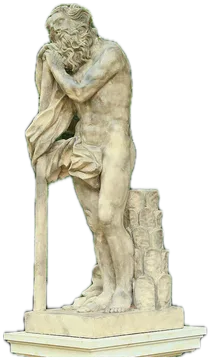
Father · Sources
For even though I grudge thee, and am fain to thwart their overthrow, I avail naught by my grudging, for truly thou art far the mightier. Still it beseemeth that my labour too be not made of none effect; for I also am a god, and my birth is from the stock whence is thine own, and crooked-counselling Cronos begat me as the most honoured of his daughters
Then Hera, the queenly goddess, daughter of great Cronos, went to and fro harnessing the horses of golden frontlets. and Hebe quickly put to the car on either side the curved wheels of bronze, eight-spoked, about the iron axle-tree. Of these the felloe verily is of gold imperishable,
with his fat and flesh, when he is fallen at the ships of the Achaeans. So spake she, and the goddess, white-armed Hera, failed not to hearken. She then went to and fro harnessing the horses of golden frontlets, even Hera, the queenly goddess, daughter of great Cronos; but Athene, daughter of Zeus that beareth the aegis,
Il. 4.59 · Il. 5.721 · Il. 8.383 · Il. 14.194 · Il. 14.243
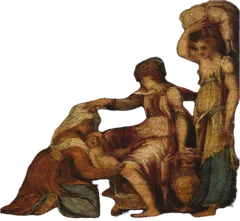
Mother · Sources
Происхождение по Гесиоду. Гестия также названа дочерью, но в Илиаде не упоминается и в её граф здесь не добавляется.
Hesiod, Theogony (H. G. Evelyn-White) · Hesiod, Theogony 453–458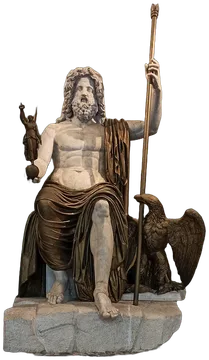
Husband · Sources
how far I among all the gods am honoured the least. Then, greatly troubled, Zeus, the cloud-gatherer spoke to her: Surely this will be sorry work, since you will set me on to engage in strife with Hera, when she shall anger me with taunting words. Even now she always upbraids me among the immortal gods,and declares that I give aid to the Trojans in battle. But for the present, depart again, lest Hera note something; and I will take thought for these things to bring all to pass. Come, I will bow my head to you, that thou may be certain, for this from me is the surest token among the immortals;
hard will they prove for you, though you are my wife. Whatever it is fitting for you to hear, this none other shall know before you, whether of gods or men; but what I wish to devise apart from the gods, of all this do not in any way inquire nor ask.
There went he up and slept, and beside him lay Hera of the golden throne.
Il. 1.519–522 · Il. 1.546 · Il. 1.611 · Il. 4.5–6 · Il. 4.60–61 · Il. 7.411 · Il. 8.461 · Il. 10.5 · Il. 10.329 · Il. 14.155 · Il. 14.213 · Il. 14.295 · Il. 14.346 · Il. 15.5 · Il. 15.33 · Il. 15.34 · Il. 15.48 · Il. 15.91 · Il. 15.156 · Il. 16.432 · Il. 18.184 · Il. 18.356 · Il. 19.97 · Il. 21.479 · Il. 21.498–499 · Il. 21.512 · Il. 24.64
Brother through father · Sources
Квалификация братства/сестринства: Илиада: Общий отец подтверждён; сведения о матерях неполны. Различие матерей не установлено. Общие родители: Кронос.
Wikidata: Кронос — роль родителя · P22 Wikidata: Рея — роль родителя · P25 Wikidata: Кронос — роль родителя · P22For even though I grudge thee, and am fain to thwart their overthrow, I avail naught by my grudging, for truly thou art far the mightier. Still it beseemeth that my labour too be not made of none effect; for I also am a god, and my birth is from the stock whence is thine own, and crooked-counselling Cronos begat me as the most honoured of his daughters
even so with cries rushed they one against the other. And the son of crooked-counselling Cronos took pity when he saw them, and spake to Hera, his sister and his wife: Ah, woe is me, for that it is fated that Sarpedon, dearest of men to me, be slain by Patroclus, son of Menoetius!
the Myrmidons made moan in lamentation for Patroclus; but Zeus spake unto Hera, his sister and his wife: Thou hast then had thy way, O ox-eyed, queenly Hera; thou hast aroused Achilles, swift of foot. In good sooth must the long-haired Achaeans be children of thine own womb.
Il. 4.58 · Il. 16.432 · Il. 18.356
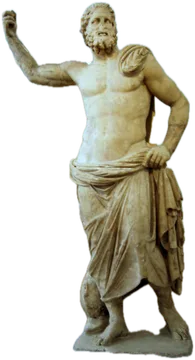
Brother through father · Sources
Квалификация братства/сестринства: Илиада: Общий отец подтверждён; сведения о матерях неполны. Различие матерей не установлено. Общие родители: Кронос.
Wikidata: Кронос — роль родителя · P22as he went busily about in the battle where men win glory, her own brother and her lord's withal; and she was glad at heart. And Zeus she marked seated on the topmost peak of many-fountained Ida, and hateful was he to her heart. Then she took thought, the ox-eyed, queenly Hera,
Il. 14.155
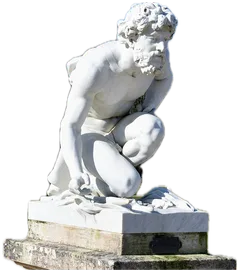
Brother through father · Sources
Братство или сестринство выведено из общего родителя: Рея, Кронос. Матери и отцы, не указанные в источнике, не предполагаются. Квалификация братства/сестринства: Илиада: Общий отец подтверждён; сведения о матерях неполны. Различие матерей не установлено. Общие родители: Кронос.
Hesiod, Theogony (H. G. Evelyn-White) · Hesiod, Theogony 453–458 Wikidata: Кронос — роль родителя · P22 Wikidata: Рея — роль родителя · P25 Wikidata: Кронос — роль родителя · P22For even though I grudge thee, and am fain to thwart their overthrow, I avail naught by my grudging, for truly thou art far the mightier. Still it beseemeth that my labour too be not made of none effect; for I also am a god, and my birth is from the stock whence is thine own, and crooked-counselling Cronos begat me as the most honoured of his daughters
Then Hera, the queenly goddess, daughter of great Cronos, went to and fro harnessing the horses of golden frontlets. and Hebe quickly put to the car on either side the curved wheels of bronze, eight-spoked, about the iron axle-tree. Of these the felloe verily is of gold imperishable,
with his fat and flesh, when he is fallen at the ships of the Achaeans. So spake she, and the goddess, white-armed Hera, failed not to hearken. She then went to and fro harnessing the horses of golden frontlets, even Hera, the queenly goddess, daughter of great Cronos; but Athene, daughter of Zeus that beareth the aegis,
Il. 4.59 · Il. 5.721 · Il. 8.383 · Il. 14.194 · Il. 14.243 · Il. 15.187
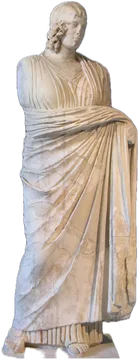
Sister through mother · Sources
Братство или сестринство выведено из общего родителя: Рея, Кронос. Матери и отцы, не указанные в источнике, не предполагаются. Квалификация братства/сестринства: Отдельный внешний источник: Общая мать подтверждена; сведения об отцах неполны. Различие отцов не установлено. Общие родители: Рея.
Hesiod, Theogony (H. G. Evelyn-White) · Hesiod, Theogony 453–458For even though I grudge thee, and am fain to thwart their overthrow, I avail naught by my grudging, for truly thou art far the mightier. Still it beseemeth that my labour too be not made of none effect; for I also am a god, and my birth is from the stock whence is thine own, and crooked-counselling Cronos begat me as the most honoured of his daughters
Then Hera, the queenly goddess, daughter of great Cronos, went to and fro harnessing the horses of golden frontlets. and Hebe quickly put to the car on either side the curved wheels of bronze, eight-spoked, about the iron axle-tree. Of these the felloe verily is of gold imperishable,
with his fat and flesh, when he is fallen at the ships of the Achaeans. So spake she, and the goddess, white-armed Hera, failed not to hearken. She then went to and fro harnessing the horses of golden frontlets, even Hera, the queenly goddess, daughter of great Cronos; but Athene, daughter of Zeus that beareth the aegis,
Il. 4.59 · Il. 5.721 · Il. 8.383 · Il. 14.194 · Il. 14.243
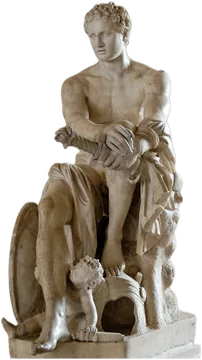
Son · Sources
Most hateful to me art thou of all gods that hold Olympus, for ever is strife dear to thee and wars and fightings. Thou hast the unbearable, unyielding spirit of thy mother, even of Hera; her can I scarce control by my words. Wherefore it is by her promptings, meseems, that thou sufferest thus.
Fool, not even yet hast thou learned how much mightier than thou I avow me to be, that thou matchest thy strength with mine. On this wise shalt thou satisfy to the full the Avengers invoked of thy mother, who in her wrath deviseth evil against thee, for that thou hast deserted the Achaeans and bearest aid to the overweening Trojans.
Il. 5.892 · Il. 21.412
See all 18
In art

Hans von Aachen. Суд Париса. Musée de la Chartreuse de Douai. Public domain. https://www.wikidata.org/wiki/Q105688151
Hans von Aachen. Суд Париса. Musée de la Chartreuse de Douai. Public domain. https://www.wikidata.org/wiki/Q105688151

François Boucher. The Judgement of Paris. Musée des beaux-arts de Mulhouse. CC BY-SA 4.0. https://www.wikidata.org/wiki/Q110304528
François Boucher. The Judgement of Paris. Musée des beaux-arts de Mulhouse. CC BY-SA 4.0. https://www.wikidata.org/wiki/Q110304528

Enrique Simonet. El Juicio de Paris. Museo de Málaga. Public domain. https://www.wikidata.org/wiki/Q1194202
Enrique Simonet. El Juicio de Paris. Museo de Málaga. Public domain. https://www.wikidata.org/wiki/Q1194202

James Thornhill. The Judgement of Paris. Government Art Collection. Public domain. https://www.wikidata.org/wiki/Q119917950
James Thornhill. The Judgement of Paris. Government Art Collection. Public domain. https://www.wikidata.org/wiki/Q119917950

Charles Errard. Суд Париса. Public domain. https://www.wikidata.org/wiki/Q138498891
Charles Errard. Суд Париса. Public domain. https://www.wikidata.org/wiki/Q138498891

James Barry. Jupiter Beguiled by Juno on Mount Ida. Graves Art Gallery. Public domain. https://www.wikidata.org/wiki/Q17242710
James Barry. Jupiter Beguiled by Juno on Mount Ida. Graves Art Gallery. Public domain. https://www.wikidata.org/wiki/Q17242710

Antonio da Vendri. Judgment of Paris. Rijksmuseum. Public domain. https://www.wikidata.org/wiki/Q17323979
Antonio da Vendri. Judgment of Paris. Rijksmuseum. Public domain. https://www.wikidata.org/wiki/Q17323979
See all 176
Sources and verification
The character is matched to the catalogue.
- Wikipedia · Hera · CC BY-SA 4.0
Excerpt; remaining sentences omitted.
Reference material remains distinct from the poem’s assertions. Characters who share a name retain separate pages.