Agamemnon
Mortal man
In Greek mythology, Agamemnon ( ; Ancient Greek: Ἀγαμέμνων Agamémnōn) was a king of Mycenae who commanded the Achaeans during the Trojan War. He was the son (or grandson) of King Atreus and Queen Aerope, the brother of Menelaus, the husband of Clytemnestra, and the father of Iphigenia, Iphianassa, Electra, Laodike, Orestes and Chrysothemis.
Explore on the graph- Mentions
- 172
- Connected characters
- 29
- Books
- 19


Mentions in the Iliad
A. T. Murray, Loeb Classical Library, Harvard University Press, 1924 · Homer, Iliad with an English Translation · CC BY-SA 3.0 US
“from the time when first they parted in strife Atreus' son, king of men, and brilliant Achilles. Who then of the gods was it that brought these two together to contend? The son of Leto and Zeus; for he in anger against the king roused throughout the host an evil pestilence, and the people began to perish,”
“out of reverence for the son of Zeus, Apollo who strikes from afar. Then all the rest of the Achaeans shouted assent, to reverence the priest and accept the glorious ransom, yet the thing did not please the heart of Agamemnon, son of Atreus, but he sent him away harshly, and laid upon him a stern command:”
“since she pitied the Danaans, when she saw them dying. When they were assembled and gathered together, among them arose and spoke swift-footed Achilles: Son of Atreus, now I think we shall return home, beaten back again, should we even escape death,”
“not even if you name Agamemnon, who now claims to be far the best of the Achaeans. Then the blameless seer took heart, and spoke: It is not then because of a vow that he finds fault, nor because of a hecatomb, but because of the priest whom Agamemnon dishonoured, and did not release his daughter nor accept the ransom.”
“In answer to him spoke swift-footed brilliant Achilles: Most glorious son of Atreus, most covetous of all, how shall the great-hearted Achaeans give you a prize? We know nothing of a hoard of wealth in common store, but whatever we took by pillage from the cities has been apportioned,”
“did they lay waste the harvest, for many things lie between us—shadowy mountains and sounding sea. But you, shameless one, we followed, so that you might rejoice, seeking to win recompense for Menelaus and for yourself, dog-face, from the Trojans. This you disregard, and take no heed of.”
“while I am here dishonoured to pile up riches and wealth for you. Then the king of men, Agamemnon, answered him: Flee then, if your heart urges you; I do not beg you to remain for my sake. With me are others who will honour me, and above all Zeus, the lord of counsel.”
See all 164
Connections
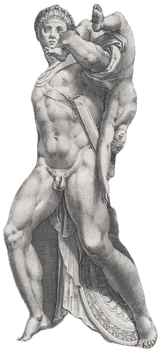
Father · Sources
from the time when first they parted in strife Atreus' son, king of men, and brilliant Achilles. Who then of the gods was it that brought these two together to contend? The son of Leto and Zeus; for he in anger against the king roused throughout the host an evil pestilence, and the people began to perish,
When he had thus spoken he sat down, and among them arose the warrior, son of Atreus, wide-ruling Agamemnon, deeply troubled. With rage his black heart was wholly filled, and his eyes were like blazing fire. To Calchas first of all he spoke, and his look threatened evil:
In answer to him spoke swift-footed brilliant Achilles: Most glorious son of Atreus, most covetous of all, how shall the great-hearted Achaeans give you a prize? We know nothing of a hoard of wealth in common store, but whatever we took by pillage from the cities has been apportioned,
Il. 1.7 · Il. 1.102 · Il. 1.122 · Il. 1.191 · Il. 1.282 · Il. 1.308 · Il. 1.355 · Il. 1.387 · Il. 2.6 · Il. 2.23 · Il. 2.54 · Il. 2.85 · Il. 2.185 · Il. 2.249 · Il. 2.434 · Il. 2.477 · Il. 2.578 · Il. 2.772 · Il. 3.120 · Il. 3.178 · Il. 4.223 · Il. 4.255 · Il. 4.311 · Il. 4.326 · Il. 4.356 · Il. 4.403 · Il. 5.528 · Il. 5.552 · Il. 7.176 · Il. 7.312 · Il. 7.470 · Il. 8.227 · Il. 8.261 · Il. 8.292 · Il. 9.69 · Il. 9.96 · Il. 9.163 · Il. 9.226 · Il. 9.300 · Il. 9.315 · Il. 9.331 · Il. 9.368 · Il. 9.388 · Il. 9.672–676 · Il. 9.697 · Il. 10.3 · Il. 10.81 · Il. 10.88 · Il. 10.102–103 · Il. 10.128 · Il. 11.94 · Il. 11.233 · Il. 11.766 · Il. 13.112 · Il. 14.22 · Il. 14.137 · Il. 19.35 · Il. 19.146 · Il. 19.241 · Il. 23.36 · Il. 23.156 · Il. 23.233 · Il. 23.486 · Il. 23.890 · Il. 24.654
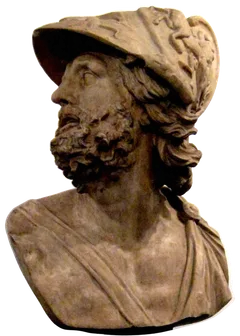
Brother through father · Sources
Квалификация братства/сестринства: Илиада: Общий отец подтверждён; сведения о матерях неполны. Различие матерей не установлено. Общие родители: Атрей.
Wikidata: Атрей — роль родителя · P22 Wikidata: Атрей — роль родителя · P22Квалификация братства/сестринства: Илиада: Общий отец подтверждён; сведения о матерях неполны. Различие матерей не установлено. Общие родители: Атрей.
Wikidata: Атрей — роль родителя · P22 Wikidata: Атрей — роль родителя · P22Nestor, first of all, and king Idomeneus, and thereafter the twain Aiantes and the son of Tydeus, and as the sixth Odysseus, the peer of Zeus in counsel. And unbidden came to him Menelaus, good at the war-cry, for he knew in his heart wherewith his brother was busied.
and that held Laas, and dwelt about Oetylus,—these were led by Agamemnon's brother, even Menelaus, good at the war-cry, with sixty ships; and they were marshalled apart. And himself he moved among them, confident in his zeal, urging his men to battle; and above all others was his heart fain
alike an ornament for his horse and to its driver a glory; even in such wise, Menelaus, were thy thighs stained with blood, thy shapely thighs and thy legs and thy fair ankles beneath. Thereat shuddered the king of men, Agamemnon, as he saw the black blood flowing from the wound,
Il. 2.408–409 · Il. 2.586 · Il. 4.148 · Il. 4.184 · Il. 4.189 · Il. 5.552 · Il. 6.61 · Il. 7.107–108 · Il. 7.120–121 · Il. 8.261 · Il. 10.32–34 · Il. 10.60 · Il. 10.72 · Il. 11.136–140 · Il. 17.249–250 · Il. 23.522
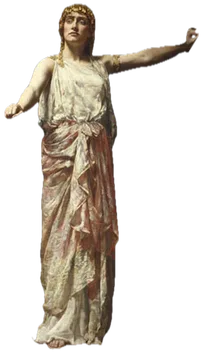
Wife · Sources
that I would not accept the glorious ransom for the girl, the daughter of Chryses, since I much prefer to keep her in my home. For certainly I prefer her to Clytemnestra, my wedded wife, since she is not inferior to her, either in form or in stature, or in mind, or in any handiwork.
Il. 1.113
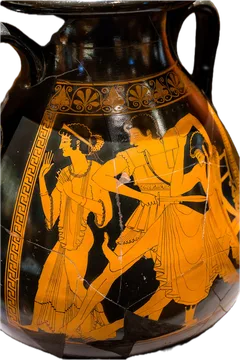
Daughter · Sources
that be fairest after Argive Helen. And if we return to Achaean Argos, the richest of lands, he shall be my son, and I will honour him even as Orestes that is reared in all abundance, my son well-beloved. Three daughters have I in my well-builded hall,Chrysothemis, and Laodice, and Iphianassa; of these let him lead to the house of Peleus which one he will, without gifts of wooing, and I will furthermore give a dower full rich, such as no man ever yet gave with his daughter. And seven well-peopled cities will I give him,
that is reared in all abundance, his son well-beloved. Three daughters has he in his well-builded hall, Chrysothemis, and Laodice, and Ophianassa; of these mayest thou lead to the house of Peleus which one thou wilt, without gifts of wooing; and he will furthermore give a dower
Il. 9.144–145 · Il. 9.286–287
Son · Sources
that be fairest after Argive Helen. And if we return to Achaean Argos, the richest of lands, he shall be my son, and I will honour him even as Orestes that is reared in all abundance, my son well-beloved. Three daughters have I in my well-builded hall,
what time we Achaeans be dividing the spoil, and heap up thy ship with store of gold and bronze, and thyself choose twenty Trojan women that be fairest after Argive Helen. And if we return to Achaean Argos, richest of lands, thou shalt be his son, and he will honour thee even as Orestes,that is reared in all abundance, his son well-beloved. Three daughters has he in his well-builded hall, Chrysothemis, and Laodice, and Ophianassa; of these mayest thou lead to the house of Peleus which one thou wilt, without gifts of wooing; and he will furthermore give a dower
Il. 9.142–143 · Il. 9.284–285
See all 29
Guardian · Sources
‘Thou sleepest, son of wise-hearted Atreus, the tamer of horses. To sleep the whole night through beseemeth not a man that is a counsellor, to whom a host is entrusted, and upon whom rest so many cares. But now, hearken thou quickly unto me, for I am a messenger to thee from Zeus, who, far away though he be, hath exceeding care for thee and pity.
Il. 2.64
Ancestor · Sources
than this I have in mind from old even until now, even since the day when thou, O king sprung from Zeus, didst take from the hut of the angry Achilles the damsel Briseïs and go thy way—in no wise according to our will. Nay, for I, mine own self, urgently sought to dissuade thee; but thou didst yield to thy lordly spirit,
Il. 9.106
Connection · Sources
And let him submit himself unto me, seeing I am more kingly, and avow me his elder in years. Then made answer the horseman, Nestor of Gerenia: Most glorious son of Atreus, Agamemnon, king of men, the gifts that thou offerest the prince Achilles may no man any more condemn.
Il. 9.160–161
Opponent · Sources
openly, to the end that other Achaeans also may be wroth, if haply he hopeth to deceive yet some other of the Danaans, seeing he is ever clothed in shamelessness. Yet not in my face would he dare to look, though he have the front of a dog. Neither counsel will I devise with him nor any work,
all this thou seemest to speak almost after mine own mind; but my heart swelleth with wrath whenso I think of this, how the son of Atreus hath wrought indignity upon me amid the Argives, as though I were some alien that had no rights. Howbeit do ye go and declare my message,
Il. 9.374 · Il. 9.647–648
Connection · Sources
And he was husband's brother to shameless me, as sure as ever such a one there was. So spake she, and the old man was seized with wonder, and said: Ah, happy son of Atreus, child of fortune, blest of heaven; now see I that youths of the Achaeans full many are made subject unto thee. Ere now have I journeyed to the land of Phrygia, rich in vines,
Il. 3.180
Killed by Agamemnon · Sources
Агамемнон напал на Иса и Антифа, поразил Антифа в ухо мечом и низверг с колесницы — Антиф убит Агамемноном.
gleaming with their naked breasts, when he had stripped off their tunics, and went on to slay Isus and Antiphus, two sons of Priam, one a bastard and one born in wedlock, the twain being in one car: the bastard the reins, but glorious Antiphus stood by his side to fight. These twain had Achilles on a timebound with fresh withes amid the spurs of Ida, taking them as they were herding their sheep, and had set them free for a ransom. But now the son of Atreus, wide-ruling Agamemnon, struck Isus on the breast above the nipple with a cast of his spear, and Antiphus he smote hard by the ear with his sword, and cast him from the chariot.Then he made haste to strip from the twain their goodly battle-gear, knowing them full well, for he had seen them before by the swift ships, when Achilles, fleet of foot brought them from Ida. And as a lion easily crusheth the little ones of a swift hind, when he hath seized them with his strong teeth,
Il. 11.101–110
Killed by Agamemnon · Sources
11.101–110: Агамемнон нападает на Иса и Антифа; смерть Иса названа в 11.107–110.
gleaming with their naked breasts, when he had stripped off their tunics, and went on to slay Isus and Antiphus, two sons of Priam, one a bastard and one born in wedlock, the twain being in one car: the bastard the reins, but glorious Antiphus stood by his side to fight. These twain had Achilles on a timebound with fresh withes amid the spurs of Ida, taking them as they were herding their sheep, and had set them free for a ransom. But now the son of Atreus, wide-ruling Agamemnon, struck Isus on the breast above the nipple with a cast of his spear, and Antiphus he smote hard by the ear with his sword, and cast him from the chariot.Then he made haste to strip from the twain their goodly battle-gear, knowing them full well, for he had seen them before by the swift ships, when Achilles, fleet of foot brought them from Ida. And as a lion easily crusheth the little ones of a swift hind, when he hath seized them with his strong teeth,
Il. 11.101–110
Killed by Agamemnon · Sources
В стихах 11.238–241 Агамемнон вырывает копьё из рук Антенорова сына, ударяет его мечом по шее, и тот сваливается на землю; описание прямо называет Ифидаманта погибшим от руки Агамемнона.
either of the Trojans themselves or of their famed allies. It was Iphidamas, son of Antenor, a valiant man and tall, that was nurtured in deep-soiled Thrace, mother of flocks, and Cisseus reared him in his house while he was yet but a little child, even his mother's father, that begat fair-cheeked Theano.
Il. 11.221–223
Killed by Agamemnon · Sources
В 11.259–261 Агамемнон сбивает Коона копьём и срубает ему голову; убийство прямо названо.
yet even so he ceased not from battle and war, but, wind-nurtured spear in hand, leapt upon Coön. Now he was eagerly drawing by the foot Iphidamas, his own brother, begotten of the one father, and was calling upon all the bravest, but even as he dragged him through the throng Agamemnon smote him with a thrust of his bronze-shod spear beneath his bossed shield,and loosed his limbs; and he drew near and struck off his head over Iphidamas. There then the sons of Antenor beneath the hands of the king, the son of Atreus, fulfilled the measure of their fate, and went down to the house of Hades. But Agamemnon ranged along the ranks of the other warriors
Il. 11.256–261
Ally · Sources
To him then Idomeneus, leader of the Cretans, made answer, saying: Son of Atreus, of a surety will I be to thee a trusty comrade, even as at the first I promised and gave my pledge; but do thou urge on the other long-haired Achaeans that we may fight with speed, seeing the Trojans have made of none effect our oaths.
Il. 4.266–267
Killed by Agamemnon · Sources
Описание прямо называет Гипполоха убитым Агамемноном; 11.143–147: Агамемнон сбивает Писандра, а Гипполоха низлагает, отрубает руки и голову.
had come on an embassage with godlike Odysseus, bade slay him then and there, neither suffer him to return to the Achaeans, now of a surety shall ye pay the price of your father's foul outrage. He spake, and thrust Peisander from his chariot to the ground, smiting him with his spear upon the breast, and backward was he hurled upon the earth.But Hippolochus leapt down, and him he slew upon the ground, and shearing off his arms with the sword, and striking off his head, sent him rolling, like a round stone, amid the throng. These then he let be, but where chiefly the battalions were being driven in rout, there leapt he in, and with him other well-greaved Achaeans.
Il. 11.143–147
Killed by Agamemnon · Sources
Стихи 11.143–144 прямо описывают, как Агамемнон сбивает Писандра с колесницы ударом пики в грудь, и тот падает навзничь.
had come on an embassage with godlike Odysseus, bade slay him then and there, neither suffer him to return to the Achaeans, now of a surety shall ye pay the price of your father's foul outrage. He spake, and thrust Peisander from his chariot to the ground, smiting him with his spear upon the breast, and backward was he hurled upon the earth.
Il. 11.143–144
Appearing to Agamemnon in a dream · Sources
Стихи 2.18–22 прямо описывают, как Сон Обманный направился к Агамемнону, принял облик Нестора и обратился к нему; устойчивое отношение обманного посланничества, тип other.
since Hera hath Vent the minds of all by her supplication, and over the Trojans hang woes. So spake he, and the Dream went his way, when he had heard this saying. Forthwith he came to the swift ships of the Achaeans, and went his way to Agamemnon, son of Atreus, and found him sleeping in his hut, and over him was shed ambrosial slumber.So he took his stand above his head, in the likeness of the son of Neleus, even Nestor, whom above all the elders Agamemnon held in honour; likening himself to him, the Dream from heaven spake, saying: Thou sleepest, son of wise-hearted Atreus, the tamer of horses. To sleep the whole night through beseemeth not a man that is a counsellor,
Il. 2.18–22
Connection · Sources
nor take heed of your wrath. But I will threaten you thus: as Phoebus Apollo takes from me the daughter of Chryses, her with my ship and my companions I will send back, but I will myself come to your tent and take the fair-cheeked Briseis, your prize, so that you will understand
Il. 1.182
Charioteer · Sources
В стихах 4.227–229 Евримедонт назван возницей Атрида и держит коней в стороне по приказу Агамемнона; описание прямо называет его возницей Агамемнона.
but full eager for battle where men win glory. His horses and his chariot adorned with bronze he let be, and his squire, Eurymedon, son of Peiraeus' son Ptolemaeus, kept the snorting steeds withdrawn apart; and straitly did Agamemnon charge him to have them at hand, whenever
Il. 4.227–229
Killed by Agamemnon · Sources
В 11.95–99 Агамемнон ударяет Оилея пикой в лоб, мозг Оилея смешала пика; убийство прямо названо.
but even as he rushed straight upon him the king smote him on the forehead with his sharp spear, nor was the spear stayed by his helm, heavy with bronze, but passed through it and through the bone, and all his brain was spattered about within; so stayed he him in his fury. These then did Agamemnon, king of men, leave there,
Il. 11.95–99
Herald · Sources
Killed by Agamemnon · Sources
Агамемнон вонзает Адрасту пику в утробу, и тот опрокидывается — убийство Адраста.
but let all perish together out of Ilios, unmourned and unmarked. So spake the warrior, and turned his brother's mind, for he counselled aright; so Menelaus with his hand thrust from him the warrior Adrastus, and lord Agamemnon smote him on the flank, and he fell backward; and the son of Atreus
Il. 6.62–64
Killed by Agamemnon · Sources
Описание прямо называет Биенора убитым Агамемноном; 11.91–93: Агамемнон ринулся вперёд и сверг Биенора, а затем и его возницу.
even then the Danaans by their valour brake the battalions, calling to their fellows through the lines. And among them Agamemnon rushed forth the first and slew a warrior, Bienor, shepherd of the host,—himself and after him his comrade, Oïleus, driver of horses. Oïleus verily leapt down from his chariot and stood and faced him,
Il. 11.91–93
Connection · Sources
Стихи 11.19–23 прямо называют броню, поднесённую в подарок Агамемнону Киниром; устойчивое отношение дара/гостеприимства.
But the son of Atreus shouted aloud, and bade the Argives array them for battle, and himself amid them did on the gleaming bronze. The greaves first he set about his legs; beautiful they were, and fitted with silver ankle-pieces; next he did on about his chest the corseletthat on a time Cinyras had given him for a guest-gift. For he heard afar in Cyprus the great rumour that the Achaeans were about to sail forth to Troy in their ships, wherefore he gave him the breastplate to do pleasure to the king. Thereon verily were ten bands of dark cyanus,
Il. 11.19–23
Connection · Sources
The mare had Anchises' son Echepolus given to Agamemnon without price, to the end that he might not follow him to windy Ilios, but might abide at home and take his joy; for great wealth had Zeus given him, and he dwelt in spaclous Sicyon:
Il. 23.296–299
Killed by Agamemnon · Sources
В стихе 6.33 царь Агамемнон назван вместе с Елатом среди убитых, а 6.34–35 уточняют, что Елат жил в Педасе у Сатниоента; описание прямо называет Елата убитым Агамемноном.
and Odysseus with his spear of bronze laid low Pidytes of Percote, and Teucer goodly Aretaon. And Antilochus, son of Nestor, slew Ablerus with his bright spear, and the king of men, Agamemnon, slew Elatus that dwelt in steep Pedasus by the banks of fair-flowing Satnioeis.And the warrior Leïtus slew Phylacus, as he fled before him; and Eurypylus laid Melanthius low. But Adrastus did Menelaus, good at the warcry, take alive; for his two horses, coursing in terror over the plain, became entangled in a tamarisk bough, and breaking the curved car at the end of the pole,
Il. 6.33–35
Herald · Sources
Killed by Agamemnon · Sources
В 5.38–42 Агамемнон сбивает Одия с колесницы, всаживает пику в спину и тот падает; убийство прямо названо.
So spake she, and led furious Ares forth from the battle. Then she made him to sit down on the sandy banks of Scamander, and the Trojans were turned in flight by the Danaans. Each one of the captains slew his man; first the king of men, Agamemnon, thrust from his car the leader of the Halizones, great Odius,for as he turned first of all to flee he fixed his spear in his back between the shoulders and drave it through his breast; and he fell with a thud, and upon him his armour clanged. And Idomeneus slew Phaestus, son of Borus the Maeonian, that had come from deep-soiled Tarne.
Il. 5.38–42
In art

Charles-Antoine Coypel. Fury of Achilles. собрание не указано. Public domain. https://commons.wikimedia.org/wiki/File%3ACoypel%2C_Charles-Antoine_-_Fury_of_Achilles_-_1737.jpg
Photograph / reproduction: Charles-Antoine Coypel
Photograph / reproduction date: 1737
Charles-Antoine Coypel. Fury of Achilles. собрание не указано. Public domain. https://commons.wikimedia.org/wiki/File%3ACoypel%2C_Charles-Antoine_-_Fury_of_Achilles_-_1737.jpg
Photograph / reproduction: Charles-Antoine Coypel
Photograph / reproduction date: 1737

Peter Paul Rubens. The wrath of Achilles .. собрание не указано. CC BY-SA 2.0. https://commons.wikimedia.org/wiki/File%3AWLANL_-_Quistnix%21_-_Museum_Boijmans_van_Beuningen_-_Achilles_vertoornd_op_Agamemnon%2C_Rubens.jpg
Photograph / reproduction: Peter Paul Rubens
Photograph / reproduction date: between 1630 and 1635

Askelladd. Achilles' Sacrifice of Trojan Prisoners. собрание не указано. CC0. https://commons.wikimedia.org/wiki/File%3AAchilles%27_Sacrifice_of_Trojan_Prisoners.jpg
Photograph / reproduction: Askelladd
Photograph / reproduction date: 350-330 BC
Askelladd. Achilles' Sacrifice of Trojan Prisoners. собрание не указано. CC0. https://commons.wikimedia.org/wiki/File%3AAchilles%27_Sacrifice_of_Trojan_Prisoners.jpg
Photograph / reproduction: Askelladd
Photograph / reproduction date: 350-330 BC

Michel Martin Drolling. Wrath of Achilles2. собрание не указано. Public domain. https://commons.wikimedia.org/wiki/File%3AWrath_of_Achilles2.jpg
Photograph / reproduction: Michel Martin Drolling
Photograph / reproduction date: 1810
Michel Martin Drolling. Wrath of Achilles2. собрание не указано. Public domain. https://commons.wikimedia.org/wiki/File%3AWrath_of_Achilles2.jpg
Photograph / reproduction: Michel Martin Drolling
Photograph / reproduction date: 1810

Peter Paul Rubens. The wrath of Achilles .. собрание не указано. Public domain. https://commons.wikimedia.org/wiki/File%3APeter_Paul_Rubens_164.jpg
Photograph / reproduction: Peter Paul Rubens
Photograph / reproduction date: between 1630 and 1635
Peter Paul Rubens. The wrath of Achilles .. собрание не указано. Public domain. https://commons.wikimedia.org/wiki/File%3APeter_Paul_Rubens_164.jpg
Photograph / reproduction: Peter Paul Rubens
Photograph / reproduction date: between 1630 and 1635

Anonymous Unknown author. Streit des Agamemnon mit Achilles um die schöne Briseis. собрание не указано. Public domain. https://commons.wikimedia.org/wiki/File%3AStreit_des_Agamemnon_mit_Achilles_um_die_sch%C3%B6ne_Briseis.png
Photograph / reproduction: AnonymousUnknown author
Photograph / reproduction date: 18th century


Peter Paul Rubens. The Wrath of Achilles. Museum Boijmans Van Beuningen. Public domain. https://www.wikidata.org/wiki/Q19925629
Peter Paul Rubens. The Wrath of Achilles. Museum Boijmans Van Beuningen. Public domain. https://www.wikidata.org/wiki/Q19925629
See all 171
Sources and verification
The character is matched to the catalogue.
- Wikipedia · Agamemnon · CC BY-SA 4.0
Excerpt; remaining sentences omitted.
Reference material remains distinct from the poem’s assertions. Characters who share a name retain separate pages.