Leitus
Mortal man
In Greek mythology, Leitus (; Ancient Greek: Λήϊτος, romanized: Leïtos, lit. 'of the people' or 'public') was a leader of the Boeotians and admiral of 12 ships which sailed against Troy.
Explore on the graph- Mentions
- 4
- Connected characters
- 1
- Books
- 4


Mentions in the Iliad
A. T. Murray, Loeb Classical Library, Harvard University Press, 1924 · Homer, Iliad with an English Translation · CC BY-SA 3.0 US
“and Arcesilaus and Prothoënor and Clonius; these were they that dwelt in Hyria and rocky Aulis and Schoenus and Scolus and Eteonus with its many ridges, Thespeia, Graea, and spacious Mycalessus; and that dwelt about Harma and Eilesium and Erythrae;”
“And the warrior Leïtus slew Phylacus, as he fled before him; and Eurypylus laid Melanthius low. But Adrastus did Menelaus, good at the warcry, take alive; for his two horses, coursing in terror over the plain, became entangled in a tamarisk bough, and breaking the curved car at the end of the pole,”
“lightly passing among them, aroused their strong battalions. To Teucer first he came and to Leïtus, to bid them on, and to the warrior Peneleos, and Thoas and Deïpyrus, and Meriones and Antilochus, masters of the war-cry; to these he spake, spurring them on with winged words:”
“but the spear-point of Polydamas cut even to the bone, for he it was that cast at him from nigh at hand. And Leitus again, the son of great-souled Alectryon, did Hector wound in close fight, on the hand at the wrist, and made him cease from fighting: and casting an anxious glance about him he shrank back, seeing he no more had hope that bearing spear in hand he might do battle with the Trojans.”
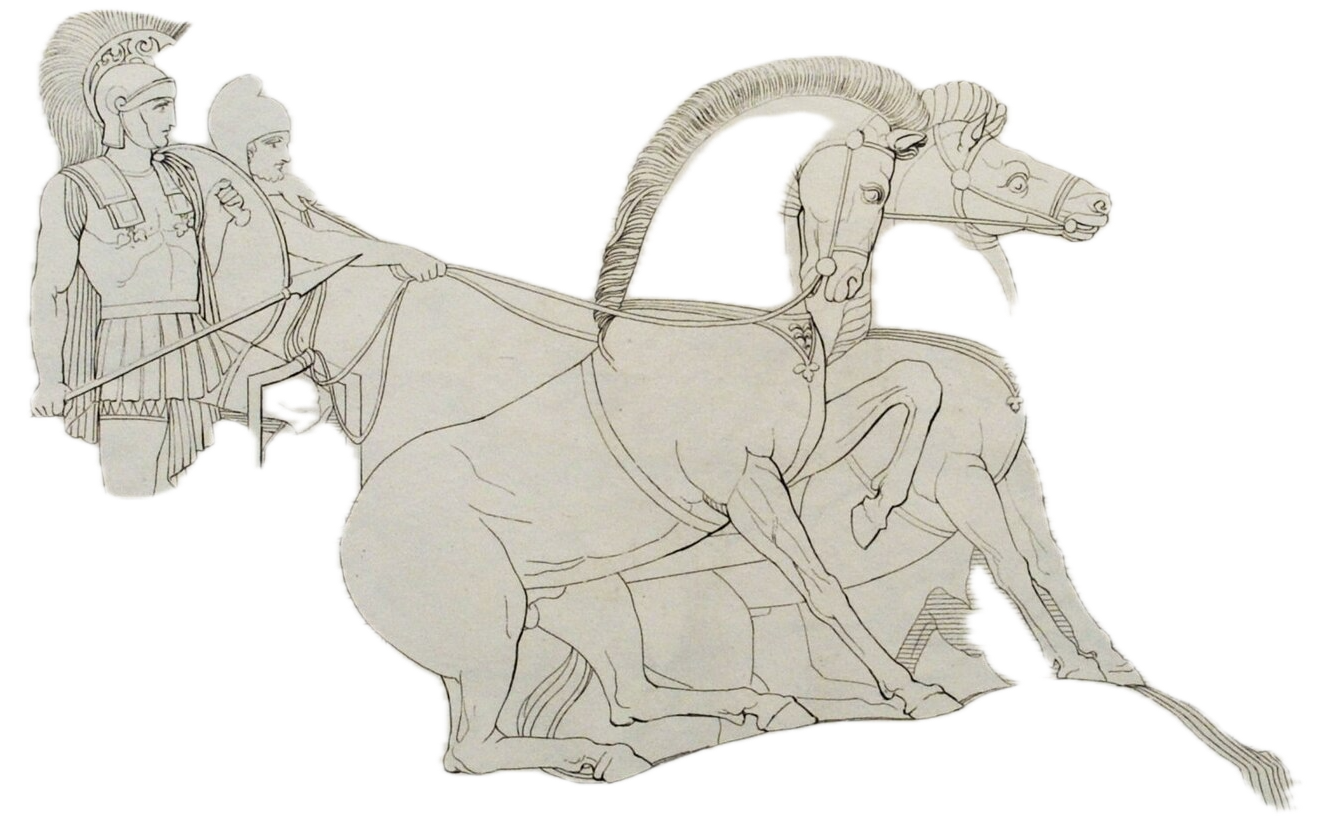

See all 4
Connections
Father · Sources
Father · Sources
but the spear-point of Polydamas cut even to the bone, for he it was that cast at him from nigh at hand. And Leitus again, the son of great-souled Alectryon, did Hector wound in close fight, on the hand at the wrist, and made him cease from fighting: and casting an anxious glance about him he shrank back, seeing he no more had hope that bearing spear in hand he might do battle with the Trojans.
Il. 17.602
See all 1
In art
See all 0
There is nothing in this section yet.
04 / PROVENANCE
Sources and verification
The character is matched to the catalogue.
- Wikipedia · Leitus · CC BY-SA 4.0
Excerpt; remaining sentences omitted.
Reference material remains distinct from the poem’s assertions. Characters who share a name retain separate pages.