Patroclus
Mortal man
Patroclus (; Ancient Greek: Πάτροκλος, romanized: Pátroklos, lit. 'glory of the father') was a Greek hero of the Trojan War and close companion of the hero Achilles in Greek mythology. Patroclus is an important character in Homer's Iliad.
Explore on the graph





- Mentions
- 129
- Connected characters
- 17
- Books
- 14


Mentions in the Iliad
A. T. Murray, Loeb Classical Library, Harvard University Press, 1924 · Homer, Iliad with an English Translation · CC BY-SA 3.0 US
“The son of Peleus went his way to his huts and his balanced ships together with the son of Menoetius, and with his men; but the son of Atreus launched a swift ship on the sea, and chose for it twenty rowers, and drove on board a hecatomb for the god, and brought the fair-cheeked daughter of Chryses and set her in the ship;”

“who sent you forth for the sake of the girl, Briseis. But come, Patroclus, sprung from Zeus, bring forth the girl, and give her to them to lead away. However, let these two themselves be witnesses before the blessed gods and mortal men, and before him, that ruthless king, if hereafter”

“and led forth from the hut the fair-cheeked Briseis, and gave her to them to lead away. So the two went back beside the ships of the Achaeans, and with them, all unwilling, went the woman. But Achilles burst into tears, and withdrew apart from his comrades, and sat down on the shore of the grey sea, looking forth over the wine-dark deep.”
“on the day when at the sterns of the ships they shall be fighting in grimmest stress about Patroclus fallen; for thus it is ordained of heaven. But of thee I reck not in thine anger, no, not though thou shouldst go to the nethermost bounds of earth and sea, where abide Iapetus and Cronos,”
“and Patroclus alone sat over against him in silence, waiting until Aeacus' son should cease from singing. But the twain came forward and goodly Odysseus led the way, and they took their stand before his face; and Achilles leapt up in amazement with the lyre in his hand, and left the seat whereon he sat;”
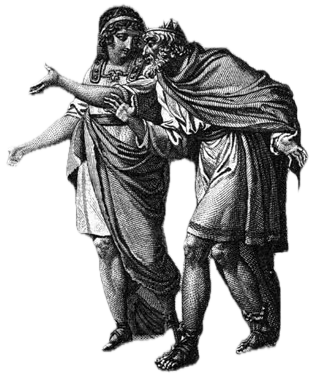
“and made them sit on couches and rugs of purple; and forthwith he spake to Patroclus, that was near: Set forth a larger bowl, thou son of Menoetius; mingle stronger drink, and prepare each man a cup, for these be men most dear, that are beneath my roof. So he spake, and Patroclus gave ear to his dear comrade. He cast down a great fleshing-block in the light of the fire and laid thereon a sheep's back and a fat goat's, and the chine of a great hog withal, rich with fat. And Automedon held them for him, while goodly Achilles carved.”
See all 128
“I deem that Hector will be stayed, eager though he be for battle. So spake he, but they took each man a two handled cup, and when they had made libation went their way along the lines of ships, and Odysseus led. But Patroclus bade his comrades and the handmaids spread forthwith a thick couch for Phoenix;”

“even the daughter of Phorbas, fair-cheeked Diomede. And Patroclus laid him down on the opposite side, and by him in like manner lay fair-girdled Iphis, whom goodly Achilles had given him when he took steep Scyrus, the city of Enyeus. But when the others were now come to the huts of the son of Atreus,”
“for Achilles was standing by the stern of his ship, huge of hull, gazing upon the utter toil of battle and the tearful rout. And forthwith he spake to his comrade Patroclus, calling to him from beside the ship; and he heard, and came forth from the hut like unto Ares; and this to him was the beginning of evil.”
“for need has come upon them that may no longer be borne. Yet go now, Patroclus, dear to Zeus, and ask Nestor who it is that he bringeth wounded from out the war. Of a truth from behind he seemeth in all things like Machaon, son of Asclepius, but I saw not the eyes of the man,”
“with a brazen grater, and sprinkled thereover white barley meal; and she bade them drink, when she had made ready the potion. Then when the twain had drunk, and sent from them parching thirst, they took delight in tales, speaking each to the other; and lo, Patroclus stood at the doors, a godlike man.”
“Then made answer the horseman Nestor of Gerenia: Wherefore now doth Achilles thus have pity for the sons of the Achaeans, as many as have been smitten with missiles? Nor knoweth he at all what grief hath arisen throughout the camp; for the best men lie among the ships smitten by darts or wounded with spear-thrusts.”
“Ah, friend, of a surety Menoetius thus laid charge upon thee on the day when he sent thee forth from Phthia to Agamemnon. And we twain were within, I and goodly Odysseus, and in the halls we heard all things, even as he gave thee charge. For we had come to the well-builded house of Peleus,”
“but to thee did Menoetius, son of Actor, thus give command: ‘My child, in birth is Achilles nobler than thou, but thou art the elder though in might he is the better far. Yet do thou speak to him well a word of wisdom and give him counsel, and direct him; and he will obey thee to his profit.’”
“and the warlike sons of the Achaeans may take breath, wearied though they be; for scant is the breathing-space in battle. And lightly might ye that are unwearied drive men that are wearied with battle back toward the city from the ships and the huts. So spake he, and roused the heart in the breast of Patroclus,”
“will the Achaeans haply still hold back mighty Hector, or will they now perish, slain beneath his spear? And to him again made answer the wounded Eurypylus: No longer, Zeus-born Patroclus, will there be any defence of the Achaeans, but they will fling themselves upon the black ships.”
“So then amid the huts the valiant son of Menoetius was tending the wounded Eurypylus, but the others, Argives and Trojans, fought on in throngs, nor were the ditch of the Danaans and their wide wall above long to protect them,”
“and breathe strength into him again, and make him forget the pains that now distress his heart; and let him drive the Achaeans back once more, when he has roused in them craven panic; so shall they flee and fall among the many-benched ships of Achilles, son of Peleus, and he shall send forth his comrade”
“And Patroclus, so long as the Achaeans and Trojans were fighting about the wall aloof from the swift ships, even so long sat in the hut of kindly Eurypylus, and was making him glad with talk, and on his grievous wound was spreading simples to assuage his dark pangs.”
“Thus then they were warring around the well-benched ship, but Patroclus drew nigh to Achilles, shepherd of the host, shedding hot tears, even as a fountain of dark water that down over the face of a beetling cliff poureth its dusky stream;”
“Then with a heavy groan, didst thou make answer, O knight Patroclus: O Achilles, son of Peleus, far the mightiest of the Achaeans, be not wroth; so great a sorrow hath overmastered the Achaeans. For verily all they that aforetime were bravest, lie among the ships smitten by darts or wounded with spear-thrusts.”
“drive men that are wearied with the battle back to the city from the ships and the huts. So spake he in prayer, fool that he was, for in sooth it was to be his own evil death and fate for which he prayed. Then, his heart deeply stirred, spake to him swift-footed Achilles: Ah me, Zeus-born Patroclus, what a thing hast thou said!”
“Yet even so, Patroclus, in warding destruction from the ships fall thou upon them mightily, lest verily they burn the ships with blazing fire and rob the Greeks of their desired return. Howbeit do thou hearken, that I may put in thy mind the sum of my counsel, to the end that thou mayest win me great recompense and glory”
“that alone we might loose the sacred diadem of Troy. On this wise spake they one to the other, but Aias no longer abode, for he was sore beset with darts; the will of Zeus was overmastering him, and the lordly Trojans with their missiles; and terribly did the bright helm about his temples”
“smote both his thighs and spake to Patroclus: Up now, Zeus-born Patroclus, master of horsemen. Lo, I see by the ships the rush of consuming fire. Let it not be that they take the ships and there be no more escaping! Do on my armour with all haste, and I will gather the host.”
“round about the valiant squire of the swift-footed son of Aeacus. And among them all stood warlike Achilles, urging on both horses and men that bear the shield. Fifty were the swift ships which Achilles, dear to Zeus, led to Troy,”
“buckler pressed on buckler, helm upon helm, and man on man. The horse-hair crests on the bright helmet-ridges touched each other, as the men moved their heads, in such close array stood they one by another. And in the front of all two warriors arrayed themselves for war, even Patroclus and Automedon, both of one mind,”
“and a part the Father granted him, and a part denied. That Patroclus should thrust back the war and battle from the ships he granted; but that he should return safe from out the battle he denied. Achilles then, when he had poured libation and made prayer to father Zeus, went again into his tent, and laid the cup away in the chest, and came forth and”
“So saying, he roused the strength and spirit of every man, and on the Trojans they fell all in a throng, and round about them the ships echoed wondrously beneath the shouting of the Achaeans. But when the Trojans saw the valiant son of Menoetius, himself and his squire, shining in their armour,”
“and backward in the dust he fell with a groan, and about him his comrades were driven in rout, even the Paeonians, for upon them all had Patroclus sent panic, when he slew their leader that was pre-eminent in fight. From out the ships then he drave them, and quenched the blazing fire. And half-burnt the ship was left there,”
“And in the trench many pairs of swift horses, drawers of chariots, brake the pole at the end, and left the chariots of their lords. But Patroclus followed after, calling fiercely to the Danaans, with purpose of evil toward the Trojans, while they with shouting and in flight filled all the ways, now that their ranks were broken;”
“and many a hillside do the torrents furrow deeply, and down to the dark sea they rush headlong from the mountains with a mighty roar, and the tilled fields of men are wasted; even so mighty was the roar of the mares of Troy as they sped on. But when Patroclus had cut off the foremost battalions, he hemmed them”
“being laid low beneath the hands of Patroclus, son of Menoetius, he called aloud, upbraiding the godlike Lycians: Shame, ye Lycians, whither do ye flee? Now be ye swift to fight; for I myself will meet this man, that I may know who he is that prevaileth here, and verily hath wrought the Trojans much mischief,”
“even so with cries rushed they one against the other. And the son of crooked-counselling Cronos took pity when he saw them, and spake to Hera, his sister and his wife: Ah, woe is me, for that it is fated that Sarpedon, dearest of men to me, be slain by Patroclus, son of Menoetius!”
“shewing honour to his dear son—his own son whom Patroclus was about to slay in the deep-soiled land of Troy, far from his native land. Now when they were come near, as they advanced one against the other, then verily did Patroclus smite glorious Thrasymelus, that was the valiant squire of the prince Sarpedon;”
“and the other two were righted, and strained at the reins; and the two warriors came together again in soul-devouring strife. Then again Sarpedon missed with his bright spear, and over the left shoulder of Patroclus went the point of the spear and smote him not.”
“if so be the Achaeans shall spoil me of my armour, now that I am fallen amid the gathering of the ships. Nay, hold thy ground valiantly, and urge on all the host. Even as he thus spake the end of death enfolded him, his eyes alike and his nostrils; and Patroclus, setting his foot upon his breast, drew the spear from out the flesh, and the midriff followed therewith;”
“are wasting their lives away, yet thou carest not to aid them. Low lies Sarpedon, leader of the Lycian shieldmen, he that guarded Lycia by his judgments and his might. Him hath brazen Ares laid low beneath the spear of Patroclus. Nay, friends, take your stand beside him, and have indignation in heart,”
“was ever the stay of their city, albeit he was a stranger from afar; for much people followed with him, and among them he was himself pre-eminent in fight. And they made straight for the Danaans full eagerly, and Hector led them, in wrath for Sarpedon's sake. But the Achaeans were urged on by Patroclus, of the shaggy heart, son of Menoetius.”
“and he fell headlong upon the corpse, and death, that slayeth the spirit, was shed about him. Then over Patroclus came grief for his slain comrade, and he charged through the foremost fighters like a fleet falcon that driveth in flight daws and starlings; even so straight against the Lycians, O Patroclus, master of horsemen,”
“and against the Trojans didst thou charge, and thy heart was full of wrath for thy comrade. And he smote Sthenelaus, the dear son of Ithaemenes, on the neck with a stone, and brake away therefrom the sinews; and the foremost fighters and glorious Hector gave ground. Far as is the flight of a long javelin,”
“shouldst thou yield glory to me, and thy soul to Hades of the goodly steeds. So spake he, but the valiant son of Menoetius rebuked him, saying: Meriones, wherefore dost thou, that art a man of valour, speak on this wise? Good friend, it is not for words of reviling that the Trojans will give ground from the corpse; ere that shall the earth hold many a one.”
“turn his bright eyes from the fierce conflict, but ever looked down upon them, and debated in heart, pondering much about the slaying of Patroclus, whether in the fierce conflict even there over godlike Sarpedon, glorious Hector”
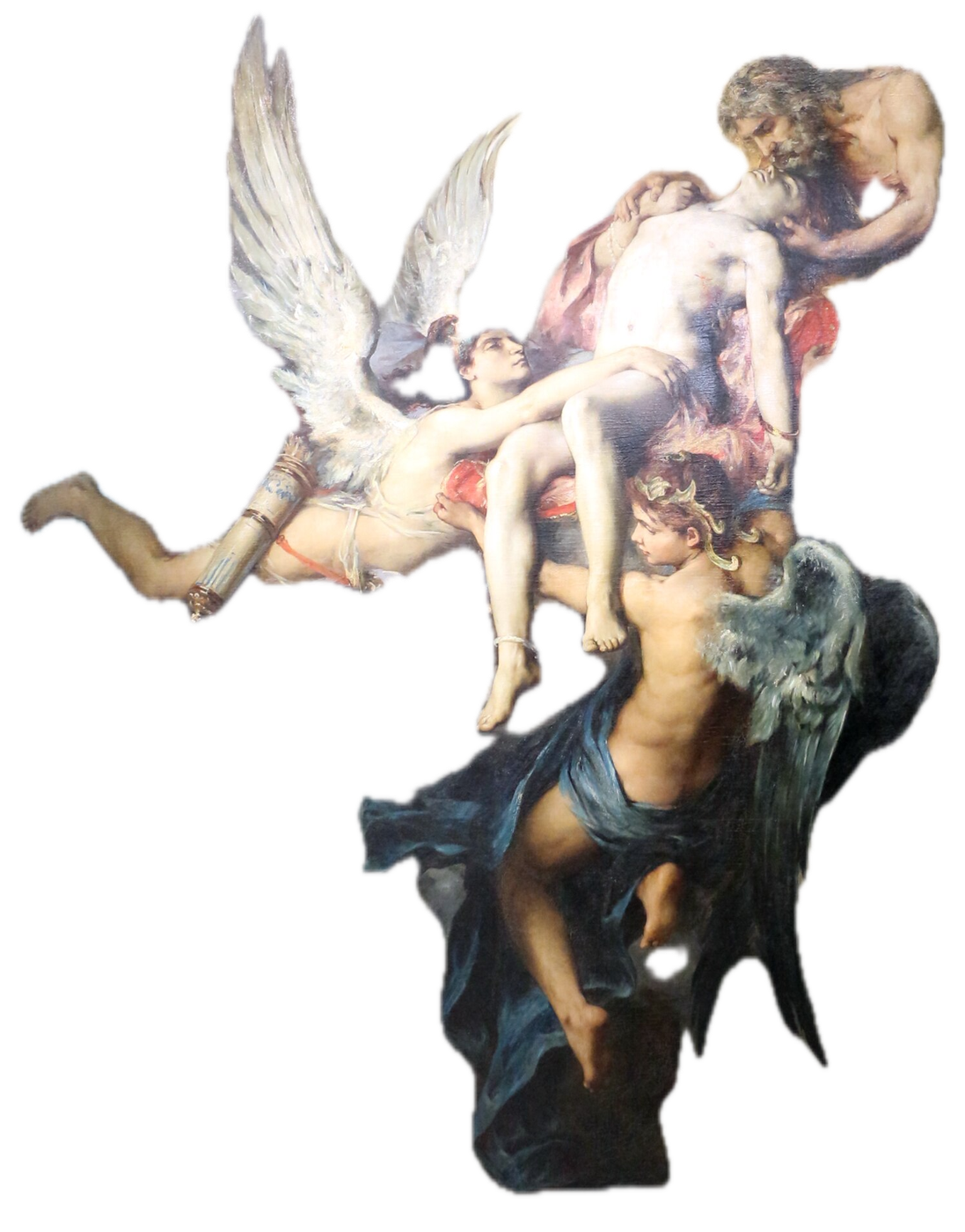
“and anointed him with ambrosia, and clothed him about with immortal raiment, and gave him to swift conveyers to bear with them, even to the twin brethren, Sleep and Death, who set him speedily in the rich land of wide Lycia. But Patroclus with a call to his horses and to Automedon,”
“pressed after the Trojans and Lycians, and was greatly blinded in heart, fool that he was! for had he observed the word of the son of Peleus, he would verily have escaped the evil fate of black death. But ever is the intent of Zeus stronger than that of men, for he driveth even a valiant man in rout, and robbeth him of victory”
“But when for the fourth time he rushed on like a god, then with a terrible cry Apollo spake to him winged words: Give back, Zeus-born Patroclus. It is not fated, I tell thee, that by thy spear the city of the lordly Trojans shall be laid waste, nay, nor by that of Achilles, who is better far than thou.”
“and vouchsafed glory to the Trojans and to Hector. But Hector let be the other Danaans, neither sought to stay them, but drave his strong-hoofed horses against Patroclus; and Patroclus over against him leapt from his chariot to the ground with a spear in his left hand,”
“So saying he made for the warrior Cebriones with the rush of a lion that, while he wasteth the farm-stead, hath been smitten on the breast, and his own valour bringeth him to ruin; even so upon Cebriones, O Patroclus, didst thou leap furiously.”
“then verily beyond their portion the Achaeans proved the better. Forth from out the range of darts they drew the warrior Cebriones from the battle-din of the Trojans, and stripped the armour from his shoulders; and Patroclus with fell intent leapt upon the Trojans. Thrice then leapt he upon them, the peer of swift Ares,”
“for enfolded in thick mist did he meet him; and Apollo took his stand behind him, and smote his back and broad shoulders with the flat of his hand, and his eyes were made to whirl. And from his head Phoebus Apollo smote the helmet, that rang as it rolled”
“from their cars at his first coming with his chariot to learn his lesson of war. He it was that first hurled his spear at thee, knight Patroclus, yet subdued thee not; but he ran back again and mingled with the throng, when he had drawn forth the ashen spear from the flesh, and he abode not”
“and with the spear I myself am pre-eminent among the war-loving Trojans, even I that ward from them the day of doom; but for thee, vultures shall devour thee here. Ah, poor wretch, even Achilles, for all his valour, availed thee not, who, I ween, though himself abiding behind, laid strait command upon thee, as thou wentest forth: Come not back, I charge thee, Patroclus, master of horsemen,”
“Even as he thus spake the end of death enfolded him; and his soul fleeting from his limbs was gone to Hades, bewailing her fate, leaving manliness and youth. And to him even in his death spake glorious Hector: Patroclus, wherefore dost thou prophesy for me sheer destruction?”
“And the son of Atreus, Menelaus, dear to Ares, failed not to mark that Patroclus had been slain in battle by the Trojans, but fared amid the foremost fighters, harnessed in flaming bronze, and bestrode the dead, as over a calf standeth lowing plaintively its mother, that hath brought forth”
“bestridden Patroclus, and slain the best man of the Trojans, even Panthous' son, Euphorbus, and hath made him cease from his furious valour. So spake he, and went back again, a god into the toil of men. But the soul of Hector was darkly clouded with dread sorrow, and he glanced then along the lines, and forthwith was ware of the one”
“but sore troubled he spake to his own great-hearted spirit: Ah, woe is me! If I leave behind the goodly arms, and Patroclus, that here lieth low for that he would get me recompense, I fear lest many a Danaan wax wroth against me, whosoever beholdeth it. But if for very shame I, that am alone, do battle with Hector and the Trojans,”
“for Achilles, Peleus' son: of ills that were the best. While he pondered thus in mind and heart, meanwhile the ranks of the Trojans came on, and Hector led them. Then Menelaus gave ground backward, and left the corpse, ever turning him about like a bearded lion”
“Now Hector, when he had stripped from Patroclus his glorious armour, sought to hale him away that he might cut the head from off his shoulders with the sharp bronze, and drag off the corpse, and give it to the dogs of Troy; but Aias drew near, bearing his shield, that was like a city wall. Then Hector gave ground backward into the throng of his comrades,”
“homeward will we go, and for Troy shall utter destruction be made plain. Ah, that there were now in the Trojans dauntless courage, that knoweth naught of fear, such as cometh upon men that for their country's sake toil and strive with foemen; then forthwith should we hale Patroclus into Ilios.”
“whether this whole day through I shall prove me a coward, as thou pratest, or shall stay many a one of the Danaans, how fierce soever for valorous deeds he be, from fighting in defence of the dead Patroclus. So saying, he shouted aloud, and called to the Trojans: Ye Trojans, and Lycians, and Dardanians that fight in close combat,”
“With this intent am I wasting the substance of mine own folk that ye may have gifts and food, and thereby I cause the strength of each one of you to wax. Wherefore let every man turn straight against the foe and die haply, or live; for this is the dalliance of war. And whosoever shall hale Patroclus, dead though he be,”
“In no wise have I such dread for the corpse of Patroclus that shall presently glut the dogs and birds of the Trojans, as I have for mine own life, lest some evil befall, and for thine as well, for a cloud of war compasseth everything about, even Hector, and for us is utter destruction plain to see.”
“and the headlands of the shore echo on either hand, as the salt-sea belloweth without; even with such din of shouting came on the Trojans. But the Achaeans stood firm about the son of Menoetius with oneness of heart, fenced about with shields of bronze. And the son of Cronos”
“when he had got among them lightly scattered the battalions of the Trojans, that had taken their stand above Patroclus, and were fain above all to hale him to their city, and get them glory. Now Hippothous, the glorious son of Pelasgian Lethus, was dragging the corpse by the foot through the fierce conflict,”
“and the helm with horse-hair crest was cloven about the spear-point, smitten by the great spear and the strong hand; and the brain spurted forth from the wound along the socket of the spear all mingled with blood. There then his strength was loosed, and from his hands he let fall”
“Wherefore let us make straight for the Danaans, and let it not be at their ease that they bring to the ships the dead Patroclus. So spake he, and leapt forth far to the front of the foremost fighters, and there stood. And they rallied, and took their stand with their faces toward the Achaeans. Then Aeneas wounded with a thrust of his spear Leocritus,”
“as they stood around Patroclus, and before them they held their spears. For Aias ranged to and fro among them and straitly charged every man; not one, he bade them, should give ground backward from the corpse, nor yet fight in front of the rest of the Achaeans as one pre-eminent above them all; but stand firm close beside the corpse and do battle hand to hand.”
“and standing far apart. But those in the midst suffered woes by reason of the darkness and the war, and were sore distressed with the pitiless bronze, even all they that were chieftains. Howbeit two men that were famous warriors, even Thrasymedes and Antilochus, had not yet learned that peerless Patroclus was dead, but deemed that,”
“Such evil toil of men and horses did Zeus on that day strain taut over Patroclus. Nor as yet did goodly Achilles know aught of Patroclus' death, for afar from the swift ships were they fighting beneath the wall of the Trojans. Wherefore Achilles never deemed in his heart”
“and the iron din went up through the unresting air to the brazen heaven. But the horses of the son of Aeacus being apart from the battle were weeping, since first they learned that their charioteer had fallen in the dust beneath the hands of man-slaying Hector. In sooth Automedon, valiant son of Diores,”
“of a dead man or woman, even so abode they immovably with the beauteous car, bowing their heads down to the earth. And hot tears ever flowed from their eyes to the ground, as they wept in longing for their charioteer, and their rich manes were befouled,”
“Alcimedon, what man beside of the Achaeans is of like worth to curb and guide the spirit of immortal steeds, save only Patroclus, the peer of the gods in counsel, while yet he lived? But now death and fate have come upon him. Howbeit”
“and left Aretus lying there stricken to the death. And Automedon, the peer of swift Ares, despoiled him of his armour, and exulted, saying: Verily a little have I eased mine heart of grief for the death of Menoetius' son, though it be but a worse man that I have slain.”
“Then Menelaus, good at the war-cry, answered her: Phoenix, old sire, my father of ancient days, would that Athene may give me strength and keep from me the onrush of darts. So should I be full fain to stand by Patroclus' side and succour him; for in sooth his death hath touched me to the heart.”
“In his likeness Apollo that worketh afar spake unto Hector: Hector, what man beside of the Achaeans will fear thee any more, seeing thou hast thus quailed before Menelaus, who aforetime was a weakling warrior? Now with none to aid him hath he taken the dead from out the ranks of the Trojans and is gone—aye, he hath slain thy trusty comrade,”
“whereby we may both hale away the corpse, and ourselves return home for the joy of our dear comrades, who methinks are sore distressed as they look hither-ward, and deem that the fury and the irresistible hands of man-slaying Hector will not be stayed, but will fall upon the black ships.”
“even so from Patroclus departed Menelaus, good at the war-cry, sorely against his will; for exceedingly did he fear lest the Achaeans in sorry rout should leave him to be a prey to the foemen. And many a charge laid he on Meriones and the Aiantes, saying: Ye Aiantes twain, leaders of the Argives, and thou, Meriones,”
“now let each man remember the kindliness of hapless Patroclus; for to all was he ever gentle while yet he lived, but now death and fate have come upon him. So saying fair-haired Menelaus departed, glancing warily on every side as an eagle, which, men say, hath”
“Antilochus, up, come hither, thou nurtured of Zeus, that thou mayest learn woeful tidings, such as I would had never been. Even now, I ween, thou knowest, for thine eyes behold it, how that a god rolleth ruin upon the Danaans, and that victory is with the men of Troy. And slain is the best man of the Achaeans,”
“that Achilles will come forth, how wroth soever he be against goodly Hector; for in no wise may he fight against the Trojans unarmed as he is. But let us of ourselves devise the counsel that is best, whereby we may both hale away the corpse, and ourselves escape death and fate amid the battle-din of the Trojans.”
“even so the Trojans for a time ever followed on in throngs, thrusting with swords and two-edged spears, but whenso the twain Aiantes would wheel about and stand against them, then would their colour change, and no man dared dart forth and do battle for the dead.”
“while yet I lived the best man of the Myrmidons should leave the light of the sun beneath the hands of the Trojans! in good sooth the valiant son of Menoetius must now, be dead, foolhardy one. Surely I bade him come back again to the ships when he had thrust off the consuming fire, and not to fight amain with Hector.”
“and strewed it over his head and defiled his fair face, and on his fragrant tunic the black ashes fell. And himself in the dust lay outstretched, mighty in his mightiness, and with his own hands he tore and marred his hair. And the handmaidens, that Achilles and Patroclus had got them as booty, shrieked aloud in anguish of heart,”
“but what pleasure have I therein, seeing my dear comrade is dead, even Patroclus, whom I honoured above all my comrades, even as mine own self? Him have I lost, and his armour Hector that slew him hath stripped from him, that fair armour, huge of size, a wonder to behold, that the gods gave as a glorious gift to Peleus”
“hath he fallen, and had need of me to be a warder off of ruin. Now therefore, seeing I return not to my dear native land, neither proved anywise a light of deliverance to Patroclus nor to my other comrades, those many that have been slain by goodly Hector, but abide here by the ships. Profitless burden upon the earth—”
“and came to the ships and the Hellespont. Howbeit Patroclus, the squire of Achilles, might the well-greaved Achaeans not draw forth from amid the darts; for now again there overtook him the host and the chariots of Troy, and Hector, son of Priam, in might as it were a flame.”
“and shout aloud; but backward would he give never a whit. And as shepherds of the steading avail not in any wise to drive from a carcase a tawny lion when he hungereth sore, even so the twain warrior Aiantes availed not to affright Hector, Priam's son, away from the corpse.”
“as he maketh havoc with his spear in defence of dead Patroclus. And to him again spake wind-footed, swift Iris: Well know we of ourselves that thy glorious armour is held of them; but even as thou art go thou to the trench, and show thyself to the men of Troy, if so be that, seized with fear of thee,”
“And there in that hour perished twelve men of their best amid their own chariots and their own spears. But the Achaeans with gladness drew Patroclus forth from out the darts and laid him on a bier, and his dear comrades thronged about him weeping; and amid them followed swift-footed Achilles,”
“the whole night through made moan in lamentation for Patroclus. And among them the son of Peleus began the vehement lamentation, laying his man-slaying hands upon the breast of his comrade and uttering many a groan, even as a bearded lion whose whelps some hunter of stags hath snatched away”
“here in the land of Troy; since neither shall I come back to be welcomed of the old knight Peleus in his halls, nor of my mother Thetis, but even here shall the earth hold me fast. But now, Patroclus, seeing I shall after thee pass beneath the earth, I will not give thee burial till I have brought hither the armour and the head of Hector,”
“they might wash from Patroclus the bloody gore. And they set upon the blazing fire the cauldron for filling the bath, and poured in water, and took billets of wood and kindled them beneath it. Then the fire played about the belly of the cauldron, and the water grew warm. But when the water boiled in the bright bronze,”
“Then albeit he refused himself to ward from them ruin, yet clad he Patroclus in his own armour and sent him into the war, and added therewithal much people. All day long they fought around the Scaean gates, and on that selfsame day had laid the city waste, but that,”
“Now Dawn the saffron-robed arose from the streams of Oceanus to bring light to immortals and to mortal men, and Thetis came to the ships bearing gifts from the god. And she found her dear son as he lay, clasping Patroclus,”
“yet am I sore afraid lest meantime flies enter the wounds that the bronze hath dealt on the corpse of the valiant son of Menoetius, and breed worms therein, and work shame upon his corpse—for the life is slain out of him—and so all his flesh shall rot. Then the goddess, silver-footed Thetis, answered him: My child, let not these things distress thy heart.”
“neither drink nor food shall pass, seeing my comrade is dead, who in my hut lieth mangled by the sharp bronze, his feet turned toward the door, while round about him our comrades mourn; wherefore it is nowise on these things that my heart is set, but on slaying, and blood, and the grievous groanings of men.”
“And they bestowed them in the huts, and set the women there, and the horses proud squires drave off to the herd. But Briseis, that was like unto golden Aphrodite, when she had sight of Patroclus mangled with the sharp bronze, flung herself about him and shrieked aloud,”
“Ah verily of old, thou too, O hapless one, dearest of my comrades, thyself wast wont to set forth in our hut with nimble haste a savoury meal, whenso the Achaeans made haste to bring tearful war against the horse-taming Trojans. But now thou liest here mangled, and my heart”
“Xanthus and Balius, ye far-famed children of Podarge, in some other wise bethink you to bring your charioteer back safe to the host of the Danaans, when we have had our fill of war, and leave ye not him there dead, as ye did Patroclus. Then from beneath the yoke spake to him the horse Xanthus, of the swift-glancing feet;”
“even so cowered the Trojans in the streams of the dread river beneath the steep banks. And he, when his hands grew weary of slaying, chose twelve youths alive from out the river as blood-price for dead Patroclus, son of Menoetius. These led he forth dazed like fawns,”
“Until Patroclus met his day of fate, even till then was it more pleasing to me to spare the Trojans, and full many I took alive and sold oversea; but now is there not one that shall escape death, whomsoever before the walls of Ilios God shall deliver into my hands—”
“Not even the fair-flowing river with his silver eddies shall aught avail you, albeit to him, I ween, ye have long time been wont to sacrifice bulls full many, and to cast single-hooved horses while yet they lived. into his eddies. Howbeit even so shall ye perish by an evil fate till ye have all paid the price for the slaying of Patroclus and for the woe of the Achaeans,”
“as he devised evil for goodly Hector, looking the while upon his fair flesh to find where it was most open to a blow. Now all the rest of his flesh was covered by the armour of bronze, the goodly armour that he had stripped from mighty Patroclus when he slew him; but there was an opening where the collar bones part the neck and shoulders, even the gullet,”
“But why doth my heart thus hold converse with me? There lieth by the ships a dead man unwept, unburied, even Patroclus; him will I not forget so long as I abide among the living, and my knees are quick. Nay, if even in the house of Hades men forget their dead,”
“but spake among his war-loving comrades, saying: Ye Myrmidons of fleet steeds, my trusty comrades, let us not yet loose our single-hooved horses from their cars, but with horses and chariots let us draw nigh and mourn Patroclus; for that is the due of the dead.”
“stretching him on his face in the dust before the bier of the son of Menoetius. And they put off, each man of them, their shining harnesses of bronze, and loosed their loud-neighing horses, and themselves sat down beside the ship of the swift-footed son of Aeacus, a countless host; and he made them a funeral feast to satisfy their hearts.”
“then there came to him the spirit of hapless Patroclus, in all things like his very self, in stature and fair eyes and in voice, and in like raiment was he clad withal; and he stood above Achilles' head and spake to him, saying: Thou sleepest, and hast forgotten me, Achilles.”
“and reared me with kindly care and named me thy squire; even so let one coffer enfold our bones, a golden coffer with handles twain, the which thy queenly mother gave thee. Then in answer spake to him Achilles, swift of foot: Wherefore, O head beloved, art thou come hither,”
“Then down upon the shore they cast these, man after man, where Achilles planned a great barrow for Patroclus and for himself. But when on all sides they had cast down the measureless wood, they sate them down there and abode, all in one throng. And Achilles straightway bade the war-loving Myrmidons”
“gird them about with bronze, and yoke each man his horses to his car. And they arose and did on their armour and mounted their chariots,warriors and charioteers alike. In front fared the men in chariots, and thereafter followed a cloud of footmen, a host past counting and in the midst his comrades bare Patroclus.”
“Now, therefore, seeing I go not home to my dear native land, I would fain give unto the warrior Patroclus this lock to fare with him. He spake and set the lock in the hands of his dear comrade, and in them all aroused the desire of lament. And now would the light of the sun have gone down upon their weeping,”
“And twelve valiant sons of the great-souled Trojans slew he with the bronze—and grim was the work he purposed in his heart and thereto he set the iron might of fire, to range at large. Then he uttered a groan, and called on his dear comrade by name: Hail, I bid thee, O Patroclus, even in the house of Hades,”
“Patroclus, for whom all the Achaeans groan aloud. When she had thus departed, and they arose with a wondrous din, driving the clouds tumultuously before them. And swiftly they came to the sea to blow thereon, and the wave swelled”
“drew wine from a golden howl and poured it upon the earth, and wetted the ground, calling ever upon the spirit of hapless Patroclus. As a father waileth for his son, as he burneth his bones, a son newly wed whose death has brought woe to his hapless parents, even so wailed Achilles for his comrade as he burned his bones,”
“and he sat upright and spake to them saying: Son of Atreus, and ye other princes of the hosts of Achaea, first quench ye with flaming wine the burning pyre, even all whereon the might of the fire hath come, and thereafter let us gather the bones of Patroclus, Menoetius' son, singling them out well from the rest;”
“First they quenched with flaming wine the pyre, so far as the flame had come upon it, and the ash had settled deep; and with weeping they gathered up the white bones of their gentle comrade into a golden urn, and wrapped them in a double layer of fat, and placing the urn in the hut they covered it with a soft linen cloth.”
“even as he drave; but the fifth prize was left unclaimed, even the two-handled urn. Unto Nestor Achilles gave this, bearing it through the gathering of the Argives; and he came to his side, and said Take this now, old sire, and let it be treasure for thee, a memorial of Patroclus' burying; for nevermore shalt thou behold him”
“and gave it as a gift to Thoas; and as a ransom for Lycaon, son of Priam, Jason's son Euneos gave it to the warrior Patroclus. This bowl did Achilles set forth as a prize in honour of his comrade, even for him whoso should prove fleetest in speed of foot.”
“where was strewn the filth from the slaying of the loud bellowing bulls that swift-footed Achilles had slain in honour of Patroclus; and with the filth of the bulls were his mouth and nostrils filled. So then much-enduring, goodly Odysseus took up the bowl, seeing he came in the first, and glorious Aias took the ox.”
“the battlegear of Sarpedon, that Patroclus stripped from him; and he stood up, and spake among the Argives, saying: To win these prizes invite we warriors twain, the best there are, to clothe them in their armour and take bronze that cleaveth the flesh, and so make trial each of the other before the host.”
“and bind Hector behind the chariot to drag him withal; and when he had haled him thrice about the barrow of the dead son of Menoetius, he would rest again in his hut, but would leave Hector outstretched on his face in the dust. Howbeit Apollo kept all defacement from his flesh, pitying the warrior”
“But this man, when he hath reft goodly Hector of life, bindeth him behind his chariot and draggeth him about the barrow of his dear comrade; in sooth neither honour nor profit shall he have therefrom. Let him beware lest we wax wroth with him, good man though he be; for lo, in his fury he doth foul despite unto senseless clay.”
“neither do worms consume it, such as devour men that be slain in fight. Truly Achilles draggeth him ruthlessly about the barrow of his dear comrade, so oft as sacred Dawn appeareth, howbeit he marreth him not; thou wouldst thyself marvel, wert thou to come and see how dewy-fresh he lieth, and is washen clean of blood,”
“the while he grovelled at Achilles' feet, but Achilles wept for his own father, and now again for Patroclus; and the sound of their moaning went up through the house. But when goodly Achilles had had his fill of lamenting, and the longing therefor had departed from his heart and limbs,”
“they that Achilles honoured above all his comrades, after the dead Patroclus. These then loosed from beneath the yoke the horses and mules, and led within the herald, the crier of the old king, and set him on a chair; and from the wain of goodly felloes they took the countless ransom for Hector's head.”
“and his comrades with him lifted it upon the polished waggon. Then he uttered a groan, and called by name upon his dear comrade: Be not thou wroth with me, Patroclus, if thou hearest even in the house of Hades that I have given back goodly Hector to his dear father, seeing that not unseemly is the ransom he hath given me.”
“oft would he drag thee about the barrow of his comrade, Patroclus, whom thou didst slay; howbeit even so might he not raise him up. But now all dewy-fresh thou liest in my halls as wert thou newly slain, like as one whom Apollo of the silver bow assaileth with his gentle shafts and slayeth.”
Connections
Father · Sources
and made them sit on couches and rugs of purple; and forthwith he spake to Patroclus, that was near: Set forth a larger bowl, thou son of Menoetius; mingle stronger drink, and prepare each man a cup, for these be men most dear, that are beneath my roof. So he spake, and Patroclus gave ear to his dear comrade. He cast down a great fleshing-block in the light of the fire and laid thereon a sheep's back and a fat goat's, and the chine of a great hog withal, rich with fat. And Automedon held them for him, while goodly Achilles carved.
Then the valiant son of Menoetius spake the first: Wherefore dost thou call me, Achilles? What need hast thou of me? And in answer to him spake Achilles, swift of foot: Goodly son of Menoetius, dear to this heart of mine, now methinks will the Achaeans be standing about my knees in prayer,
Then made answer the horseman Nestor of Gerenia: Wherefore now doth Achilles thus have pity for the sons of the Achaeans, as many as have been smitten with missiles? Nor knoweth he at all what grief hath arisen throughout the camp; for the best men lie among the ships smitten by darts or wounded with spear-thrusts.
Il. 9.202 · Il. 11.605 · Il. 11.655 · Il. 11.765 · Il. 11.785 · Il. 11.822 · Il. 16.14 · Il. 16.452 · Il. 16.760 · Il. 16.827 · Il. 18.12 · Il. 18.325–327 · Il. 19.25 · Il. 21.28 · Il. 23.85 · Il. 23.100 · Il. 23.239
Grandfather · Sources
Происхождение выведено по цепочке родителей: Актор → Менетий → Патрокл.
and made them sit on couches and rugs of purple; and forthwith he spake to Patroclus, that was near: Set forth a larger bowl, thou son of Menoetius; mingle stronger drink, and prepare each man a cup, for these be men most dear, that are beneath my roof. So he spake, and Patroclus gave ear to his dear comrade. He cast down a great fleshing-block in the light of the fire and laid thereon a sheep's back and a fat goat's, and the chine of a great hog withal, rich with fat. And Automedon held them for him, while goodly Achilles carved.
Then the valiant son of Menoetius spake the first: Wherefore dost thou call me, Achilles? What need hast thou of me? And in answer to him spake Achilles, swift of foot: Goodly son of Menoetius, dear to this heart of mine, now methinks will the Achaeans be standing about my knees in prayer,
Then made answer the horseman Nestor of Gerenia: Wherefore now doth Achilles thus have pity for the sons of the Achaeans, as many as have been smitten with missiles? Nor knoweth he at all what grief hath arisen throughout the camp; for the best men lie among the ships smitten by darts or wounded with spear-thrusts.
Il. 9.202 · Il. 11.605 · Il. 11.655 · Il. 11.765 · Il. 11.785 · Il. 11.822 · Il. 16.14 · Il. 16.452 · Il. 16.760 · Il. 16.827 · Il. 18.12 · Il. 18.325–327 · Il. 19.25 · Il. 21.28 · Il. 23.85 · Il. 23.100 · Il. 23.239
Killer · Sources
Even as he thus spake the end of death enfolded him; and his soul fleeting from his limbs was gone to Hades, bewailing her fate, leaving manliness and youth. And to him even in his death spake glorious Hector: Patroclus, wherefore dost thou prophesy for me sheer destruction?
and the iron din went up through the unresting air to the brazen heaven. But the horses of the son of Aeacus being apart from the battle were weeping, since first they learned that their charioteer had fallen in the dust beneath the hands of man-slaying Hector. In sooth Automedon, valiant son of Diores,
Il. 16.855 · Il. 17.428
Literary link · Sources
Even as he thus spake the end of death enfolded him; and his soul fleeting from his limbs was gone to Hades, bewailing her fate, leaving manliness and youth. And to him even in his death spake glorious Hector: Patroclus, wherefore dost thou prophesy for me sheer destruction?
Il. 16.859
Friend · Sources
and led forth from the hut the fair-cheeked Briseis, and gave her to them to lead away. So the two went back beside the ships of the Achaeans, and with them, all unwilling, went the woman. But Achilles burst into tears, and withdrew apart from his comrades, and sat down on the shore of the grey sea, looking forth over the wine-dark deep.
and made them sit on couches and rugs of purple; and forthwith he spake to Patroclus, that was near: Set forth a larger bowl, thou son of Menoetius; mingle stronger drink, and prepare each man a cup, for these be men most dear, that are beneath my roof. So he spake, and Patroclus gave ear to his dear comrade. He cast down a great fleshing-block in the light of the fire and laid thereon a sheep's back and a fat goat's, and the chine of a great hog withal, rich with fat. And Automedon held them for him, while goodly Achilles carved.
Then the valiant son of Menoetius spake the first: Wherefore dost thou call me, Achilles? What need hast thou of me? And in answer to him spake Achilles, swift of foot: Goodly son of Menoetius, dear to this heart of mine, now methinks will the Achaeans be standing about my knees in prayer,
Il. 1.345 · Il. 9.205 · Il. 11.608 · Il. 11.616 · Il. 15.64 · Il. 17.271 · Il. 17.411 · Il. 17.557 · Il. 17.640–642 · Il. 18.81 · Il. 18.98–102 · Il. 18.152 · Il. 18.235–237 · Il. 18.317 · Il. 19.315 · Il. 23.18 · Il. 23.45 · Il. 23.99 · Il. 23.105 · Il. 24.4 · Il. 24.52 · Il. 24.591
Connection · Sources
At sight of him the old man sprang from his bright chair, and took him by the hand and led him in, and bade him be seated. But Patroclus from over against him refused, and spake, saying: I may not sit, old sir, fostered of Zeus, nor wilt thou persuade me. Revered and to be dreaded is he who sent me forth to learn
Il. 11.649
Teacher · Sources
with warm water, and sprinkle thereon kindly simples of healing power, whereof men say that thou hast learned from Achilles, whom Cheiron taught, the most righteous of the Centaurs. For the leeches, Podaleirius and Machaon, the one methinks lieth wounded amid the huts,
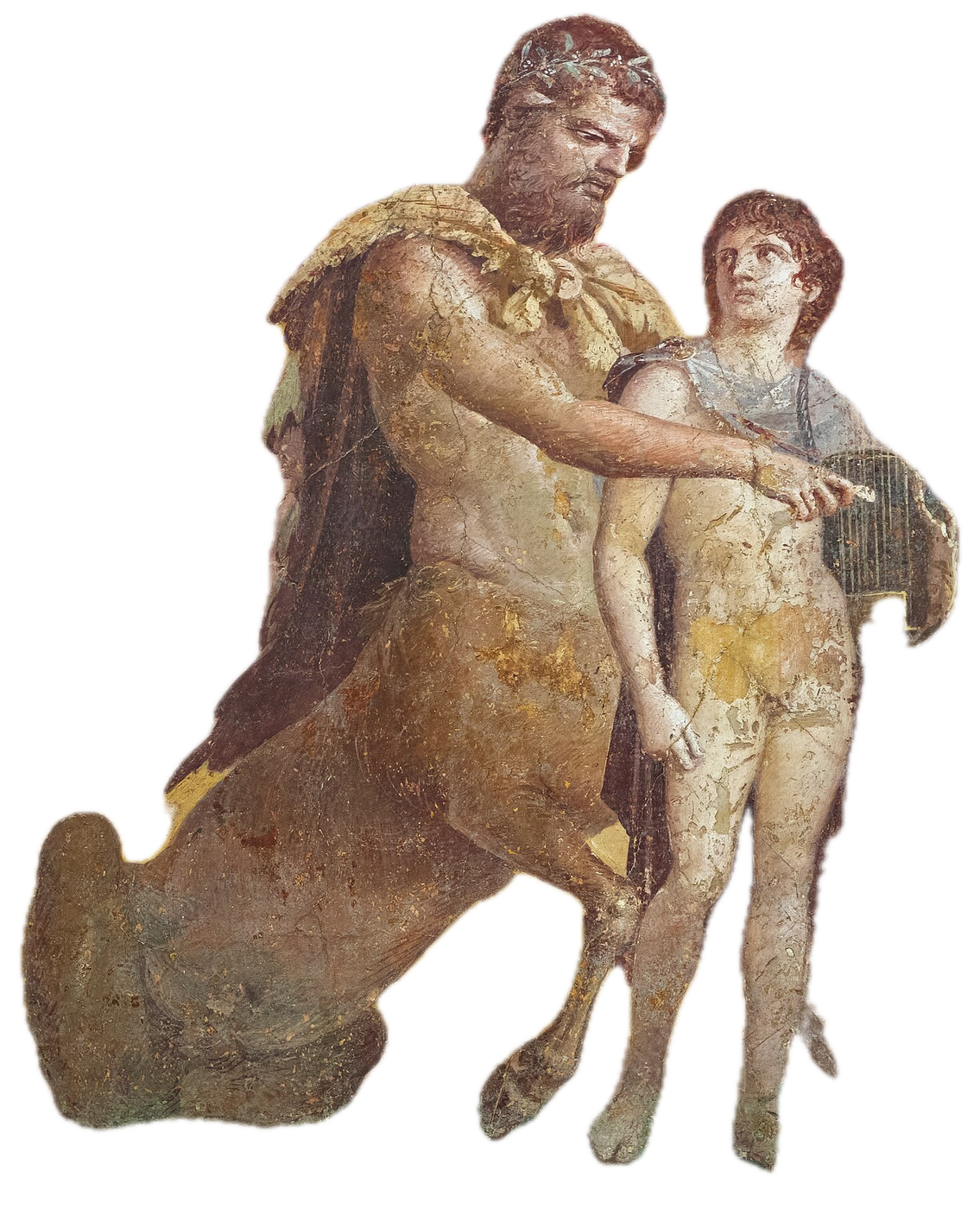
Il. 11.831–832
Ally · Sources
Membership · Sources
But why doth my heart thus hold converse with me? There lieth by the ships a dead man unwept, unburied, even Patroclus; him will I not forget so long as I abide among the living, and my knees are quick. Nay, if even in the house of Hades men forget their dead,
Il. 22.389
Poetic resemblance · Sources
for Achilles was standing by the stern of his ship, huge of hull, gazing upon the utter toil of battle and the tearful rout. And forthwith he spake to his comrade Patroclus, calling to him from beside the ship; and he heard, and came forth from the hut like unto Ares; and this to him was the beginning of evil.
then verily beyond their portion the Achaeans proved the better. Forth from out the range of darts they drew the warrior Cebriones from the battle-din of the Trojans, and stripped the armour from his shoulders; and Patroclus with fell intent leapt upon the Trojans. Thrice then leapt he upon them, the peer of swift Ares,
Il. 11.604 · Il. 16.784
Struck down by Patroclus · Sources
even so beneath Patroclus did the leader of the Lycian shieldmen struggle in death; and he called by name his dear comrade: Dear Glaucus, warrior amid men of war, now in good sooth it behoveth thee to quit thee as a spearman and a dauntless warrior; now be evil war thy heart's desire if indeed thou art swift to fight.
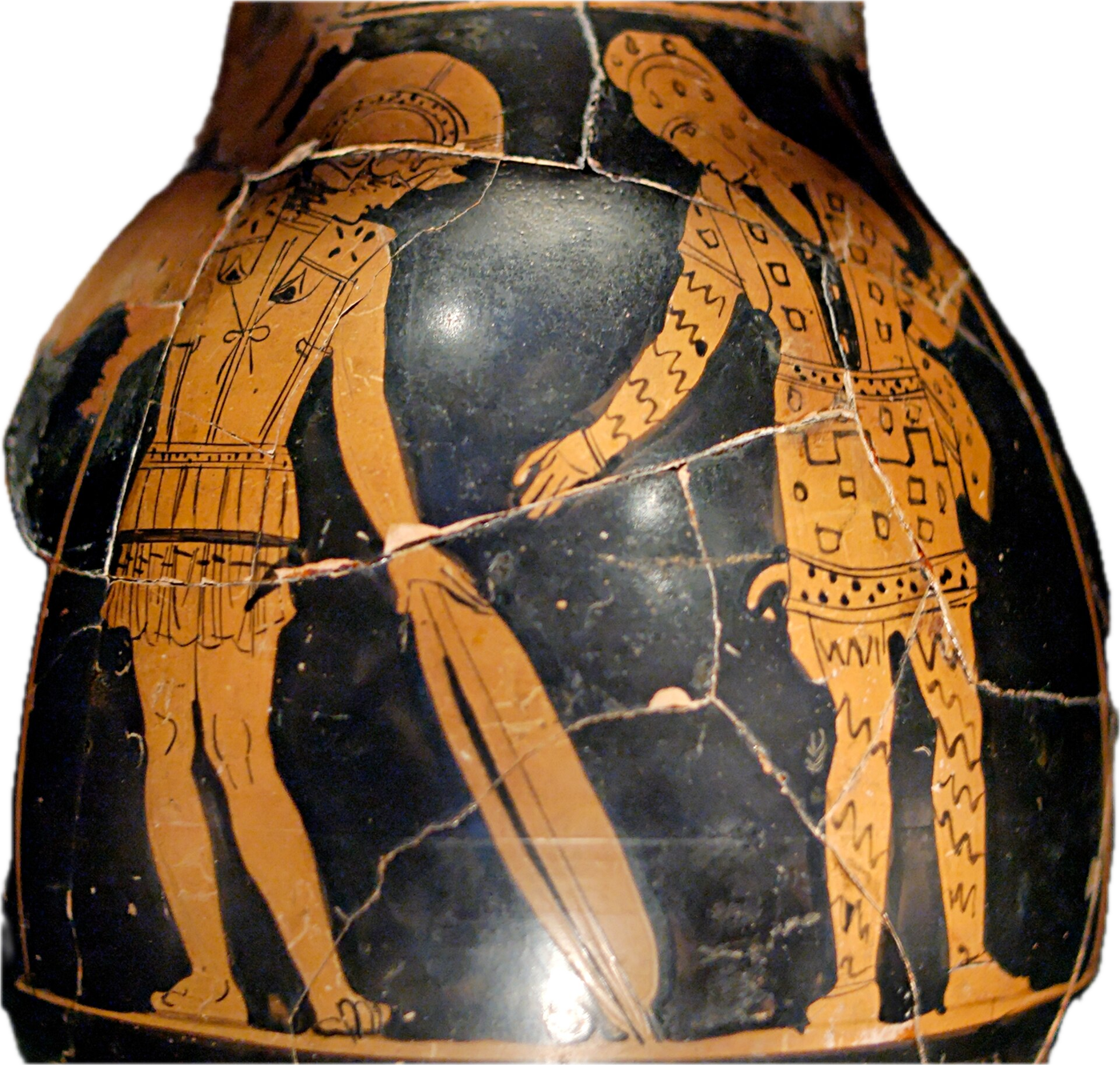
Il. 16.490
Connection · Sources
the battlegear of Sarpedon, that Patroclus stripped from him; and he stood up, and spake among the Argives, saying: To win these prizes invite we warriors twain, the best there are, to clothe them in their armour and take bronze that cleaveth the flesh, and so make trial each of the other before the host.
Il. 23.800
Killed by Patroclus · Sources
and against the Trojans didst thou charge, and thy heart was full of wrath for thy comrade. And he smote Sthenelaus, the dear son of Ithaemenes, on the neck with a stone, and brake away therefrom the sinews; and the foremost fighters and glorious Hector gave ground. Far as is the flight of a long javelin,
Il. 16.586–589
See all 17
Killed by Patroclus · Sources
shewing honour to his dear son—his own son whom Patroclus was about to slay in the deep-soiled land of Troy, far from his native land. Now when they were come near, as they advanced one against the other, then verily did Patroclus smite glorious Thrasymelus, that was the valiant squire of the prince Sarpedon;him he smote on the lower belly, and loosed his limbs. But Sarpedon missed him with his bright spear, as in turn he got upon him, but smote with his spear the horse Pedasus on the right shoulder; and the horse shrieked aloud as he gasped forth his life, and down he fell in the dust with a moan, and his spirit flew from him.
Il. 16.463–465
Killed by Patroclus · Sources
full easily, and again of himself he rouseth men to fight; and he it was that now put fury in the breast of Patroclus. Then whom first, whom last didst thou slay, Patroclus, when the gods called thee deathward? Adrastus first, and Autonous, and Echeclus,and Perimus, son of Megas, and Epistor, and Melanippus, and thereafter Elasus, and Mulius, and Pylartes: these he slew, and the others bethought them each man of flight. Then would the sons of the Achaeans have taken high-gated Troy by the hands of Patroclus, for around and before him he raged with his spear,
Il. 16.692–698
Killed by Patroclus · Sources
and cast him down upon his face; and life left him as he fell. Then as Erylaus rushed upon him, he smote him full upon the head with a stone, and his head was wholly cloven asunder within the heavy helmet; and he fell headlong upon the earth, and death, that slayeth the spirit, was shed about him.
Il. 16.413–414
Killed by Patroclus · Sources
Thereafter Erymas and Amphoterus, and Epaltes, and Tlepolemus, son of Damastor, and Echius and Pyris, and Ipheus and Evippus, and Polymelus, son of Argeas, all these one after another he brought down to the bounteous earth. But when Sarpedon saw his comrades, that wear the tunic ungirt,
Il. 16.415–418
Killed by Patroclus · Sources
Thereafter Erymas and Amphoterus, and Epaltes, and Tlepolemus, son of Damastor, and Echius and Pyris, and Ipheus and Evippus, and Polymelus, son of Argeas, all these one after another he brought down to the bounteous earth. But when Sarpedon saw his comrades, that wear the tunic ungirt,
Il. 16.415–418
Connection · Sources
even the daughter of Phorbas, fair-cheeked Diomede. And Patroclus laid him down on the opposite side, and by him in like manner lay fair-girdled Iphis, whom goodly Achilles had given him when he took steep Scyrus, the city of Enyeus. But when the others were now come to the huts of the son of Atreus,
Il. 9.666–668
Killed by Patroclus · Sources
Связь названа в самой карточке персонажа и подтверждена внешним источником; в извлечении из русского текста отдельной связи не было. Свидетельство источника: «Patroclus kills a Mulius among his Trojan-side victims; distinct from the Epeian of Book 11 and the man in Book 20.»
Iliad 16.694-700 · Iliad 16.694-700 ↗full easily, and again of himself he rouseth men to fight; and he it was that now put fury in the breast of Patroclus. Then whom first, whom last didst thou slay, Patroclus, when the gods called thee deathward? Adrastus first, and Autonous, and Echeclus,and Perimus, son of Megas, and Epistor, and Melanippus, and thereafter Elasus, and Mulius, and Pylartes: these he slew, and the others bethought them each man of flight. Then would the sons of the Achaeans have taken high-gated Troy by the hands of Patroclus, for around and before him he raged with his spear,had not Phoebus Apollo taken his stand upon the well-builded wall thinking thoughts of bane for him, but bearing aid to the Trojans. Thrice did Patroclus set foot upon a corner of the high wall, and thrice did Apollo fling him back, thrusting against the bright shield with his immortal hands.
Il. 16.694–700
Killed by Patroclus · Sources
Связь названа в самой карточке персонажа и подтверждена внешним источником; в извлечении из русского текста отдельной связи не было. Свидетельство источника: «Targeted source note, Iliad 16.696–697: Patroclus kills Pylartes during his assault on the Trojan force; this is the distinct namesake in book 16.»
Perseus Digital Library: Homer, Iliad Book 16 · Perseus Digital Library: Homer, Iliad Book 16 ↗Killed by Patroclus · Sources
Ил. 16.692–695 перечисляет троянцев, убитых Патроклом; Автоной назван в 16.694. Исправлена прежняя ссылка на гибель самого Патрокла.
Илиада 16.692–695 — Автоной, убитый Патроклом · Iliad 16.692–695 ↗full easily, and again of himself he rouseth men to fight; and he it was that now put fury in the breast of Patroclus. Then whom first, whom last didst thou slay, Patroclus, when the gods called thee deathward? Adrastus first, and Autonous, and Echeclus,and Perimus, son of Megas, and Epistor, and Melanippus, and thereafter Elasus, and Mulius, and Pylartes: these he slew, and the others bethought them each man of flight. Then would the sons of the Achaeans have taken high-gated Troy by the hands of Patroclus, for around and before him he raged with his spear,
Il. 16.692–695
Killed by Patroclus · Sources
Связь названа в самой карточке персонажа и подтверждена внешним источником; в извлечении из русского текста отдельной связи не было. Свидетельство источника: «A Trojan Adrastus is listed among Patroclus' victims; preserve him as a distinct local person because the Iliad does not identify him as Merops' son.»
Iliad 16.692–697 · Iliad 16.692–697 ↗full easily, and again of himself he rouseth men to fight; and he it was that now put fury in the breast of Patroclus. Then whom first, whom last didst thou slay, Patroclus, when the gods called thee deathward? Adrastus first, and Autonous, and Echeclus,and Perimus, son of Megas, and Epistor, and Melanippus, and thereafter Elasus, and Mulius, and Pylartes: these he slew, and the others bethought them each man of flight. Then would the sons of the Achaeans have taken high-gated Troy by the hands of Patroclus, for around and before him he raged with his spear,
Il. 16.692–697
In art

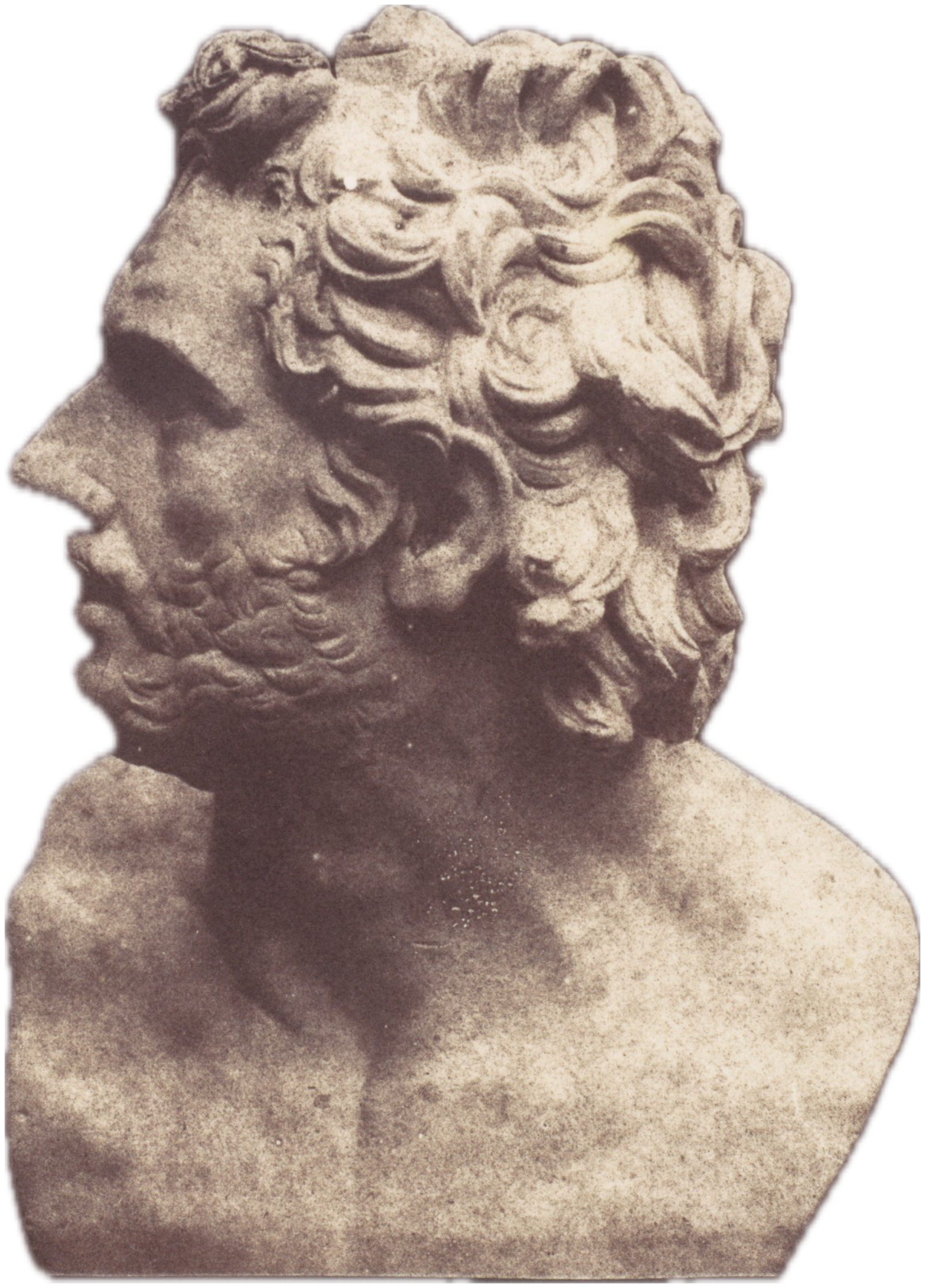
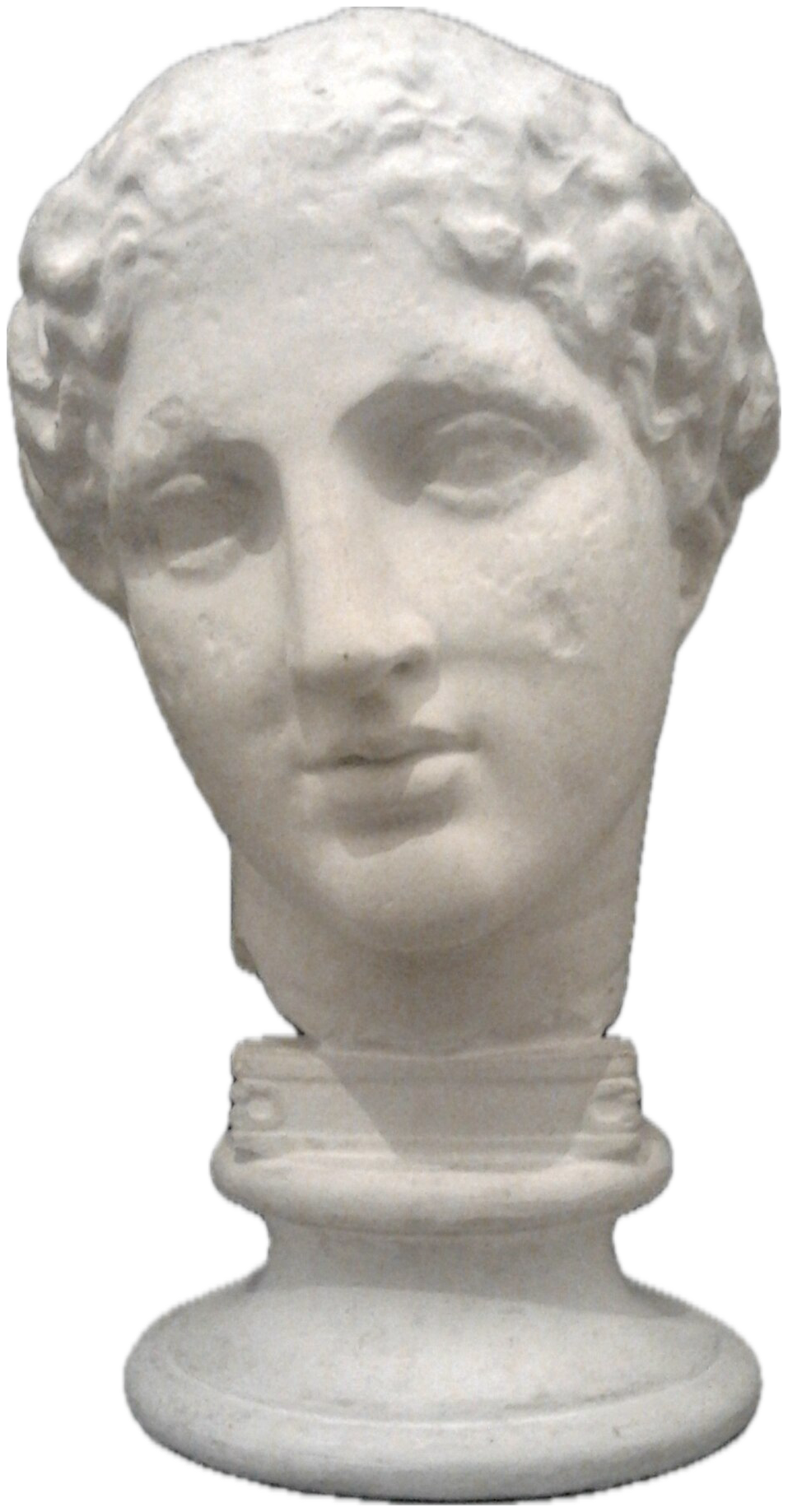
William Henry Fox Talbot. Bust of Patroclus. Metropolitan Museum of Art. CC0. https://www.wikidata.org/wiki/Q104213121

Jean-Auguste-Dominique Ingres. The Ambassadors of Agamemnon in the tent of Achilles. Beaux-Arts de Paris. Public domain. https://www.wikidata.org/wiki/Q16020875
Image author: Jean-Auguste-Dominique Ingres
Image date: 1801

Nikolai Ge. Ахиллес оплакивает Патрокла. Belarusian National Arts Museum. Public domain. https://www.wikidata.org/wiki/Q17117194
Image author: Nikolai Ge
Image date: 1855
See all 16

Jean-Auguste-Dominique Ingres. Achilles Receiving in his Tent the Envoys of Agamemnon. Nationalmuseum. Public domain. https://www.wikidata.org/wiki/Q18599184

Dirck van Baburen. Achilles preparing to avenge the death of Patroclus. Hessen Kassel Heritage. Public domain. https://www.wikidata.org/wiki/Q3327366

Jean Alaux. Briseis mourning the body of Patroclus in the tent of Achilles. Beaux-Arts de Paris. CC BY-SA 3.0. https://www.wikidata.org/wiki/Q62618838

Pierre Edme Louis Pellier. Patroclus handing Briseis to the Heralds of Agamemnon. Public domain. https://www.wikidata.org/wiki/Q120556090

Antoine Wiertz. Греки и троянцы сражаются за тело Патрокла. Liege Fine Arts Museum. Public domain. https://www.wikidata.org/wiki/Q21152204

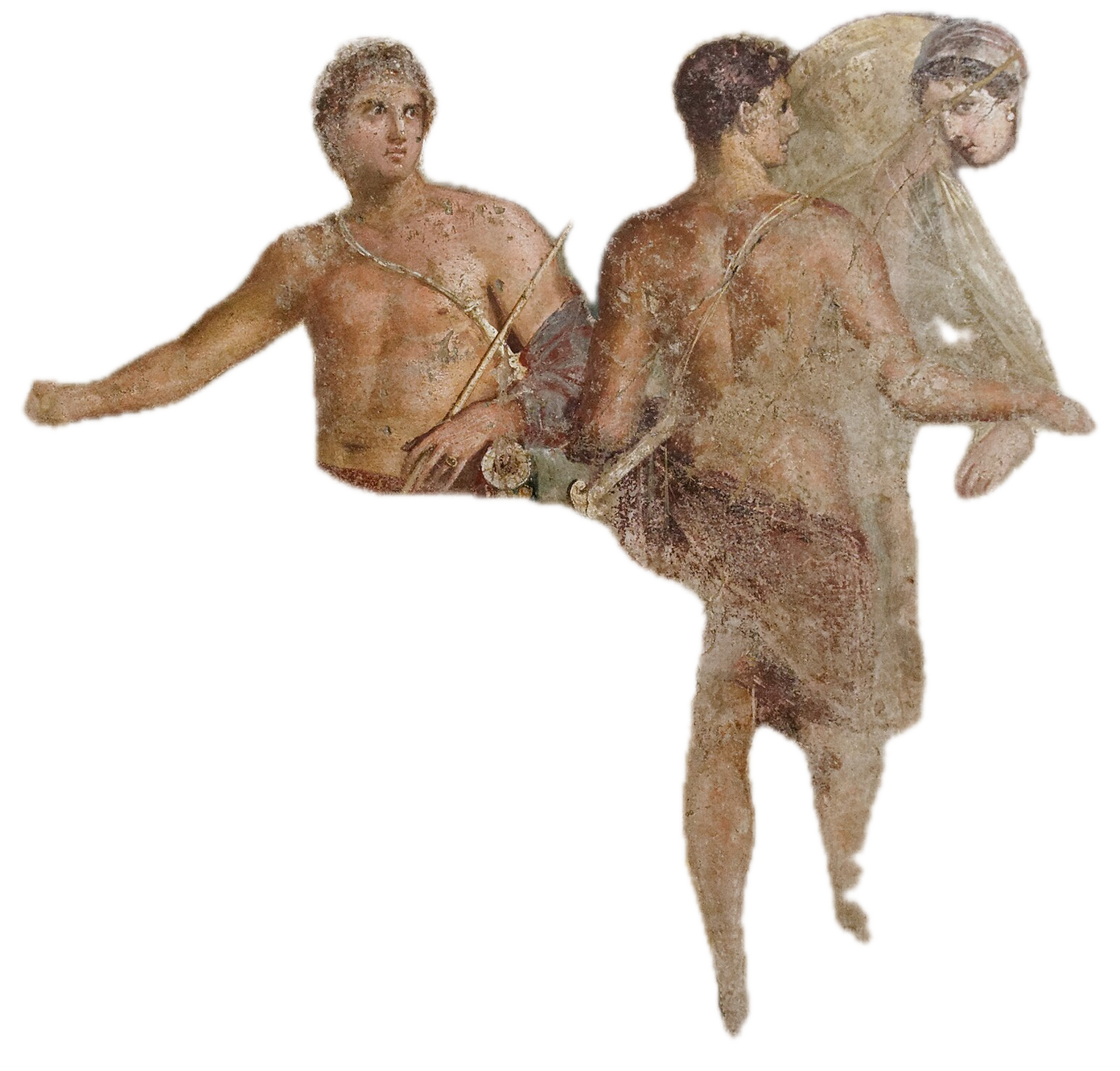
ArchaiOptix. Wall painting - two heroes conversing - Herculaneum (ins or II - palaestra) - Napoli MAN 9020. собрание не указано. CC BY-SA 4.0. https://commons.wikimedia.org/wiki/File%3AWall_painting_-_two_heroes_conversing_-_Herculaneum_%28ins_or_II_-_palaestra%29_-_Napoli_MAN_9020.jpg
Image author: ArchaiOptix
Image date: 2018-10-07 14:57:34


Jean Benner. Briseïs pleurant sur le corps de Patrocle. Château de Nemours. Public domain. https://www.wikidata.org/wiki/Q106620119

Giulio Romano. Ajax Defends Patroclus's Corpse. Palazzo Ducale Mantua. Public domain. https://www.wikidata.org/wiki/Q19931414

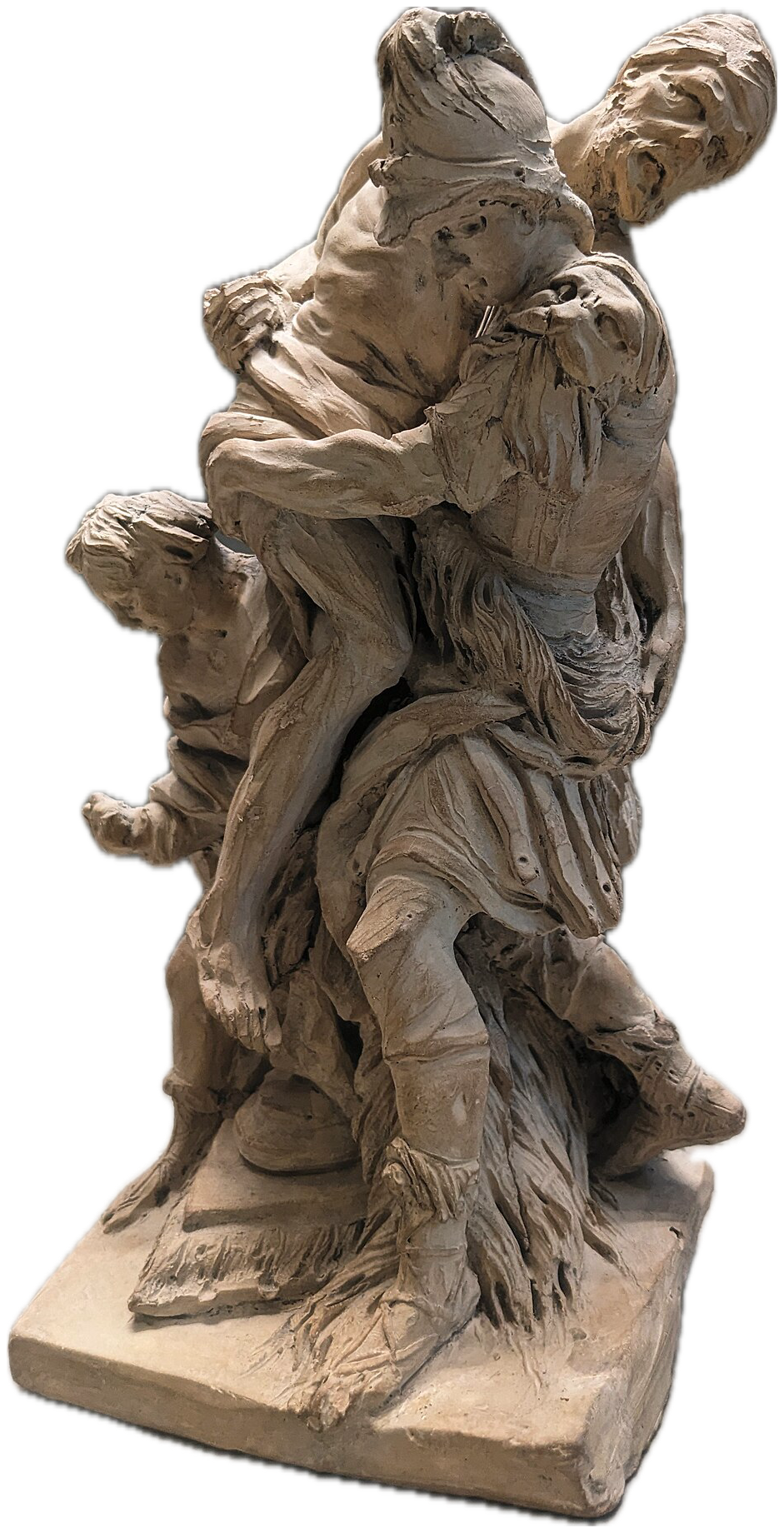
Robert Fagan. Pasquino (Menelaus supporting the Body of Patroclus). National Trust. Public domain. https://www.wikidata.org/wiki/Q52145610

Jacques-Louis David. Patroclus. Musée Thomas-Henry. Public domain. https://www.wikidata.org/wiki/Q83385172

Giuseppe Cades. Achilles in his Tent with Patroclus, Playing a Lyre, surprised by Ulysses and Nestor. Department of Paintings of the Louvre. Public domain. https://www.wikidata.org/wiki/Q18573844
Image author: Giuseppe Cades
Image date: 1782

Менелай с телом Патрокла. Loggia dei Lanzi. CC BY 2.5. https://www.wikidata.org/wiki/Q1134128

Achilles and Briseis. Naples National Archaeological Museum. Public domain. https://www.wikidata.org/wiki/Q4673755
04 / PROVENANCE
Sources and verification
The character is matched to the catalogue.
- Wikipedia · Patroclus · CC BY-SA 4.0
Excerpt; remaining sentences omitted.
Reference material remains distinct from the poem’s assertions. Characters who share a name retain separate pages.