Odysseus
Mortal man
In Greek and Roman mythology, Odysseus ( , US also ; Ancient Greek: Ὀδυσσεύς, Ὀδυσεύς, romanized: Odysseús, Odyseús, IPA: [o.dy(s̠).s̠ěu̯s̠]), also known by the Latin variant Ulysses (, UK also ; Latin: Ulysses, Ulixes), is a legendary Greek king of Ithaca and the hero of Homer's epic poem, the Odyssey. Odysseus also plays a key role in Homer's Iliad and other works in that same epic cycle.
Explore on the graph- Mentions
- 90
- Connected characters
- 30
- Books
- 15


Mentions in the Iliad
A. T. Murray, Loeb Classical Library, Harvard University Press, 1924 · Homer, Iliad with an English Translation · CC BY-SA 3.0 US
“suiting it to my mind, so that it will be worth just as much—but if they do not, I myself will come and take your prize, or that of Aias, or that of Odysseus I will seize and bear away. Angry will he be, to whomever I come. But these things we will consider hereafter.”
“and Odysseus of many wiles went on board to take command. So these embarked and sailed over the watery ways; but the son of Atreus bade the people purify themselves. And they purified themselves, and cast the defilement into the sea, and offered to Apollo perfect hecatombs”
“came to Chryse bringing the holy hecatomb. When they had arrived within the deep harbour, they furled the sail, and stowed it in the black ship, and the mast they lowered by the forestays and brought it to the crutch with speed, and rowed her with oars to the place of anchorage.”
“So saying he placed her in his arms, and he joyfully took his dear child; but they made haste to set in array for the god the holy hecatomb around the well-built altar, and then they washed their hands and took up the barley grains. Then Chryses lifted up his hands, and prayed aloud for them:”
“neither suffer them to draw into the sea their curved ships. So spake she, and the goddess, flashing-eyed Athene, failed not to hearken. Down from the peaks of Olympus she went darting, and speedily came to the swift ships of the Achaeans. There she found Odysseus, the peer of Zeus in counsel,”
“But himself he went straight to Agamemnon, son of Atreus, and received at his hand the staff of his fathers, imperishable ever, and therewith went his way along the ships of the brazen-coated Achaeans. Whomsoever he met that was a chieftain or man of note, to his side would he come and with gentle words seek to restrain him, saying:”
“Hateful was he to Achilles above all, and to Odysseus, for it was they twain that he was wont to revile; but now again with shrill cries he uttered abuse against goodly Agamemnon. With him were the Achaeans exceeding wroth, and had indignation in their hearts. Howbeit with loud shoutings he spake and chid Agamemnon:”
See all 88
Connections
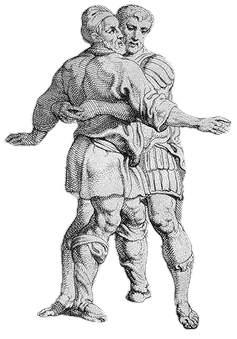
Father · Sources
as he stood. He laid no hand upon his benched, black ship, for that grief had come upon his heart and soul; and flashing-eyed Athene stood near him, and said: Son of Laërtes, sprung from Zeus, Odysseus of many wiles, is it thus indeed that ye will fling yourselves
This again is Laertes' son, Odysseus of many wiles, that was reared in the land of Ithaca, rugged though it be, and he knoweth all manner of craft and cunning devices. Then to her again made answer Antenor, the wise: Lady, this verily is a true word that thou hast spoken,
of the horse-taming Trojans. This that thou sayest is as empty wind. Then lord Agamemnon spake to him with a smile, when he knew that he was wroth, and took back his words: Zeus-born son of Laertes, Odysseus of many wiles, neither do I chide thee overmuch nor urge thee on,
Il. 2.173 · Il. 3.200 · Il. 4.358 · Il. 8.93 · Il. 9.307 · Il. 9.624 · Il. 10.144 · Il. 10.544 · Il. 10.570 · Il. 11.316
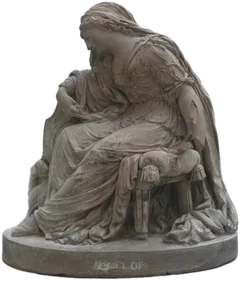
Wife · Sources
Odyssey calls Penelope Odysseus’ wife; external epic/reference evidence, not an Iliad passage.
Homer, Odyssey 23 · Homer, Odyssey 23.231–262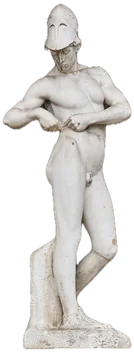
Son · Sources
Son of Atreus, what a word hath escaped the barrier of thy teeth! How sayest thou that we are slack in battle, whenso we Achaeans rouse keen war against the horse-taming Trojans? Thou shalt see, if so be thou wilt and if thou carest aught therefor, the father of Telemachus mingling with the foremost fighters
Il. 4.354
Ancestor · Sources
Описание прямо называет родство с Одиссеем; сохранённый внешний снимок (enwiki, со ссылкой на «Одиссею») подтверждает деда по матери.
Autolycus · English Wikipedia, 'Autolycus' (revision snapshot)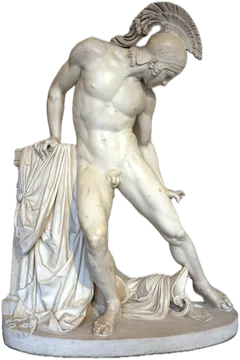
Friend · Sources
Hail, O Achilles, of the equal feast have we no stinting, either in the hut of Agamemnon, son of Atreus, or now in thine; for here is abundance that satisfies the heart to feast withal. Yet matters of the delicious feast are not in our thoughts, nay, Zeus-nurtured one, it is utter ruin that we behold, and are afraid;
Il. 9.225
Poetic resemblance · Sources
neither suffer them to draw into the sea their curved ships. So spake she, and the goddess, flashing-eyed Athene, failed not to hearken. Down from the peaks of Olympus she went darting, and speedily came to the swift ships of the Achaeans. There she found Odysseus, the peer of Zeus in counsel,
Nestor, first of all, and king Idomeneus, and thereafter the twain Aiantes and the son of Tydeus, and as the sixth Odysseus, the peer of Zeus in counsel. And unbidden came to him Menelaus, good at the war-cry, for he knew in his heart wherewith his brother was busied.
and held the mainland and dwelt on the shores over against the isles. Of these was Odysseus captain, the peer of Zeus in counsel. And with him there followed twelve ships with vermilion prows. And the Aetolians were led by Thoas, Andraemon's son, even they that dwelt in Pleuron and Olenus and Pylene and Chalcis, hard by the sea, and rocky Calydon. For the sons of great-hearted Oeneus were no more, neither did he himself still live, and fair-haired Meleager was dead, to whom had commands been given that he should bear full sway among the Aetolians. And with Thoas there followed forty black ships.
Il. 2.169 · Il. 2.407 · Il. 2.636
Connection · Sources
in all manner of toils; and Pallas Athene loveth him. If he but follow with me, even out of blazing fire might we both return, for wise above all is he in understanding. Then spake unto him much enduring goodly Odysseus: Son of Tydeus, praise me not over-much, neither blame me in aught:
Il. 10.245
Ally · Sources
Hear me, goddess, and come a goodly helper to my feet. So spake he in prayer, and Pallas Athene heard him, and made his limbs light, his feet and his hands above. But when they were now about to dart forth to win the prize, then Aias slipped as he ran—for Athene hampered him—
Il. 23.771–772
See all 30
Killed by Odysseus · Sources
В стихах 4.499–504 Одиссей ударил Демокоонта пикой в висок, и тот «грянулся на землю»; описание прямо называет его убитым Одиссеем.
and strode amid the foremost warriors, harnessed in flaming bronze; close to the foe he came and took his stand, and glancing warily about him hurled with his bright spear; and back did the Trojans shrink from the warrior as he cast. Not in vain did he let fly his spear, but smote Priam's bastard son Democoon,that had come at his call from Abydus, from his stud of swift mares. Him Odysseus, wroth for his comrade's sake, smote with his spear on the temple, and out through the other temple passed the spear-point of bronze, and darkness enfolded his eyes, and he fell with a thud and upon him his armour clanged.
Il. 4.499–504
Ally · Sources
В 10.243–247 Диомед выбирает Одиссея товарищем для ночной вылазки и говорит «Если со мной он пойдет»; совместное действие прямо названо.
So said he, since he feared for the sake of fair-haired Menelaus. But among them spake again Diomedes, good at the war-cry: If of a truth ye bid me of myself choose me a comrade, how should I then forget godlike Odysseus, whose heart and proud spirit are beyond all others eagerin all manner of toils; and Pallas Athene loveth him. If he but follow with me, even out of blazing fire might we both return, for wise above all is he in understanding. Then spake unto him much enduring goodly Odysseus: Son of Tydeus, praise me not over-much, neither blame me in aught:
Il. 10.243–247
Connection · Sources
Антенор сам говорит, что принимал Одиссея и Менелая как гостей и угощал их — прямое гостеприимство.
for erstwhile on a time goodly Odysseus came hither also on an embassy concerning thee, together with Menelaus, dear to Ares; and it was I that gave them entertainment and welcomed them in my halls, and came to know the form and stature of them both and their cunning devices. Now when they mingled with the Trojans, as they were gathered together,
Il. 3.205–208
Connection · Sources
В стихах 10.377–382 Долона хватают за руки, он просит взять его в плен, и с ним говорит Одиссей; описание прямо называет его схваченным Одиссеем.
stammering and pale with fear, and the teeth clattered in his mouth; and the twain panting for breath came upon him, and seized his hands; and he with a burst of tears spake to them, saying: Take me alive, and I will ransom myself; for at home have I store of bronze and gold and iron, wrought with toil;thereof would my father grant you ransom past counting, should he hear that I am alive at the ships of the Achaeans. Then in answer to him spake Odysseus of many wiles: Be of good cheer, and let not death be in thy thoughts. But come, tell me this, and declare it truly.
Il. 10.377–382
Killed by Odysseus · Sources
Стихи 11.446–451 прямо описывают удар Одиссея копьём в спину бегущего Сока и его падение, а затем Одиссей говорит, что смерть его поразила.
shalt yield glory to me, and thy soul to Hades of the goodly steeds. He spake, and the other turned back and started to flee, but even as he turned Odysseus fixed the spear in his back between the shoulders, and drave it through his breast. And he fell with a thud, and goodly Odysseus exulted over him:Ah Socus, son of wise-hearted Hippasus, tamer of horses, the end of death has been too quick in coming upon thee; thou hast not escaped it. Ah poor wretch, thy father and queenly mother shall not close thine eyes in death, but the birds that eat raw flesh shall rend thee, beating their wings thick and fast about thee;
Il. 11.446–451
Killed by Odysseus · Sources
В 11.321–322 Одиссей «сшиб» Молиона, и в 11.339–340 тела обоих бросают; убийство прямо названо.
He spake, and thrust Thymbraeus from his chariot to the ground, smiting him with his spear on the left breast, and Odysseus smote Molion, the godlike squire of that prince. These then they let be, when they had made them cease from war; but the twain ranged throughout the throng, making havoc of it, as when two boars
Il. 11.321–322
Opponent · Sources
Hateful was he to Achilles above all, and to Odysseus, for it was they twain that he was wont to revile; but now again with shrill cries he uttered abuse against goodly Agamemnon. With him were the Achaeans exceeding wroth, and had indignation in their hearts. Howbeit with loud shoutings he spake and chid Agamemnon:
Il. 2.220
Killed by Odysseus · Sources
This is the Lycian ally Chromius in the casualty list of Odysseus' attack on the Lycian front; distinct from the other Homonyms.
A. S. Kline, The Iliad: Character Index · Index: Lycian Chromius killed by Odysseus; Iliad V.677–678 (local 5.678)Killed by Odysseus · Sources
В 5.676–677 Одиссей, направленный Афиной на ликийцев, «Койрана тут умертвил».
to slay with the sharp bronze the valiant son of Zeus; wherefore Athene turned his mind toward the host of the Lycians. Then slew he Coeranus and Alastor and Chromius and Alcandrus and Halius and Noëmon and Prytanis; and yet more of the Lycians would goodly Odysseus have slain,
Il. 5.676–677
Herald · Sources
В стихах 9.169–171 вестники Одий и Еврибат сопровождают Одиссея и Аякса в посольстве; в 2.184 Еврибат прямо назван итакийским глашатаем. Описание называет его глашатаем Одиссея.
Come, therefore, let us send forth chosen men to go forthwith to the hut of Peleus' son, Achilles. Nay, rather, whomsoever I shall choose, let them consent. First of all let Phoenix, dear to Zeus, lead the way, and after him great Aias and goodly Odysseus;and of the heralds let Odius and Eurybates attend them. And now bring ye water for our hands, and bid keep holy silence, that we may make prayer unto Zeus, son of Cronos, if so be he will have compassion upon us. So said he and the words that he spake were pleasing unto all. Then heralds poured water over their hands,
Il. 9.169–171
Friend · Sources
cast with his sharp spear amid the throng. Him he missed, but smote in the groin Odysseus' goodly comrade, Leucus, as he was drawing the corpse to the other side; so he fell upon it, and the body slipped from his grasp. For his slaying waxed Odysseus mightily wroth at heart,
Il. 4.491–492
Connection · Sources
В 19.238–247 Меланипп назван среди спутников, которые идут к ставке Атреева сына, а впереди идёт Одиссей; Меланипп — его спутник.
for the summons is this: Ill shall it be for him whoso is left at the ships of the Argives. Nay, setting out in one throng let us rouse keen battle against the horse-taming Trojans. He spake, and took to him the sons of glorious Nestor, and Meges, son of Phyleus, and Thoas and Meriones and Lycomedes,son of Creon, and Melanippus; and they went their way to the hut of Agamemnon, son of Atreus. Then straightway in the one moment was the word said, and the deed fulfilled. Seven tripods bare they from the hut, even as he promised him, and twenty gleaming cauldrons and twelve horses;and forth they speedily led women skilled in goodly handiwork; seven they were, and the eighth was fair-cheeked Briseis. Then Odysseus weighed out ten talents of gold in all, and led the way and with him the other youths of the Achaeans bare the gifts. These then they set in the midst of the place of gathering, and Agamemnon
Il. 19.238–247
Killed by Odysseus · Sources
В 5.676–679 Одиссей, направленный Афиной на ликийцев, убивает их, и Ноемон назван среди убитых.
to slay with the sharp bronze the valiant son of Zeus; wherefore Athene turned his mind toward the host of the Lycians. Then slew he Coeranus and Alastor and Chromius and Alcandrus and Halius and Noëmon and Prytanis; and yet more of the Lycians would goodly Odysseus have slain,
Il. 5.676–679
Killed by Odysseus · Sources
Стих 6.30 прямо говорит, что Одиссей убил Пидита перкотийца.
and Odysseus with his spear of bronze laid low Pidytes of Percote, and Teucer goodly Aretaon. And Antilochus, son of Nestor, slew Ablerus with his bright spear, and the king of men, Agamemnon, slew Elatus that dwelt in steep Pedasus by the banks of fair-flowing Satnioeis.
Il. 6.30
Killed by Odysseus · Sources
Стихи: Одиссей умертвил Койрана, Аластора и Алькандра — Аластор убит Одиссеем.
of the enduring soul was ware of it, and his spirit waxed furious within him; and he pondered then in heart and soul whether he should pursue further after the son of Zeus that thundereth aloud, or should rather take the lives of more Lycians. But not for great-hearted Odysseus was it ordainedto slay with the sharp bronze the valiant son of Zeus; wherefore Athene turned his mind toward the host of the Lycians. Then slew he Coeranus and Alastor and Chromius and Alcandrus and Halius and Noëmon and Prytanis; and yet more of the Lycians would goodly Odysseus have slain,
Il. 5.674–678
Killed by Odysseus · Sources
Стихи: Одиссей умертвил Койрана, Аластора и Алькандра — Алькандр убит Одиссеем.
of the enduring soul was ware of it, and his spirit waxed furious within him; and he pondered then in heart and soul whether he should pursue further after the son of Zeus that thundereth aloud, or should rather take the lives of more Lycians. But not for great-hearted Odysseus was it ordainedto slay with the sharp bronze the valiant son of Zeus; wherefore Athene turned his mind toward the host of the Lycians. Then slew he Coeranus and Alastor and Chromius and Alcandrus and Halius and Noëmon and Prytanis; and yet more of the Lycians would goodly Odysseus have slain,
Il. 5.674–678
Killed by Odysseus · Sources
Описание прямо называет Галия убитым Одиссеем; 5.677–679 перечисляют Галия среди убитых Одиссеем ликийцев.
to slay with the sharp bronze the valiant son of Zeus; wherefore Athene turned his mind toward the host of the Lycians. Then slew he Coeranus and Alastor and Chromius and Alcandrus and Halius and Noëmon and Prytanis; and yet more of the Lycians would goodly Odysseus have slain,
Il. 5.677–679
Killed by Odysseus · Sources
Описание прямо называет Гипейроха убитым Одиссеем; стих 11.335 говорит, что сын Лаэрта убил Гипейроха и Гипподама.
And Odysseus slew Hippodamus and Hypeirochus. Then the son of Cronos stretched evenly for them the line of battle, as he looked down from Ida, and they kept slaying one another. Tydeus' son wounded the warrior Agastrophus, son of Paeon, on the hip with a thrust of his spear; nor were his horses
Il. 11.335
Killed by Odysseus · Sources
Описание прямо называет Гипподама убитым Одиссеем; стих 11.335 говорит, что сын Лаэрта убил Гипейроха и Гипподама.
And Odysseus slew Hippodamus and Hypeirochus. Then the son of Cronos stretched evenly for them the line of battle, as he looked down from Ida, and they kept slaying one another. Tydeus' son wounded the warrior Agastrophus, son of Paeon, on the hip with a thrust of his spear; nor were his horses
Il. 11.335
Connection · Sources
Ил. 11.420–421: Одиссей, отбиваясь от окруживших его троянцев, первым ранил Деиопита в плечо. Это ранение; текст не говорит, что Деиопит погиб.
But first he smote peerless Deïopites from above in the shoulder, leaping upon him with sharp spear; and thereafter he slew Thoön and Eunomus, and then Chersidamas as he leapt down from his car he stabbed with his spear upon the navel beneath his bossed shield;
Il. 11.420–421
Killed by Odysseus · Sources
Стихи 5.676–679 прямо перечисляют ликийцев, которых умертвил Одиссей, и называют среди них Пританиса.
to slay with the sharp bronze the valiant son of Zeus; wherefore Athene turned his mind toward the host of the Lycians. Then slew he Coeranus and Alastor and Chromius and Alcandrus and Halius and Noëmon and Prytanis; and yet more of the Lycians would goodly Odysseus have slain,
Il. 5.676–679
Killed by Odysseus · Sources
Стихи 11.423–425: Одиссей поражает Херсидаманта в низ живота, тот падает в пыль — смертельное поражение.
But first he smote peerless Deïopites from above in the shoulder, leaping upon him with sharp spear; and thereafter he slew Thoön and Eunomus, and then Chersidamas as he leapt down from his car he stabbed with his spear upon the navel beneath his bossed shield;and he fell in the dust and clutched the ground with his palm. These then he let be, but smote Charops, son of Hippasus, with a thrust of his spear, even the own brother of wealthy Socus. And to bear him aid came Socus, a godlike man; close to Odysseus he came, and took his stand, and he spake, saying:
Il. 11.423–425
Killed by Odysseus · Sources
Стих 11.422: «После того и Фоона, и Эннома наземь повергнул» — Одиссей повергает Эннома, после чего снимает доспехи.
But first he smote peerless Deïopites from above in the shoulder, leaping upon him with sharp spear; and thereafter he slew Thoön and Eunomus, and then Chersidamas as he leapt down from his car he stabbed with his spear upon the navel beneath his bossed shield;
Il. 11.422
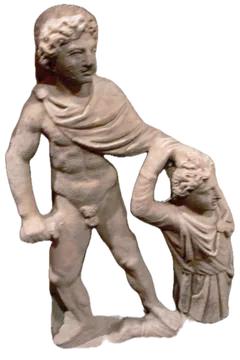
In art

Odysseus (statue), Vathy. CC BY-SA 3.0. https://www.wikidata.org/wiki/Q114140399
Odysseus (statue), Vathy. CC BY-SA 3.0. https://www.wikidata.org/wiki/Q114140399

Jean-Auguste-Dominique Ingres. The Ambassadors of Agamemnon in the tent of Achilles. Beaux-Arts de Paris. Public domain. https://www.wikidata.org/wiki/Q16020875
Photograph / reproduction: Jean-Auguste-Dominique Ingres
Photograph / reproduction date: 1801
Jean-Auguste-Dominique Ingres. The Ambassadors of Agamemnon in the tent of Achilles. Beaux-Arts de Paris. Public domain. https://www.wikidata.org/wiki/Q16020875
Photograph / reproduction: Jean-Auguste-Dominique Ingres
Photograph / reproduction date: 1801

Jan Boeckhorst. Ulysses discovers Achilles dressed up as a girl. собрание не указано. Public domain. https://commons.wikimedia.org/wiki/File%3AJan_Boeckhorst_Ulysses_discovers_Achilles_dressed_up_as_a_girl.jpg
Photograph / reproduction: Jan Boeckhorst
Photograph / reproduction date: circa 1650
Jan Boeckhorst. Ulysses discovers Achilles dressed up as a girl. собрание не указано. Public domain. https://commons.wikimedia.org/wiki/File%3AJan_Boeckhorst_Ulysses_discovers_Achilles_dressed_up_as_a_girl.jpg
Photograph / reproduction: Jan Boeckhorst
Photograph / reproduction date: circa 1650

After Nicolas Poussin. The Return of Odysseus .. собрание не указано. Public domain. https://commons.wikimedia.org/wiki/File%3APoussin_Odyseus.JPG
Photograph / reproduction: After Nicolas Poussin
Photograph / reproduction date: 1650s
After Nicolas Poussin. The Return of Odysseus .. собрание не указано. Public domain. https://commons.wikimedia.org/wiki/File%3APoussin_Odyseus.JPG
Photograph / reproduction: After Nicolas Poussin
Photograph / reproduction date: 1650s

Guidoccio Cozzarelli. Guidoccio Cozzarelli Heimkehr des Odysseus. собрание не указано. Public domain. https://commons.wikimedia.org/wiki/File%3AGuidoccio_Cozzarelli_Heimkehr_des_Odysseus.jpg
Photograph / reproduction: Guidoccio Cozzarelli
Photograph / reproduction date: before 1517
Guidoccio Cozzarelli. Guidoccio Cozzarelli Heimkehr des Odysseus. собрание не указано. Public domain. https://commons.wikimedia.org/wiki/File%3AGuidoccio_Cozzarelli_Heimkehr_des_Odysseus.jpg
Photograph / reproduction: Guidoccio Cozzarelli
Photograph / reproduction date: before 1517

Angelika Kauffmann. Angelica Kauffmann (1741-1807) - Ulysses Discovering Achilles - 872174 - National Trust. собрание не указано. Public domain. https://commons.wikimedia.org/wiki/File%3AAngelica_Kauffmann_%281741-1807%29_-_Ulysses_Discovering_Achilles_-_872174_-_National_Trust.jpg
Photograph / reproduction: Angelika Kauffmann
Photograph / reproduction date: 1770/1771


Richard Geiger. Geiger Richárd - görög népek 017 Odüsszeusz beszél anyja árnyával az alivilágban. собрание не указано. Public domain. https://commons.wikimedia.org/wiki/File%3AGeiger_Rich%C3%A1rd_-_g%C3%B6r%C3%B6g_n%C3%A9pek_017_Od%C3%BCsszeusz_besz%C3%A9l_anyja_%C3%A1rny%C3%A1val_az_alivil%C3%A1gban.jpg
Photograph / reproduction: Richard Geiger
Photograph / reproduction date: 1900
See all 397
Sources and verification
The character is matched to the catalogue.
- Wikipedia · Odysseus · CC BY-SA 4.0
Excerpt; remaining sentences omitted.
Reference material remains distinct from the poem’s assertions. Characters who share a name retain separate pages.