Hebe
Goddess
In ancient Greek religion and mythology, Hebe (; Ancient Greek: Ἥβη, lit. 'youth') is the goddess of youth or of the prime of life. She was the cup-bearer for the gods of Mount Olympus, serving their nectar and ambrosia.
Explore on the graph- Mentions
- 3
- Connected characters
- 22
- Books
- 2


Mentions in the Iliad
A. T. Murray, Loeb Classical Library, Harvard University Press, 1924 · Homer, Iliad with an English Translation · CC BY-SA 3.0 US
“Now the gods, seated by the side of Zeus, were holding assembly on the golden floor, and in their midst the queenly Hebe poured them nectar, and they with golden goblets pledged one the other as they looked forth upon the city of the Trojans.”
“Then Hera, the queenly goddess, daughter of great Cronos, went to and fro harnessing the horses of golden frontlets. and Hebe quickly put to the car on either side the curved wheels of bronze, eight-spoked, about the iron axle-tree. Of these the felloe verily is of gold imperishable,”
“And Hebe bathed him, and clad him in beautiful raiment, and he sate him down by the side of Zeus, son of Cronos, exulting in his glory. Then back to the palace of great Zeus fared Argive Hera and Alalcomenean Athene, when they had made Ares, the bane of mortals, to cease from his man-slaying.”
See all 3
Connections
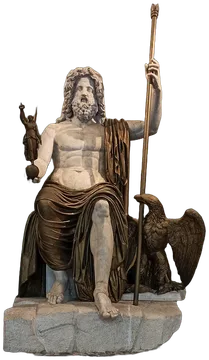
Father · Sources
Описание прямо называет Гебу дочерью Зевса; сохранённый снимок ruwiki подтверждает: «дочь Зевса и Геры».
Геба · ruwiki, «Геба» (intro)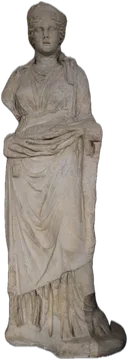
Mother · Sources
Описание прямо называет Гебу дочерью Геры; сохранённый снимок ruwiki подтверждает: «дочь Зевса и Геры».
Геба · ruwiki, «Геба» (intro)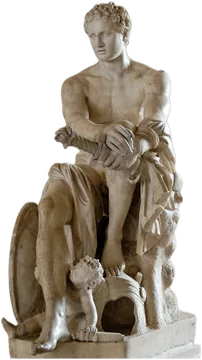
Brother · Sources
Братство или сестринство выведено из общего родителя: Гера, Зевс. Матери и отцы, не указанные в источнике, не предполагаются. Квалификация братства/сестринства: Полнота родства и линия общего родителя не установлены.
Геба · ruwiki, «Геба» (intro)took furious Ares by the hand and spake to him, saying: Ares, Ares, thou bane of mortals, thou blood-stained stormer of walls, shall we not now leave the Trojans and Achaeans to fight, to whichsoever of the two it be that father Zeus shall vouchsafe glory? But for us twain, let us give place, and avoid the wrath of Zeus.
Most hateful to me art thou of all gods that hold Olympus, for ever is strife dear to thee and wars and fightings. Thou hast the unbearable, unyielding spirit of thy mother, even of Hera; her can I scarce control by my words. Wherefore it is by her promptings, meseems, that thou sufferest thus.
Howbeit I will no longer endure that thou shouldest be in pain, for thou art mine offspring, and it was to me that thy mother bare thee; but wert thou born of any other god, thus pestilent as thou art, then long ere this hadst thou been lower than the sons of heaven. He spake, and bade Paeëon heal his hurt;
Il. 5.33 · Il. 5.892 · Il. 5.896 · Il. 21.412
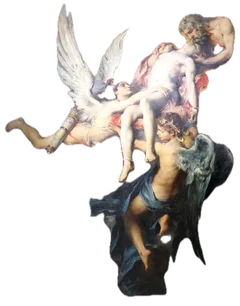
Brother · Sources
Братство или сестринство выведено из общего родителя: Зевс. Матери и отцы, не указанные в источнике, не предполагаются. Квалификация братства/сестринства: Полнота родства и линия общего родителя не установлены.
Геба · ruwiki, «Геба» (intro)And when they were come near as they advanced one against the other, the son and grandson of Zeus the cloud-gatherer, then Tlepolemus was first to speak, saying: Sarpedon, counsellor of the Lycians, why must thou be skulking here, that art a man unskilled in battle?They speak but a lie that say thou art sprung from Zeus that beareth the aegis, seeing thou art inferior far to those warriors that were sprung from Zeus in the days of men of old. Of other sort, men say, was mighty Heracles, my father, staunch in fight, the lionhearted,
And Tlepolemus smote Sarpedon upon the left thigh with his long spear, and the point sped through furiously and grazed the bone; howbeit his father as yet warded from him destruction. Then his goodly companions bare godlike Sarpedon forth from out the fight, and the long spear burdened him sore,as it trailed, but no man marked it or thought in their haste to draw forth from his thigh the spear of ash, that he might stand upon his feet; such toil had they in tending him. And on the other side the well-greaved Achaeans bare Tlepolemus from out the fight, and goodly Odysseusof the enduring soul was ware of it, and his spirit waxed furious within him; and he pondered then in heart and soul whether he should pursue further after the son of Zeus that thundereth aloud, or should rather take the lives of more Lycians. But not for great-hearted Odysseus was it ordained
to slay with the sharp bronze the valiant son of Zeus; wherefore Athene turned his mind toward the host of the Lycians. Then slew he Coeranus and Alastor and Chromius and Alcandrus and Halius and Noëmon and Prytanis; and yet more of the Lycians would goodly Odysseus have slain,
Il. 5.634–635 · Il. 5.662–672 · Il. 5.675 · Il. 6.198–199 · Il. 12.292 · Il. 12.402–403 · Il. 15.67 · Il. 16.522
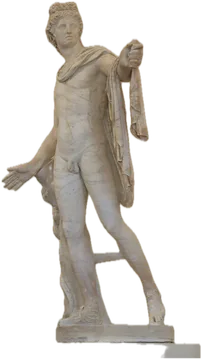
Brother · Sources
Братство или сестринство выведено из общего родителя: Зевс. Матери и отцы, не указанные в источнике, не предполагаются. Квалификация братства/сестринства: Полнота родства и линия общего родителя не установлены.
Геба · ruwiki, «Геба» (intro)from the time when first they parted in strife Atreus' son, king of men, and brilliant Achilles. Who then of the gods was it that brought these two together to contend? The son of Leto and Zeus; for he in anger against the king roused throughout the host an evil pestilence, and the people began to perish,
to sacred Ilios. And Apollo sped forth to meet her, for he looked down from out of Pergamus and beheld her, and was fain to have victory for the Trojans. So the twain met one with the other by the oak-tree. Then to her spake first the king Apollo, son of Zeus: Wherefore art thou again come thus eagerly from Olympus, thou daughter of great Zeus,
to the end that yet again the Achaeans may have respite from their toil. So spake he, nor was Apollo disobedient to his father s bidding, but went down from the hills of Ida, like a fleet falcon, the slayer of doves, that is the swiftest of winged things. He found the son of wise-hearted Priam, even goodly Hector,
Il. 1.9 · Il. 7.23 · Il. 15.236 · Il. 20.103 · Il. 21.229 · Il. 22.302
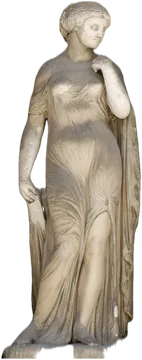
Sister · Sources
Братство или сестринство выведено из общего родителя: Зевс. Матери и отцы, не указанные в источнике, не предполагаются. Квалификация братства/сестринства: Полнота родства и линия общего родителя не установлены.
Геба · ruwiki, «Геба» (intro)His battle-gear lieth upon the bounteous earth, but himself he rangeth like the bell-wether of a herd through the ranks of warriors. Like a ram he seemeth to me, a ram of thick fleece, that paceth through a great flock of white ewes. To him made answer Helen, sprung from Zeus:
and hate thee, even as now I love thee wondrously; and lest I devise grievous hatred between both, Trojans alike and Danaans; then wouldst thou perish of an evil fate. So spake she, and Helen, sprung from Zeus, was seized with fear; and she went, wrapping herself in her bright shining mantle,
Il. 3.199 · Il. 3.418
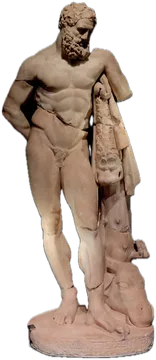
Brother · Sources
Братство или сестринство выведено из общего родителя: Зевс. Матери и отцы, не указанные в источнике, не предполагаются. Квалификация братства/сестринства: Полнота родства и линия общего родителя не установлены.
Геба · ruwiki, «Геба» (intro)And so suffered monstrous Hades even as the rest a bitter arrow, when this same man, the son of Zeus that beareth the aegis, smote him in Pylos amid the dead, and gave him over to pains. But he went to the house of Zeus and to high Olympus with grief at heart, pierced through with pains;
howbeit mine own father rageth with evil mind, cruel that he is, ever froward, a thwarter of my purposes; neither hath he any memory of this, that full often I saved his son when he was fordone by reason of Eurystheus' tasks. For verily he would make lament toward heaven and from heaven would Zeussend me forth to succour him. Had I but known all this in wisdom of my heart when Eurystheus sent him forth to the house of Hades the Warder, to bring from out of Erebus the hound of loathed Hades, then had he not escaped the sheer-falling waters of Styx.
Deemest thou that Zeus, whose voice is borne afar, will aid the Trojans, even as he waxed wroth for the sake of Heracles, his own son? Nay, come, I will give thee one of the youthful Graces to wed to be called thy wife, even Pasithea, for whom thou ever longest all thy days.
Il. 5.396 · Il. 8.363–365 · Il. 14.266 · Il. 14.324
See all 22
In art

Peter Paul Rubens. Ganymede receives the bowl from Hebe. Palais Schwarzenberg. Public domain. https://www.wikidata.org/wiki/Q111188757
Peter Paul Rubens. Ganymede receives the bowl from Hebe. Palais Schwarzenberg. Public domain. https://www.wikidata.org/wiki/Q111188757

Gavin Hamilton. Hebe Giving Drink to the Eagle of Jupiter. Cantor Arts Center at Stanford University. Public domain. https://www.wikidata.org/wiki/Q113048718
Gavin Hamilton. Hebe Giving Drink to the Eagle of Jupiter. Cantor Arts Center at Stanford University. Public domain. https://www.wikidata.org/wiki/Q113048718

Jan van Bijlert. The Feast of the Gods. Musée Magnin. CC0. https://www.wikidata.org/wiki/Q127971966
Jan van Bijlert. The Feast of the Gods. Musée Magnin. CC0. https://www.wikidata.org/wiki/Q127971966

Jean-Marc Nattier. The Duchess of Chaulnes Represented as Hebe. Department of Paintings of the Louvre. Public domain. https://www.wikidata.org/wiki/Q29842411
Jean-Marc Nattier. The Duchess of Chaulnes Represented as Hebe. Department of Paintings of the Louvre. Public domain. https://www.wikidata.org/wiki/Q29842411

William Beechey. Hebe feeding Jupiter's eagle. Fitzwilliam Museum. Public domain. https://www.wikidata.org/wiki/Q50821164
William Beechey. Hebe feeding Jupiter's eagle. Fitzwilliam Museum. Public domain. https://www.wikidata.org/wiki/Q50821164

Jacob Jordaens. Hebe. Department of Paintings of the Louvre. Public domain. https://www.wikidata.org/wiki/Q66107826
Jacob Jordaens. Hebe. Department of Paintings of the Louvre. Public domain. https://www.wikidata.org/wiki/Q66107826

Carolus-Duran. Lille carolus duran. Palais des Beaux-Arts de Lille. Public domain. https://www.wikidata.org/wiki/Q72274054
Carolus-Duran. Lille carolus duran. Palais des Beaux-Arts de Lille. Public domain. https://www.wikidata.org/wiki/Q72274054
See all 22

Jean-Marc Nattier. Jean-Marc Nattier - Portrait présumé de Mme de Mailly (1710-1751), en Hébé - P486 - Musée Carnavalet. Musée Carnavalet. Public domain. https://www.wikidata.org/wiki/Q104373764
Jean-Marc Nattier. Jean-Marc Nattier - Portrait présumé de Mme de Mailly (1710-1751), en Hébé - P486 - Musée Carnavalet. Musée Carnavalet. Public domain. https://www.wikidata.org/wiki/Q104373764

Nicolaes Maes. Double portrait of two children as Hebe and Ganymede. Public domain. https://www.wikidata.org/wiki/Q24519074
Nicolaes Maes. Double portrait of two children as Hebe and Ganymede. Public domain. https://www.wikidata.org/wiki/Q24519074

François-Hubert Drouais. «Госпожа дофина, Мария-Антуанетта, в образе Гебы» (1755–1793). Condé Museum. Public domain. https://www.wikidata.org/wiki/Q34775959
François-Hubert Drouais. «Госпожа дофина, Мария-Антуанетта, в образе Гебы» (1755–1793). Condé Museum. Public domain. https://www.wikidata.org/wiki/Q34775959

William Beechey. Frances Wyndham, later Lady Burrell (1789–1848), as Hebe. National Trust. Public domain. https://www.wikidata.org/wiki/Q52252962
William Beechey. Frances Wyndham, later Lady Burrell (1789–1848), as Hebe. National Trust. Public domain. https://www.wikidata.org/wiki/Q52252962

Henri Leopold Levy. Hebe and the eagle of Jupiter. Museum of Fine Arts of Nancy. Public domain. https://www.wikidata.org/wiki/Q60643601
Henri Leopold Levy. Hebe and the eagle of Jupiter. Museum of Fine Arts of Nancy. Public domain. https://www.wikidata.org/wiki/Q60643601

Pierre-François Berruer. Pierre-François Berruer - Hébé 01. Musée des Beaux-Arts de Bordeaux. CC BY-SA 4.0. https://www.wikidata.org/wiki/Q131406291
Pierre-François Berruer. Pierre-François Berruer - Hébé 01. Musée des Beaux-Arts de Bordeaux. CC BY-SA 4.0. https://www.wikidata.org/wiki/Q131406291

Albert-Ernest Carrier-Belleuse. Hebe asleep. Musée d'Orsay. CC BY-SA 4.0. https://www.wikidata.org/wiki/Q19337416
Albert-Ernest Carrier-Belleuse. Hebe asleep. Musée d'Orsay. CC BY-SA 4.0. https://www.wikidata.org/wiki/Q19337416

Simeon Skillin, Jr.. Hebe. Metropolitan Museum of Art. CC0. https://www.wikidata.org/wiki/Q20171180
Simeon Skillin, Jr.. Hebe. Metropolitan Museum of Art. CC0. https://www.wikidata.org/wiki/Q20171180

Antonio Canova. Геба. Staatliche Museen zu Berlin. CC BY-SA 2.5. https://www.wikidata.org/wiki/Q3717843
Antonio Canova. Геба. Staatliche Museen zu Berlin. CC BY-SA 2.5. https://www.wikidata.org/wiki/Q3717843

François Rude. Hébé et l'aigle de Jupiter - François Rude - Musée du Louvre Sculptures RF 2036 B. Department of Sculptures of the Louvre. CC0. https://www.wikidata.org/wiki/Q121641613
François Rude. Hébé et l'aigle de Jupiter - François Rude - Musée du Louvre Sculptures RF 2036 B. Department of Sculptures of the Louvre. CC0. https://www.wikidata.org/wiki/Q121641613

anonymous. Abduction of Ganymede. Public domain. https://www.wikidata.org/wiki/Q111905369
anonymous. Abduction of Ganymede. Public domain. https://www.wikidata.org/wiki/Q111905369

Franz Machtl. Hebe. CC BY 2.0. https://www.wikidata.org/wiki/Q19337773
Franz Machtl. Hebe. CC BY 2.0. https://www.wikidata.org/wiki/Q19337773

Robert Thomas. Hebe. CC BY 2.0. https://www.wikidata.org/wiki/Q19338101
Robert Thomas. Hebe. CC BY 2.0. https://www.wikidata.org/wiki/Q19338101

Bertel Thorvaldsen. Hebe by Bertel Thorvaldsen. Thorvaldsen Museum. CC0. https://www.wikidata.org/wiki/Q21584724
Bertel Thorvaldsen. Hebe by Bertel Thorvaldsen. Thorvaldsen Museum. CC0. https://www.wikidata.org/wiki/Q21584724

Ribbon Painter. Hydria Ricci. Museo Nazionale Etrusco di Villa Giulia. CC BY-SA 4.0. https://www.wikidata.org/wiki/Q43893457
Ribbon Painter. Hydria Ricci. Museo Nazionale Etrusco di Villa Giulia. CC BY-SA 4.0. https://www.wikidata.org/wiki/Q43893457
Sources and verification
The character is matched to the catalogue.
- Wikipedia · Hebe (mythology) · CC BY-SA 4.0
Excerpt; remaining sentences omitted.
Reference material remains distinct from the poem’s assertions. Characters who share a name retain separate pages.