Chryseis
Mortal woman
Chryseis ( , Ancient Greek: Χρυσηίς, romanized: Khrusēís, pronounced [kʰryːsɛːís]) is a Trojan woman in Homer's Iliad, the daughter of Chryses. Chryseis, her apparent name in the Iliad, means simply "Chryses' daughter"; later writers give her real name as Astynome (Ἀστυνόμη).
Explore on the graph
- Mentions
- 10
- Connected characters
- 2
- Books
- 1


Mentions in the Iliad
A. T. Murray, Loeb Classical Library, Harvard University Press, 1924 · Homer, Iliad with an English Translation · CC BY-SA 3.0 US
“because upon the priest Chryses the son of Atreus had wrought dishonour. For he had come to the swift ships of the Achaeans to free his daughter, bearing ransom past counting; and in his hands he held the wreaths of Apollo who strikes from afar, on a staff of gold; and he implored all the Achaeans,”

“Let me not find you, old man, by the hollow ships, either tarrying now or coming back later, lest your staff and the wreath of the god not protect you. Her I will not set free. Sooner shall old age come upon her in our house, in Argos, far from her native land,”
“For this cause the god who strikes from afar has given woes and will still give them. He will not drive off from the Danaans the loathsome pestilence, until we give back to her dear father the bright-eyed maiden, unbought, unransomed, and lead a sacred hecatomb to Chryse. Then we might appease and persuade him.”
“Let us now drag a black ship to the shining sea, and quickly gather suitable rowers into it, and place on board a hecatomb, and embark on it the fair-cheeked daughter of Chryses herself. Let one prudent man be its commander, either Aias, or Idomeneus, or brilliant Odysseus,”
“nor take heed of your wrath. But I will threaten you thus: as Phoebus Apollo takes from me the daughter of Chryses, her with my ship and my companions I will send back, but I will myself come to your tent and take the fair-cheeked Briseis, your prize, so that you will understand”
“and Odysseus of many wiles went on board to take command. So these embarked and sailed over the watery ways; but the son of Atreus bade the people purify themselves. And they purified themselves, and cast the defilement into the sea, and offered to Apollo perfect hecatombs”
“We went forth to Thebe, the sacred city of Eetion, and laid it waste, and brought here all the spoil. This the sons of the Achaeans divided properly among themselves, but for the son of Atreus they chose out the fair-cheeked daughter of Chryses. However, Chryses, priest of Apollo, who strikes from afar,”
See all 10
“Forthwith, then, I first bade propitiate the god, but thereafter anger seized the son of Atreus, and straightway he arose and spoke a threatening word, which now has come to pass. For the quick-glancing Achaeans are taking the maiden in a swift ship to Chryse, and are bearing gifts to the god;”
“Then they cast out the mooring-stones and made fast the stern cables, and themselves went forth upon the shore of the sea. They brought forth the hecatomb for Apollo, who strikes from afar, and forth stepped also the daughter of Chryses from the sea-faring ship. Her then did Odysseus of many wiles lead to the altar,”
“and place in the arms of her dear father, saying to him: Chryses, Agamemnon, king of men, sent me forth to bring to you your daughter, and to offer to Phoebus a holy hecatomb on the Danaans' behalf, that therewith we may propitiate the lord, who has now brought upon the Argives woeful lamentation.”
Connections
Father · Sources
because upon the priest Chryses the son of Atreus had wrought dishonour. For he had come to the swift ships of the Achaeans to free his daughter, bearing ransom past counting; and in his hands he held the wreaths of Apollo who strikes from afar, on a staff of gold; and he implored all the Achaeans,
Let me not find you, old man, by the hollow ships, either tarrying now or coming back later, lest your staff and the wreath of the god not protect you. Her I will not set free. Sooner shall old age come upon her in our house, in Argos, far from her native land,as she walks to and fro before the loom and serves my bed. But go, do not anger me, that you may return the safer. So he spoke, and the old man was seized with fear and obeyed his word. He went forth in silence along the shore of the loud-resounding sea, and earnestly then, when he had gone apart, the old man prayed
For this cause the god who strikes from afar has given woes and will still give them. He will not drive off from the Danaans the loathsome pestilence, until we give back to her dear father the bright-eyed maiden, unbought, unransomed, and lead a sacred hecatomb to Chryse. Then we might appease and persuade him.
Il. 1.13 · Il. 1.29–31 · Il. 1.98 · Il. 1.310 · Il. 1.369–370 · Il. 1.439–441 · Il. 1.446–447
Connection · Sources
nor take heed of your wrath. But I will threaten you thus: as Phoebus Apollo takes from me the daughter of Chryses, her with my ship and my companions I will send back, but I will myself come to your tent and take the fair-cheeked Briseis, your prize, so that you will understand
Il. 1.182
See all 2
In art

Claude Lorrain. Odysseus returns Chryseis to Her Father. Department of Paintings of the Louvre. CC BY 4.0. https://www.wikidata.org/wiki/Q18762387
Image author: Mbzt
Image date: 2023-12-07 12:01:12

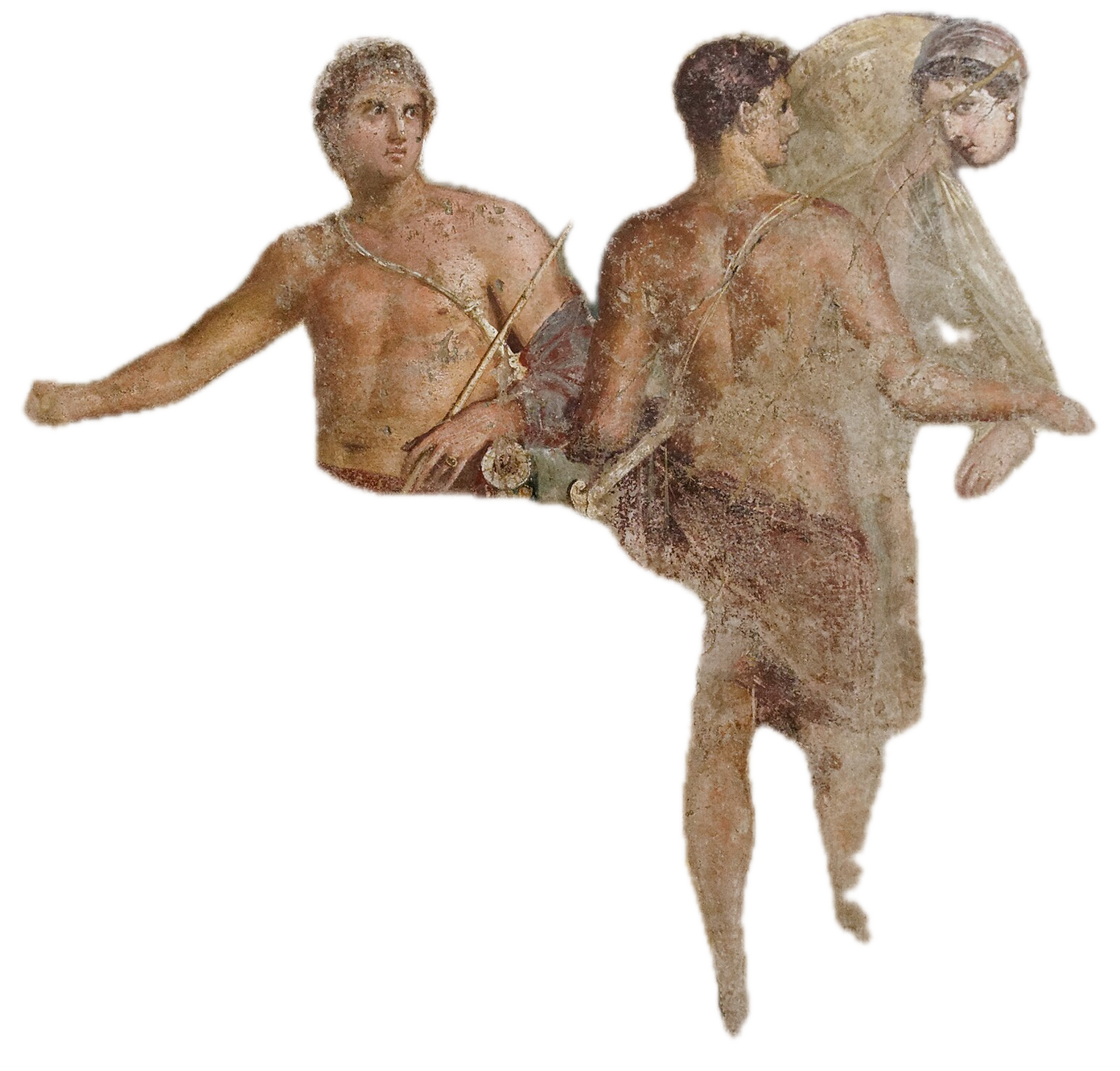
Departure of Chryseis. Naples National Archaeological Museum. CC BY-SA 4.0. https://www.wikidata.org/wiki/Q126373845
See all 2
04 / PROVENANCE
Sources and verification
The character is matched to the catalogue.
- Wikipedia · Chryseis · CC BY-SA 4.0
Excerpt; remaining sentences omitted.
Reference material remains distinct from the poem’s assertions. Characters who share a name retain separate pages.