Laertes
Mortal man
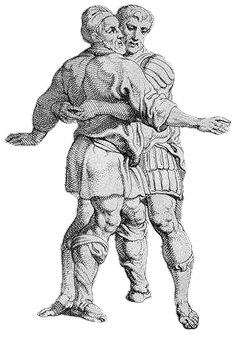
In Greek mythology, Laertes (; Ancient Greek: Λαέρτης, romanized: Laértēs Greek pronunciation: [laː.ér.tɛːs]; also spelled Laërtes) was the king of the Cephallenians, an ethnic group who lived both on the Ionian Islands and on the mainland. He presumably inherited the kingdom from his father Arcesius and grandfather Cephalus.
Explore on the graph- Mentions
- 10
- Connected characters
- 2
- Books
- 7


Mentions in the Iliad
A. T. Murray, Loeb Classical Library, Harvard University Press, 1924 · Homer, Iliad with an English Translation · CC BY-SA 3.0 US
“as he stood. He laid no hand upon his benched, black ship, for that grief had come upon his heart and soul; and flashing-eyed Athene stood near him, and said: Son of Laërtes, sprung from Zeus, Odysseus of many wiles, is it thus indeed that ye will fling yourselves”

“This again is Laertes' son, Odysseus of many wiles, that was reared in the land of Ithaca, rugged though it be, and he knoweth all manner of craft and cunning devices. Then to her again made answer Antenor, the wise: Lady, this verily is a true word that thou hast spoken,”
“of the horse-taming Trojans. This that thou sayest is as empty wind. Then lord Agamemnon spake to him with a smile, when he knew that he was wroth, and took back his words: Zeus-born son of Laertes, Odysseus of many wiles, neither do I chide thee overmuch nor urge thee on,”
“even Hector. And now would the old man here have lost his life, had not Diomedes, good at the war-cry, been quick to see; and he shouted with a terrible shout, urging on Odysseus: Zeus-born son of Laërtes, Odysseus of many wiles, whither fleest thou with thy back turned, like a coward in the throng?”


“in his baneful rage, for he deemeth there is no man like unto him among the Danaans that the ships brought hither. Then in answer to him spake swift-footed Achilles: Zeus-born son of Laërtes, Odysseus of many wiles, needs must I verily speak my word outright, even as I am minded,”






“He spake and to Patroclus nodded his brow in silence that he should spread for Phoenix a thick couch, that the others might forthwith bethink them to depart from the hut. But among them Aias, the godlike son of Telamon, spake, saying: Zeus—born son of Laërtes, Odysseus of many wiles,”
“and he came forth from the hut and spake to them, saying: How is it that ye fare thus alone by the ships throughout the camp in the immortal night? What need so great hath come upon you? Then made answer to him the horseman, Nestor of Gerenia: Zeus-born son of Laërtes, Odysseus of many wiles,”
See all 10
“Not yet was the word fully uttered, when they came themselves. Down they leapt to earth, and the others were seized with joy and welcomed them with hand-clasps and with gentle words. And the horseman, Nestor of Gerenia, was first to question them: Come tell me now, Odysseus, greatly to be praised, great glory of the Achaeans,”
“And on the stern of his ship did Odysseus place the bloody spoils of Dolon until they should make ready a sacred offering to Athene. But for themselves they entered the sea and washed away the abundant sweat from shins and necks and thighs. And when the wave of the sea had washed the abundant sweat”
“will it be if Hector of the flashing helm shall take the ships. Then in answer to him spake mighty Diomedes: Of a surety will I abide and endure, howbeit but for scant space shall be our profit, for Zeus, the cloud-gatherer, plainly willeth to give victory to the Trojans rather than to us.”
Connections
Son · Sources
as he stood. He laid no hand upon his benched, black ship, for that grief had come upon his heart and soul; and flashing-eyed Athene stood near him, and said: Son of Laërtes, sprung from Zeus, Odysseus of many wiles, is it thus indeed that ye will fling yourselves
This again is Laertes' son, Odysseus of many wiles, that was reared in the land of Ithaca, rugged though it be, and he knoweth all manner of craft and cunning devices. Then to her again made answer Antenor, the wise: Lady, this verily is a true word that thou hast spoken,
of the horse-taming Trojans. This that thou sayest is as empty wind. Then lord Agamemnon spake to him with a smile, when he knew that he was wroth, and took back his words: Zeus-born son of Laertes, Odysseus of many wiles, neither do I chide thee overmuch nor urge thee on,
Il. 2.173 · Il. 3.200 · Il. 4.358 · Il. 8.93 · Il. 9.307 · Il. 9.624 · Il. 10.144 · Il. 10.544 · Il. 10.570 · Il. 11.316
Grandson · Sources
Происхождение выведено по цепочке родителей: Лаэрт → Одиссей → Телемах.
as he stood. He laid no hand upon his benched, black ship, for that grief had come upon his heart and soul; and flashing-eyed Athene stood near him, and said: Son of Laërtes, sprung from Zeus, Odysseus of many wiles, is it thus indeed that ye will fling yourselves
This again is Laertes' son, Odysseus of many wiles, that was reared in the land of Ithaca, rugged though it be, and he knoweth all manner of craft and cunning devices. Then to her again made answer Antenor, the wise: Lady, this verily is a true word that thou hast spoken,
Son of Atreus, what a word hath escaped the barrier of thy teeth! How sayest thou that we are slack in battle, whenso we Achaeans rouse keen war against the horse-taming Trojans? Thou shalt see, if so be thou wilt and if thou carest aught therefor, the father of Telemachus mingling with the foremost fighters

Il. 2.173 · Il. 3.200 · Il. 4.354 · Il. 4.358 · Il. 8.93 · Il. 9.307 · Il. 9.624 · Il. 10.144 · Il. 10.544 · Il. 10.570 · Il. 11.316
See all 2
In art
See all 0
There is nothing in this section yet.
04 / PROVENANCE
Sources and verification
The character is matched to the catalogue.
- Wikipedia · Laertes (father of Odysseus) · CC BY-SA 4.0
Excerpt; remaining sentences omitted.
Reference material remains distinct from the poem’s assertions. Characters who share a name retain separate pages.