Hypnos
God
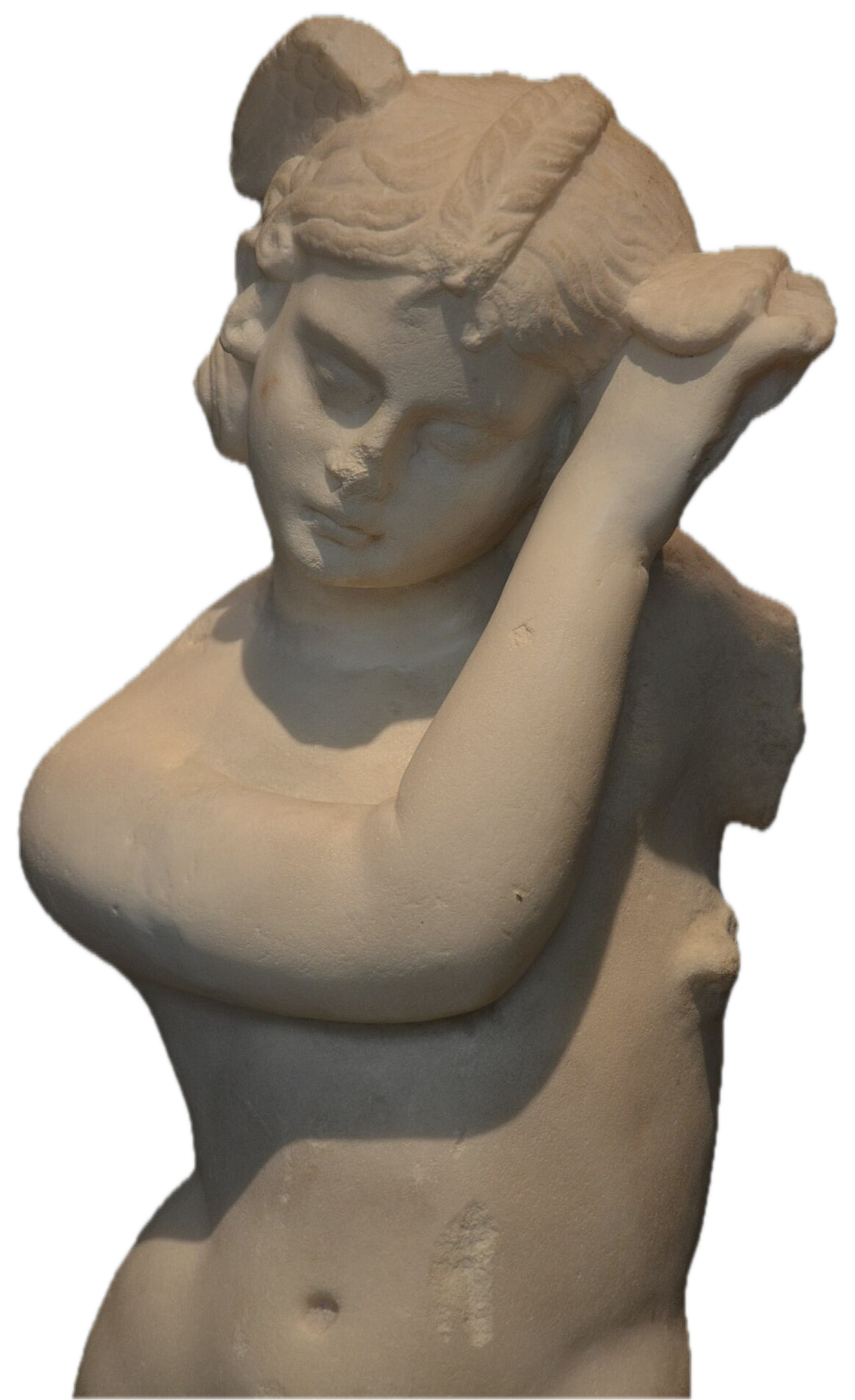
In Greek mythology, Hypnos (; Ancient Greek: Ὕπνος, 'sleep'), also spelled Hypnus, is the personification of sleep. The Roman equivalent is Somnus.
Explore on the graph- Mentions
- 6
- Connected characters
- 1
- Books
- 2


Mentions in the Iliad
A. T. Murray, Loeb Classical Library, Harvard University Press, 1924 · Homer, Iliad with an English Translation · CC BY-SA 3.0 US
“and so came to Lemnos, the city of godlike Thoas. There she met Sleep, the brother of Death; and she clasped him by the hand, and spake and addressed him: Sleep, lord of all gods and of all men, if ever thou didst hearken to word of mine, so do thou even now obey,”
“the god of the two strong arms, shall fashion thee with skill, and beneath it shall he set a foot-stool for the feet, whereon thou mayest rest thy shining feet when thou quaffest thy wine. Then sweet Sleep made answer to her, saying: Hera, queenly goddess, daughter of great Cronos, another of the gods, that are for ever, might I lightly lull to sleep, aye, were it even the streams of the river”
“To her I came in my flight, and besought her, and Zeus refrained him, albeit he was wroth, for he had awe lest he do aught displeasing to swift Night. And now again thou biddest me fulfill this other task, that may nowise be done. To him then spake again ox-eyed, queenly Hera: Sleep, wherefore ponderest thou of these things in thine heart?”
“and the topmost forest quivered beneath their feet. There Sleep did halt, or ever the eyes of Zeus beheld him, and mounted up on a fir-tree exceeding tall, the highest that then grew in Ida; and it reached up through the mists into heaven. Thereon he perched, thick-hidden by the branches of the fir,”
“Therein lay the twain, and were clothed about with a cloud, fair and golden, wherefrom fell drops of glistering dew. Thus in quiet slept the Father on topmost Gargarus, by sleep and love overmastered, and clasped in his arms his wife. But sweet Sleep set out to run to the ships of the Argives”
“and anoint him with ambrosia, and clothe him about with immortal raiment, and give him to swift conveyers to bear with them, even to the twin brethren, Sleep and Death, who shall set him speedily in the rich land of wide Lycia. There shall his brethren and his kinsfolk give him burial”
See all 6
Connections
Brother · Sources
and so came to Lemnos, the city of godlike Thoas. There she met Sleep, the brother of Death; and she clasped him by the hand, and spake and addressed him: Sleep, lord of all gods and of all men, if ever thou didst hearken to word of mine, so do thou even now obey,
and anoint him with ambrosia, and clothe him about with immortal raiment, and give him to swift conveyers to bear with them, even to the twin brethren, Sleep and Death, who shall set him speedily in the rich land of wide Lycia. There shall his brethren and his kinsfolk give him burial
Il. 14.231–232 · Il. 16.672
See all 1
In art

Jean Bérain the Elder. (Scène du Songe d'Atys Atys (...)Berain Jean btv1b52511001f 1. Bibliothèque nationale de France. Public domain. https://www.wikidata.org/wiki/Q96225504

John William Waterhouse. Сон и его сводный брат Смерть (картина). Public domain. https://www.wikidata.org/wiki/Q7539742
Image author: John William Waterhouse
Image date: 1874

1975.09.1 Mosaïque de Somnus (Musée de Die). Musée de Die. CC BY-SA 4.0. https://www.wikidata.org/wiki/Q53733013
See all 7
Bertel Thorvaldsen. Night. Thorvaldsen Museum. CC0. https://www.wikidata.org/wiki/Q21570161

Statue of Hygieia with Hypnos. J. Paul Getty Museum. CC0. https://www.wikidata.org/wiki/Q124782381

Hypnos de Algorós. National Museum of Archaeology. CC BY-SA 2.0. https://www.wikidata.org/wiki/Q136529040

Ariadne discovered by Bacchus, from Pompeii VII.4.51 room i. Naples, Archaeological Museum 9278 - 01. Naples National Archaeological Museum. CC BY-SA 4.0. https://www.wikidata.org/wiki/Q132745472
04 / PROVENANCE
Sources and verification
The character is matched to the catalogue.
- Wikipedia · Hypnos · CC BY-SA 4.0
Excerpt; remaining sentences omitted.
Reference material remains distinct from the poem’s assertions. Characters who share a name retain separate pages.