Glaucus (son of Hippolochus)
Mortal man
In Greek mythology, Glaucus (; Ancient Greek: Γλαῦκος, romanized: Glaûkos, lit. 'shiny', 'bright' or 'glimmering') was a captain in the Lycian army under the command of his close friend and cousin Sarpedon. The Lycians in the Trojan War were allies of Troy.
Explore on the graph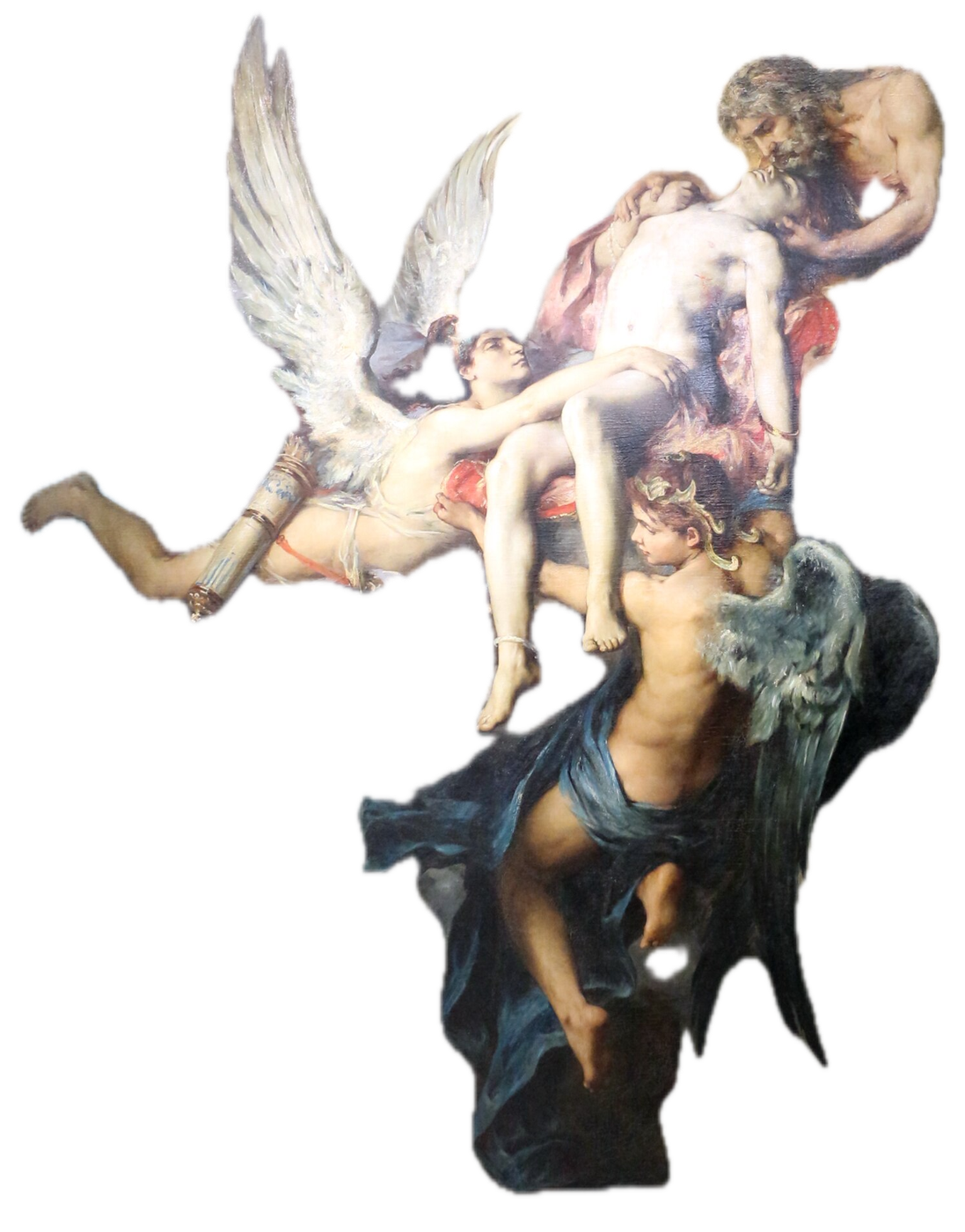
- Mentions
- 20
- Connected characters
- 7
- Books
- 7
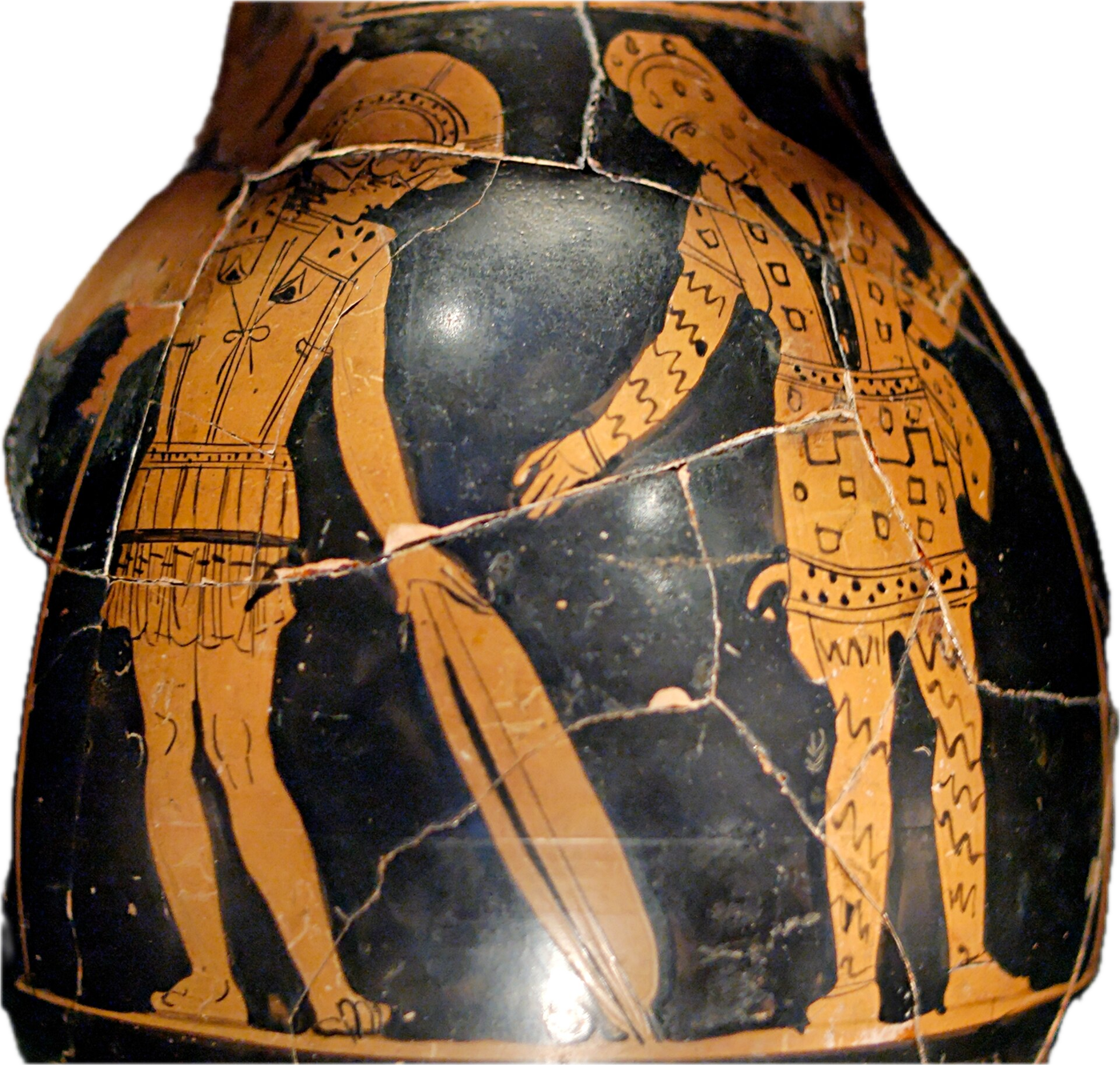


Mentions in the Iliad
A. T. Murray, Loeb Classical Library, Harvard University Press, 1924 · Homer, Iliad with an English Translation · CC BY-SA 3.0 US
“and Achilles, wise of heart, bare off the gold. And Sarpedon and peerless Glaucus were captains of the Lycians from afar out of Lycia, from the eddying Xanthus.”






“to make prayer to the gods, and promise them hecatombs. So saying, Hector of the flashing helm departed, and the black hide at either end smote against his ankles and his neck, even the rim that ran about the outermost edge of his bossed shield. But Glaucus, son of Hippolochus, and the son of Tydeus”

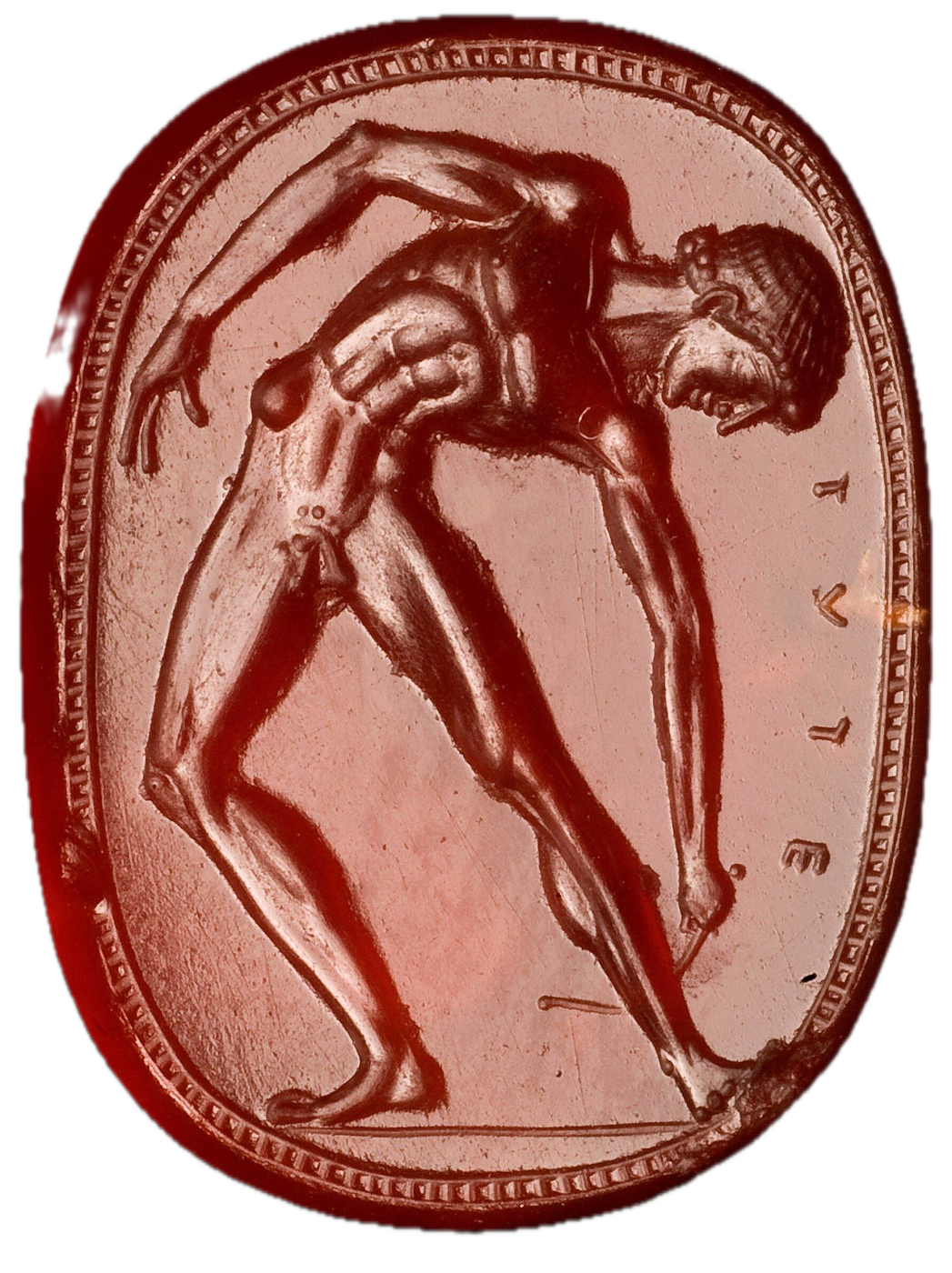
“came together in the space between the two hosts, eager to do battle. And when the twain were now come near as they advanced one against the other, Diomedes, good at the war-cry, was first to speak, saying: Who art thou, mighty one, among mortal men? For never have I seen thee in battle where men win glory”

“and he lived not for long, seeing that he was hated of all the immortal gods. So would not I be minded to fight against the blessed gods. But if thou art of men, who eat the fruit of the field, draw nigh, that thou mayest the sooner enter the toils of destruction. Then spake to him the glorious son of Hippolochus:”
“and his daughter was slain in wrath by Artemis of the golden reins. But Hippolochus begat me and of him do I declare that I am sprung; and he sent me to Troy and straitly charged me ever to be bravest and pre-eminent above all, and not bring shame upon the race of my fathers,”
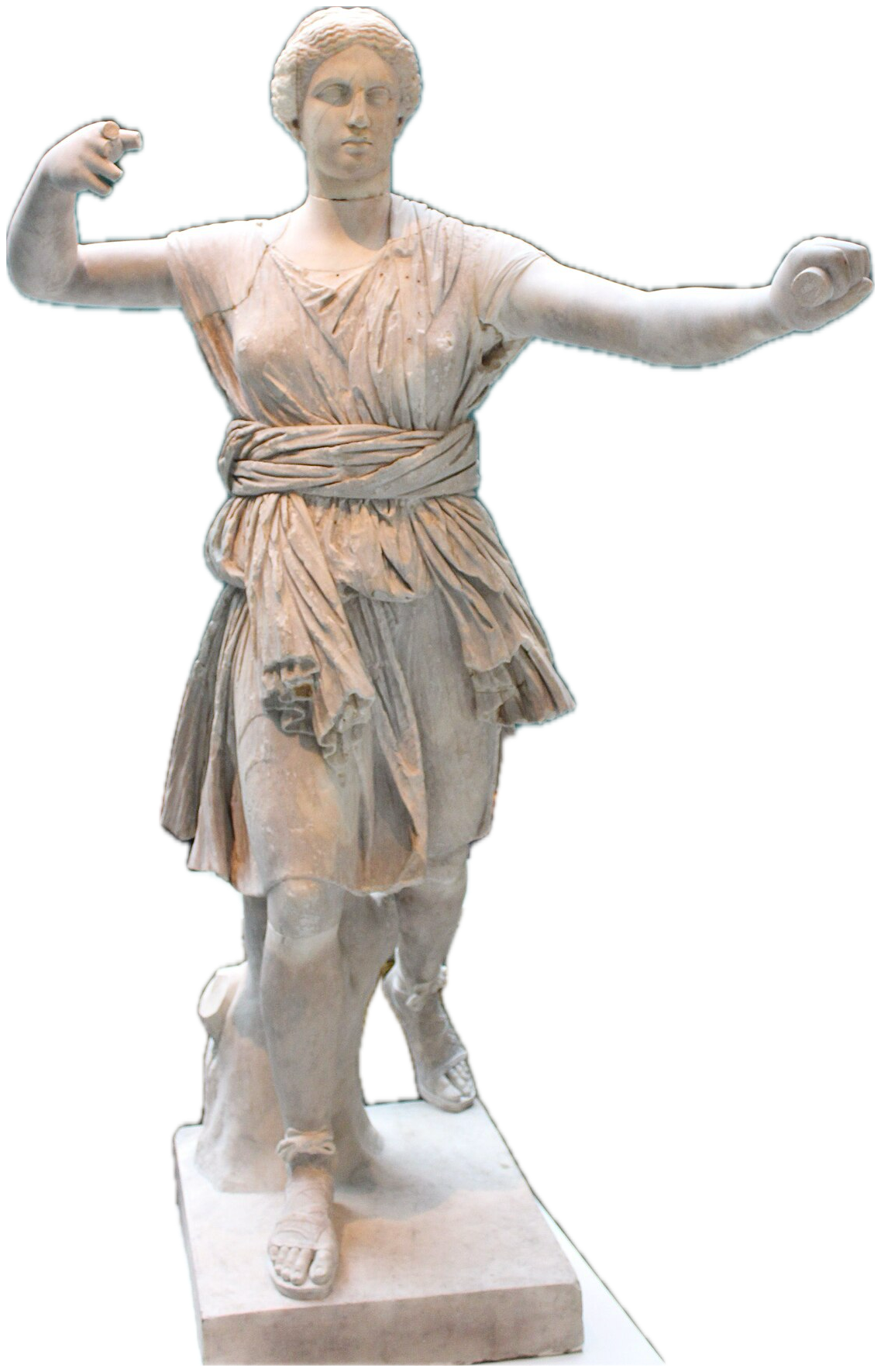
“that were far the noblest in Ephyre and in wide Lycia. This is the lineage and the blood whereof I avow me sprung. So spake he, and Diomedes, good at the warcry, waxed glad. He planted his spear in the bounteous earth, and with gentle words spake to the shepherd of the host:”
“and many Achaeans again for thee to slay whomsoever thou canst. And let us make exchange of armour, each with the other, that these men too may know that we declare ourselves to be friends from our fathers' days. When they had thus spoken, the twain leapt down from their chariots and clasped each other's hands and pledged their faith. And then from Glaucus did Zeus, son of Cronos, take away his wit,”

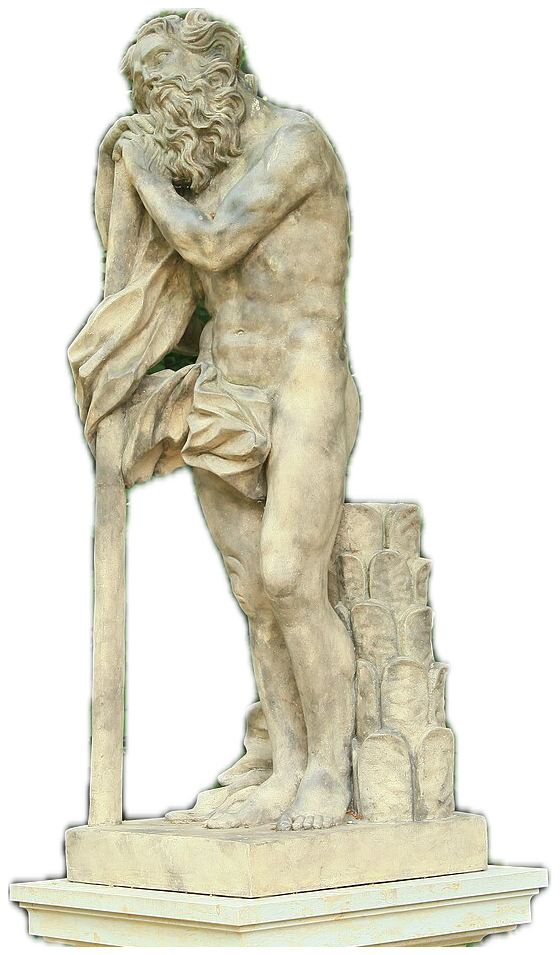
See all 20
“Areithous and ox-eyed Phylomedusa; and Hector with his sharp spear smote Eioneus on the neck beneath the well-wrought helmet of bronze, and loosed his limbs. And Glaucus, son of Hippolochus, leader of the Lycians, made a cast with his spear in the fierce conflict at Iphinous,”
“Archelochus and Acamas, well skilled in all manner of fighting. And Sarpedon led the glorious allies, and he chose as his comrades Glaucus and warlike Asteropaeus, for these seemed to him to be the bravest beyond all others after his own self, but he was pre-eminent even amid all.”
“but either he leapeth amid the flock and seizeth one, or is himself smitten as a foremost champion by a javelin from a swift hand: even so did his spirit then urge godlike Sarpedon to rush upon the wall, and break-down the battlements. Straightway then he spake to Glaucus, son of Hippolochus:”
“nor should I send thee into battle where men win glory; but now—for in any case fates of death beset us, fates past counting, which no mortal may escape or avoid—now let us go forward, whether we shall give glory to another, or another to us. So spake he, and Glaucus turned not aside,”
“all the bones of the head of Epicles; and he fell like a diver from the high wall, and his spirit left his bones. And Teucer smote Glaucus, the stalwart son of Hippolochus, as he rushed upon them, with an arrow from the high wall, where he saw his arm uncovered; and he stayed him from fighting.”
“even Polydamas, and Aeneas, and goodly Agenor, and Sarpedon, leader of the Lycians, and peerless Glaucus withal, and of the rest was no man unheedful of him, but before him they held their round shields; and his comrades lifted him up in their arms and bare him forth from the toil of war until he came to the swift horses”
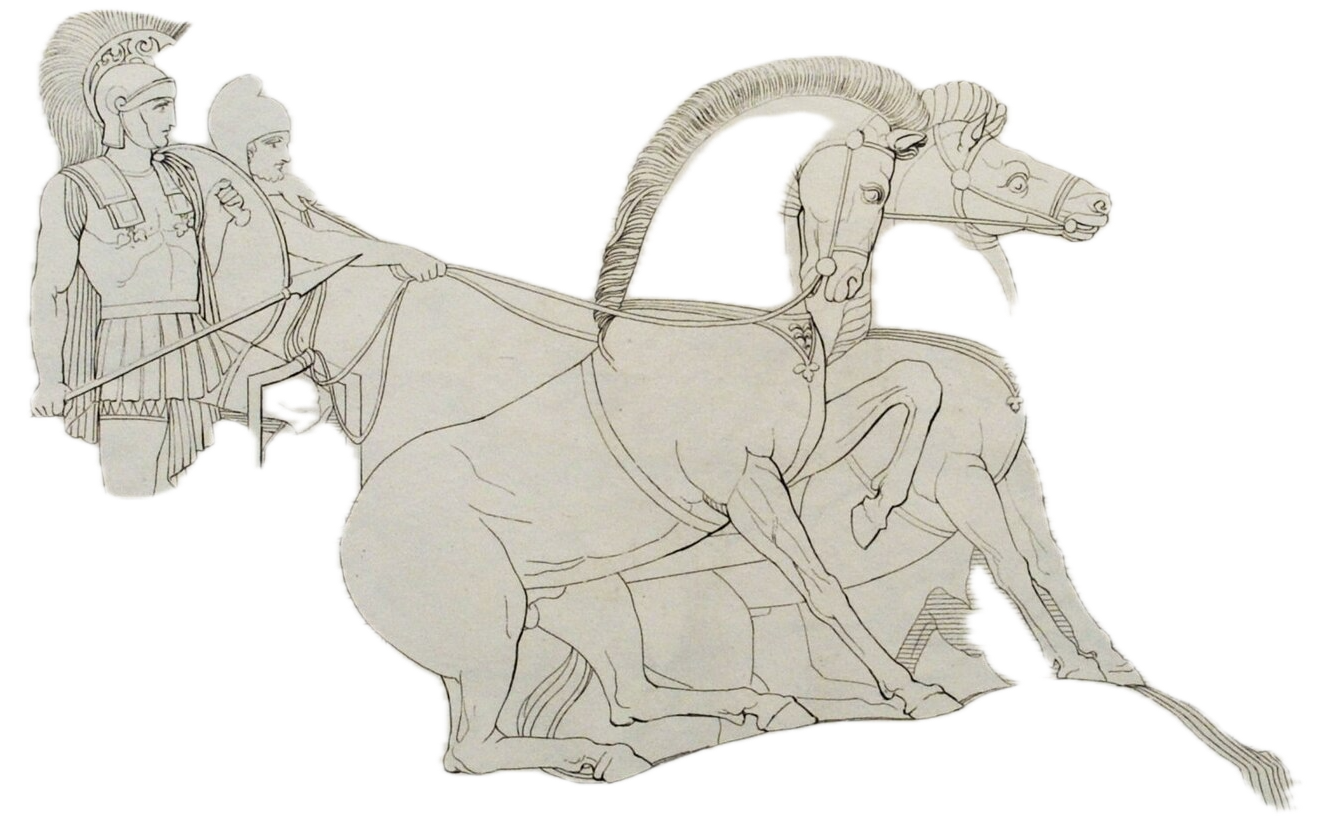
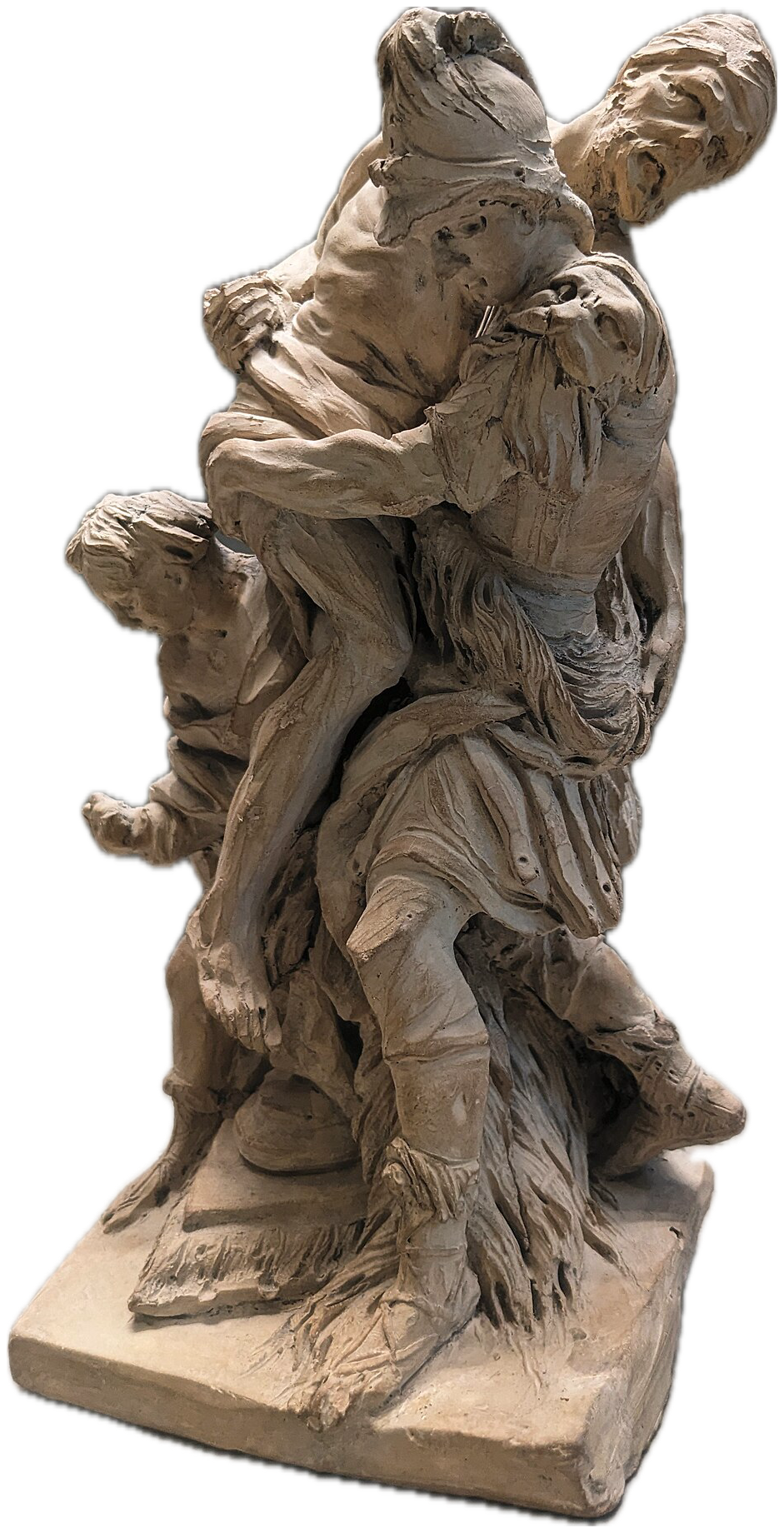
“even so beneath Patroclus did the leader of the Lycian shieldmen struggle in death; and he called by name his dear comrade: Dear Glaucus, warrior amid men of war, now in good sooth it behoveth thee to quit thee as a spearman and a dauntless warrior; now be evil war thy heart's desire if indeed thou art swift to fight.”
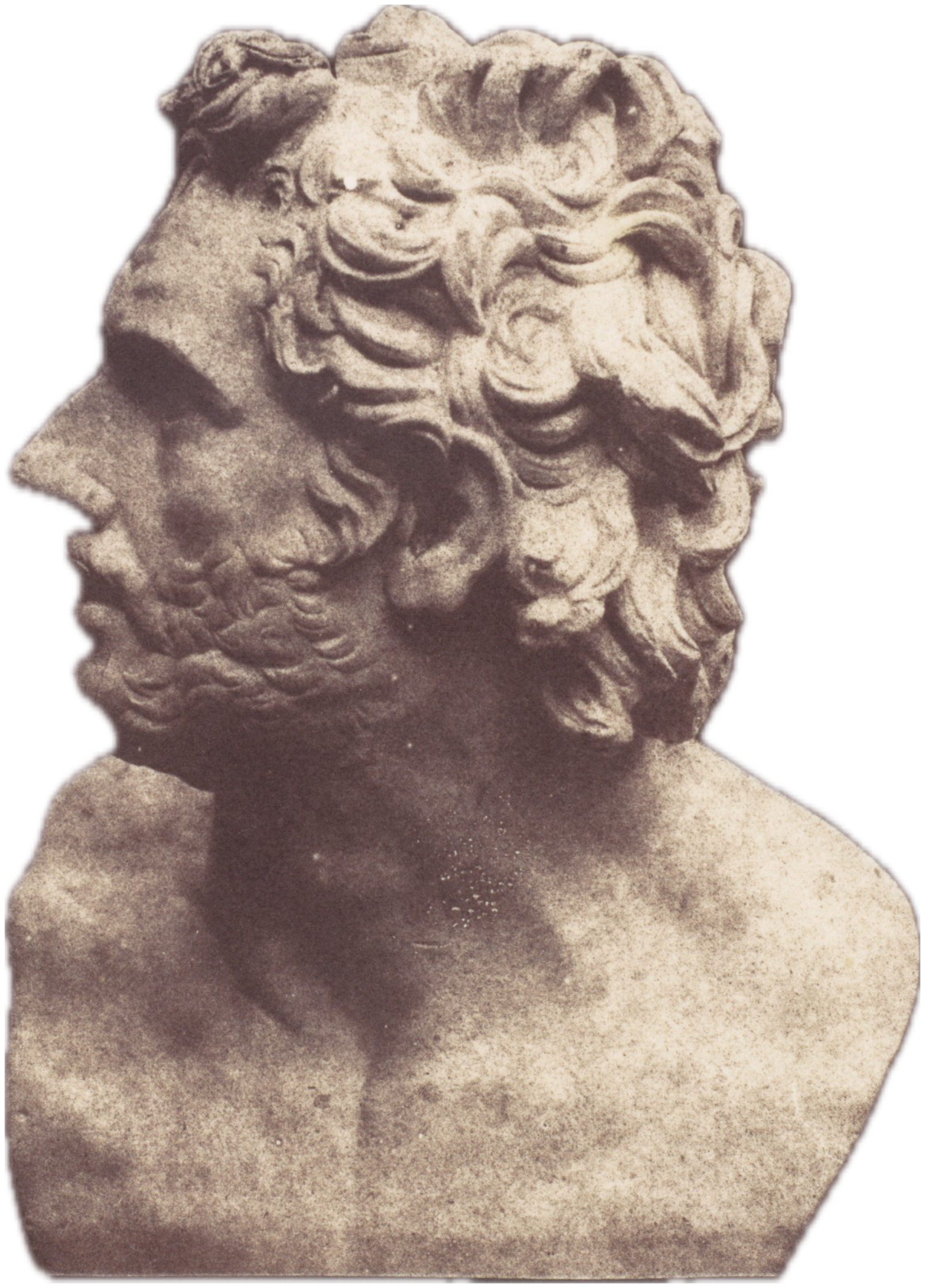
“and at the one moment he drew forth the spear-point and the soul of Sarpedon. And the Myrmidons stayed there the snorting horses, that were fain to flee now that they had left the chariot of their lords. But upon Glaucus came dread grief as he heard the voice of Sarpedon, and his heart was stirred, for that he availed not to succour him.”
“that I may call to my comrades, the Lycians, and urge them on to fight, and myself do battle about the body of him that is fallen in death. So spake he in prayer, and Phoebus Apollo heard him. Forthwith he made his pains to cease, and staunched the black blood that flowed from his grievous wound, and put might into his heart.”
“that a man casteth, making trial of his strength, in a contest, haply, or in war beneath the press of murderous foemen, even so far did the Trojans draw back, and the Achaeans drave them. And Glaucus first, the leader of the Lycian shieldmen, turned him about, and slew great-souled Bathycles,”
“And Glaucus, son of Hippolochus, leader of the Lycians, with an angry glance from beneath his brows, chid Hector with hard words, saying: Hector, most fair to look upon, in battle art thou sorely lacking. In good sooth 'tis but in vain that fair renown possesseth thee that art but a runagate. Bethink thee now how by thyself thou mayest save thy city and home”
“Glaucus, wherefore hast thou, being such a one as thou art, spoken an overweening word? Good friend, in sooth I deemed that in wisdom thou wast above all others that dwell in deep-soiled Lycia; but now have I altogether scorn of thy wits, that thou speakest thus, seeing thou sayest I stood not to face mighty Aias.”
“crying a great cry, and shewed himself before the eyes of all, flashing in the armour of the great-souled son of Peleus. And going to and fro he spake and heartened each man, Mesthles and Glaucus and Medon and Thersilochus and Asteropaeus and Deisenor and Hippothous and Phorcys and Chroraius and Ennomus, the augur—these he heartened, and spake to them winged words:”
Connections
Father · Sources
to make prayer to the gods, and promise them hecatombs. So saying, Hector of the flashing helm departed, and the black hide at either end smote against his ankles and his neck, even the rim that ran about the outermost edge of his bossed shield. But Glaucus, son of Hippolochus, and the son of Tydeus
and he lived not for long, seeing that he was hated of all the immortal gods. So would not I be minded to fight against the blessed gods. But if thou art of men, who eat the fruit of the field, draw nigh, that thou mayest the sooner enter the toils of destruction. Then spake to him the glorious son of Hippolochus:
and his daughter was slain in wrath by Artemis of the golden reins. But Hippolochus begat me and of him do I declare that I am sprung; and he sent me to Troy and straitly charged me ever to be bravest and pre-eminent above all, and not bring shame upon the race of my fathers,
Il. 6.119 · Il. 6.144 · Il. 6.206 · Il. 7.13 · Il. 12.309 · Il. 12.387 · Il. 17.140 · Il. 17.216
Grandfather · Sources
Происхождение выведено по цепочке родителей: Беллерофонт → Гипполох → Главк.
to make prayer to the gods, and promise them hecatombs. So saying, Hector of the flashing helm departed, and the black hide at either end smote against his ankles and his neck, even the rim that ran about the outermost edge of his bossed shield. But Glaucus, son of Hippolochus, and the son of Tydeus
and he lived not for long, seeing that he was hated of all the immortal gods. So would not I be minded to fight against the blessed gods. But if thou art of men, who eat the fruit of the field, draw nigh, that thou mayest the sooner enter the toils of destruction. Then spake to him the glorious son of Hippolochus:
a fair tract of orchard and of plough-land, to possess it. And the lady bare to wise-hearted Bellerophon three children, Isander and Hippolochus and Laodameia. With Laodameia lay Zeus the counsellor, and she bare godlike Sarpedon, the warrior harnessed in bronze.
Il. 6.119 · Il. 6.144 · Il. 6.196–197 · Il. 6.206 · Il. 6.215–216 · Il. 7.13 · Il. 12.309 · Il. 12.387 · Il. 17.140 · Il. 17.216
Great-grandfather · Sources
Происхождение выведено по цепочке родителей: Главк → Беллерофонт → Гипполох → Главк.
to make prayer to the gods, and promise them hecatombs. So saying, Hector of the flashing helm departed, and the black hide at either end smote against his ankles and his neck, even the rim that ran about the outermost edge of his bossed shield. But Glaucus, son of Hippolochus, and the son of Tydeus
and he lived not for long, seeing that he was hated of all the immortal gods. So would not I be minded to fight against the blessed gods. But if thou art of men, who eat the fruit of the field, draw nigh, that thou mayest the sooner enter the toils of destruction. Then spake to him the glorious son of Hippolochus:
and Glaucus begat peerless Bellerophon. To him the gods granted beauty and lovely manliness; but Proetus in his heart devised against him evil, and drave him, seeing he was mightier far, from the land of the Argives; for Zeus had made them subject to his sceptre.
Il. 6.119 · Il. 6.144 · Il. 6.155 · Il. 6.196–197 · Il. 6.206 · Il. 7.13 · Il. 12.309 · Il. 12.387 · Il. 17.140 · Il. 17.216

Ancestor · Sources
Происхождение выведено по цепочке родителей: Сизиф → Главк → Беллерофонт → Гипполох → Главк.
to make prayer to the gods, and promise them hecatombs. So saying, Hector of the flashing helm departed, and the black hide at either end smote against his ankles and his neck, even the rim that ran about the outermost edge of his bossed shield. But Glaucus, son of Hippolochus, and the son of Tydeus
and he lived not for long, seeing that he was hated of all the immortal gods. So would not I be minded to fight against the blessed gods. But if thou art of men, who eat the fruit of the field, draw nigh, that thou mayest the sooner enter the toils of destruction. Then spake to him the glorious son of Hippolochus:
Howbeit, if thou wilt, hear this also, that thou mayest know well my lineage; and many there be that know it. There is a city Ephyre in the heart of Argos, pasture-land of horses, and there dwelt Sisyphus that was craftiest of men, Sisyphus, son of Aeolus; and he begat a son Glaucus;
Il. 6.119 · Il. 6.144 · Il. 6.154 · Il. 6.155 · Il. 6.196–197 · Il. 6.206 · Il. 7.13 · Il. 12.309 · Il. 12.387 · Il. 17.140 · Il. 17.216
Ancestor · Sources
Происхождение выведено по цепочке родителей: Эол → Сизиф → Главк → Беллерофонт → Гипполох → Главк.
to make prayer to the gods, and promise them hecatombs. So saying, Hector of the flashing helm departed, and the black hide at either end smote against his ankles and his neck, even the rim that ran about the outermost edge of his bossed shield. But Glaucus, son of Hippolochus, and the son of Tydeus
and he lived not for long, seeing that he was hated of all the immortal gods. So would not I be minded to fight against the blessed gods. But if thou art of men, who eat the fruit of the field, draw nigh, that thou mayest the sooner enter the toils of destruction. Then spake to him the glorious son of Hippolochus:
Howbeit, if thou wilt, hear this also, that thou mayest know well my lineage; and many there be that know it. There is a city Ephyre in the heart of Argos, pasture-land of horses, and there dwelt Sisyphus that was craftiest of men, Sisyphus, son of Aeolus; and he begat a son Glaucus;
Il. 6.119 · Il. 6.144 · Il. 6.154 · Il. 6.155 · Il. 6.196–197 · Il. 6.206 · Il. 7.13 · Il. 12.309 · Il. 12.387 · Il. 17.140 · Il. 17.216
Friend · Sources
even so beneath Patroclus did the leader of the Lycian shieldmen struggle in death; and he called by name his dear comrade: Dear Glaucus, warrior amid men of war, now in good sooth it behoveth thee to quit thee as a spearman and a dauntless warrior; now be evil war thy heart's desire if indeed thou art swift to fight.
and at the one moment he drew forth the spear-point and the soul of Sarpedon. And the Myrmidons stayed there the snorting horses, that were fain to flee now that they had left the chariot of their lords. But upon Glaucus came dread grief as he heard the voice of Sarpedon, and his heart was stirred, for that he availed not to succour him.
Il. 16.492 · Il. 16.508
Friend · Sources
and Bellerophon a double cup of gold which I left in my palace as I came hither. But Tydeus I remember not, seeing I was but a little child when he left, what time the host of the Achaeans perished at Thebes. Therefore now am I a dear guest-friend to thee in the midst of Argos,and thou to me in Lycia, whenso I journey to the land of that folk. So let us shun one another's spears even amid the throng; full many there be for me to slay, both Trojans and famed allies, whomsoever a god shall grant me and my feet overtake;
Il. 6.224–225
Connection · Sources
seeing he made exchange of armour with Diomedes, son of Tydeus, giving golden for bronze, the worth of an hundred oxen for the worth of nine. But when Hector was come to the Scaean gate and the oak-tree, round about him came running the wives and daughters of the Trojans asking of their sons and brethren and friends
Il. 6.235–236
See all 7
In art
See all 0
There is nothing in this section yet.
04 / PROVENANCE
Sources and verification
The character is matched to the catalogue.
- Wikipedia · Glaucus (son of Hippolochus) · CC BY-SA 4.0
Excerpt; remaining sentences omitted.
Reference material remains distinct from the poem’s assertions. Characters who share a name retain separate pages.